
Stretch-Mediated Hypertrophy: What the Research Actually Says
Quick answer: Stretch-mediated hypertrophy is the finding that training a muscle in its lengthened position tends to produce equal or greater growth than training it short. The practical takeaway is to prioritise exercises and ranges that load the stretched position, not to replace your training with stretching.
Somewhere in the last few years, "train the stretch" went from a niche lab finding to a gym-floor commandment.
Deep stretch, lengthened partials, seated curls, overhead triceps work. The advice is everywhere. The evidence behind it is more interesting, and more measured, than the slogans.
What is stretch-mediated hypertrophy?
It is muscle growth driven by loading a muscle while it is in a lengthened position. The mechanical tension experienced by individual muscle fibres is higher at long lengths than at short ones, and mechanical tension is the primary signal that tells a muscle to adapt.
Two different claims get bundled under the same label, and they deserve to be separated:
- Loaded stretch during resistance training. Choosing exercises and ranges of motion that put the muscle under load while it is long. This is the one with practical support.
- Passive stretching as a growth stimulus. Holding a stretch, without load, hoping for hypertrophy. This one is far weaker.
Conflating the two is how the topic gets oversold.
Does training at long muscle lengths build more muscle?
In several controlled trials, yes, particularly for muscles that are hard to load in a stretched position otherwise.
The clearest example is the calf. In a 2023 study in the Journal of Strength and Conditioning Research, 42 young women trained calf raises three days a week for eight weeks using either full range of motion, partials in the shortened half, or partials in the lengthened half. The lengthened-partial group showed greater gastrocnemius hypertrophy, according to Kassiano and colleagues.
That finding is real, and it is also narrower than the internet suggests.
The counter-evidence you should know about
A large 2025 study in PeerJ compared lengthened partials against full range of motion in previously trained participants across multiple sites. It was pre-registered and designed to test statistical equivalence, and it found similar muscular adaptations between the two conditions, according to Wolf and colleagues.
So the honest summary is this: lengthened-position training is at least as good as full range of motion, and sometimes better, but it is not a different category of results. The gap is real and modest, not transformative.
Does static stretching build muscle on its own?
Barely, and only at doses almost nobody will actually do.
A 2024 systematic review and meta-analysis in Sports Medicine Open pooled the chronic static stretching literature and found a trivial positive effect on muscle size overall (d = 0.20, p = 0.003). Breaking it down further, the effect only reached significance for protocols lasting 15 minutes or more per session (d = 0.28), running six weeks or longer, and performed at least five times per week, according to Warneke and colleagues.
Read that dose again. Fifteen minutes of stretching per muscle, five days a week, for six weeks, for a trivial effect.
Stretching is a mobility tool, not a hypertrophy tool. Keep it if you like it. Do not expect it to grow anything.
How should you apply this in your training?
Bias your exercise selection toward movements that load the stretched position. That is the whole practical translation, and it costs you nothing.
For each muscle, there is usually a version of the exercise that puts the muscle under tension when it is long:
| Muscle | Lengthened-position choice | Shortened-position choice |
|---|---|---|
| Hamstrings | Romanian deadlift, seated leg curl | Standing leg curl, glute-ham raise top |
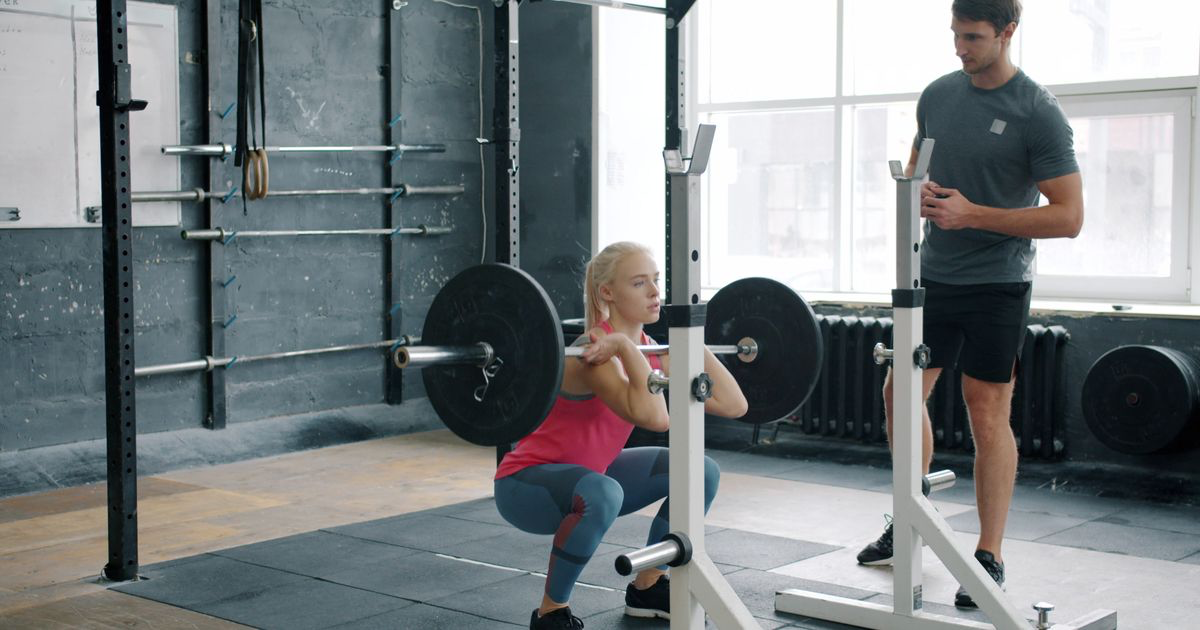
| Quads | Deep squat, leg press with full depth | Leg extension top half |
| Triceps | Overhead extension | Cable pushdown |
| Biceps | Incline dumbbell curl | Preacher curl top |
| Calves | Deep-stretch calf raise | Standing calf raise short range |
| Chest | Deep dumbbell press, cable fly at stretch | Machine press short range |
Three rules that follow from the research:
- Use full range of motion by default. It covers the lengthened position and everything else.
- Reach for lengthened partials as a finisher, not as your main method, especially on calves and other stubborn muscles.
- Do not chase depth into pain. The stretch that matters is loaded and controlled, not maximal.
The Romanian deadlift is a good example of an exercise where the loaded stretch is the entire point of the movement. Not every muscle responds the same way, and the per-muscle evidence is broken down in which muscles benefit from stretch-mediated hypertrophy.
What this does not change
Volume, effort, and progressive overload still do the heavy lifting. Exercise selection is a rounding error next to whether your sets are hard and whether the weight goes up over months.
If you are not progressing, the fix is almost never "more stretch". It is usually the basics covered in progressive overload explained and an honest look at your weekly set count.
Why this only matters if you are tracking
| Physical Notebook | Notes App | Traditional Gym App | Gym Note Plus | |
|---|---|---|---|---|
| Logging speed | Slow, needs a pen | Fast, free typing | Slow, tap through menus | Fast, free typing |
| Recording exercise swaps | Easy | Easy | Fiddly | Easy |
| Data visualization | None | None | Charts | Charts from your text |
| Flexibility | Total | Total | Rigid templates | Total |
| Searchability | None | Text search only | Structured search | Structured search |
Here is the part that gets skipped. Swapping a pushdown for an overhead extension only helps if you can tell, months later, whether the new exercise actually progressed better than the old one.
Without a log, exercise selection is fashion. With one, it is an experiment.
Gym Note Plus is built for lifters who already type sessions into their phone's notes app. You keep writing lines like Overhead ext 25x12, 25x11, 25x10, and it turns them into per-exercise charts, so a swap you made in March is measurable in June.
- Log exercise swaps in one line, no template editing.
- Compare progression per exercise rather than guessing.
- Keep the plain-text habit that made you consistent in the first place.
Paste a real session into the free notes to workout translator to see how it reads your text.
Train through the stretch because it is at least as good as the alternative and costs nothing. Do not expect it to replace hard sets and progressive overload.
Frequently Asked Questions
What is stretch-mediated hypertrophy?
Stretch-mediated hypertrophy describes muscle growth stimulated by loading a muscle at long lengths, where individual fibres experience greater mechanical tension. In practice it means favouring exercises and ranges of motion that place the target muscle under load while it is stretched, such as Romanian deadlifts for hamstrings or overhead extensions for triceps.
Are lengthened partials better than full range of motion?
The evidence is mixed and the difference is modest. A 2023 calf-training study found greater gastrocnemius growth from lengthened partials, while a large 2025 PeerJ study in trained lifters found lengthened partials and full range of motion produced similar adaptations. Full range of motion remains a sound default, with lengthened partials as a useful finisher.
Does stretching build muscle?
Passive static stretching produces only a trivial hypertrophy effect. A 2024 Sports Medicine Open meta-analysis found an overall effect size of 0.20, reaching significance only for protocols of 15 minutes or more per session, five or more times weekly, over at least six weeks. Stretching is better treated as a mobility practice.
Which exercises train the stretched position?
Exercises that load a muscle at long lengths include Romanian deadlifts and seated leg curls for hamstrings, deep squats for quads, overhead triceps extensions, incline dumbbell curls for biceps, deep-stretch calf raises, and deep dumbbell presses or cable flyes for chest. Each loads the muscle when it is lengthened rather than shortened.
Do biceps benefit from stretch-mediated hypertrophy?
Biceps do respond to lengthened-position training, and the practical version is the incline dumbbell curl, where the arm hangs behind the torso and the biceps is loaded while long. Preacher curls load the shortened half instead. The same logic covers triceps, where overhead extensions beat pushdowns for reaching the stretch.
Which muscles benefit most from stretch-mediated hypertrophy?
The muscles with the most to gain are the ones normally trained short: calves, triceps, biceps, hamstrings, quads and chest. Calves have the clearest supporting trial, where lengthened partials beat shortened partials for gastrocnemius growth. A per-muscle breakdown lives in which muscles benefit from stretch-mediated hypertrophy.
Should beginners worry about stretch-mediated hypertrophy?
Beginners should not prioritise it. Training with full range of motion, taking sets close to failure, and adding weight over time drives almost all early progress. Lengthened-position exercise selection is a refinement worth applying once the fundamentals of volume, effort, and progressive overload are already consistent.
Final takeaways
- Loading a muscle at long lengths works. It is at least as effective as short-range training and sometimes better.
- Full range of motion is the default because it already includes the stretched position.
- Lengthened partials are a finisher, most useful on stubborn muscles like calves.
- Static stretching is not a growth strategy. The required dose is impractical and the effect is trivial.
- Track your swaps. Exercise selection only matters if you can measure whether it worked.

Josh Ibbotson
Josh is the creator of Gym Note Plus, building tools that make workout tracking as simple as taking notes.
Ready to try it out?
Download Gym Note Plus and start tracking your workouts the way you want.
Download on App Store