
How to Do Cable Flys: Angles, Form, and Progression
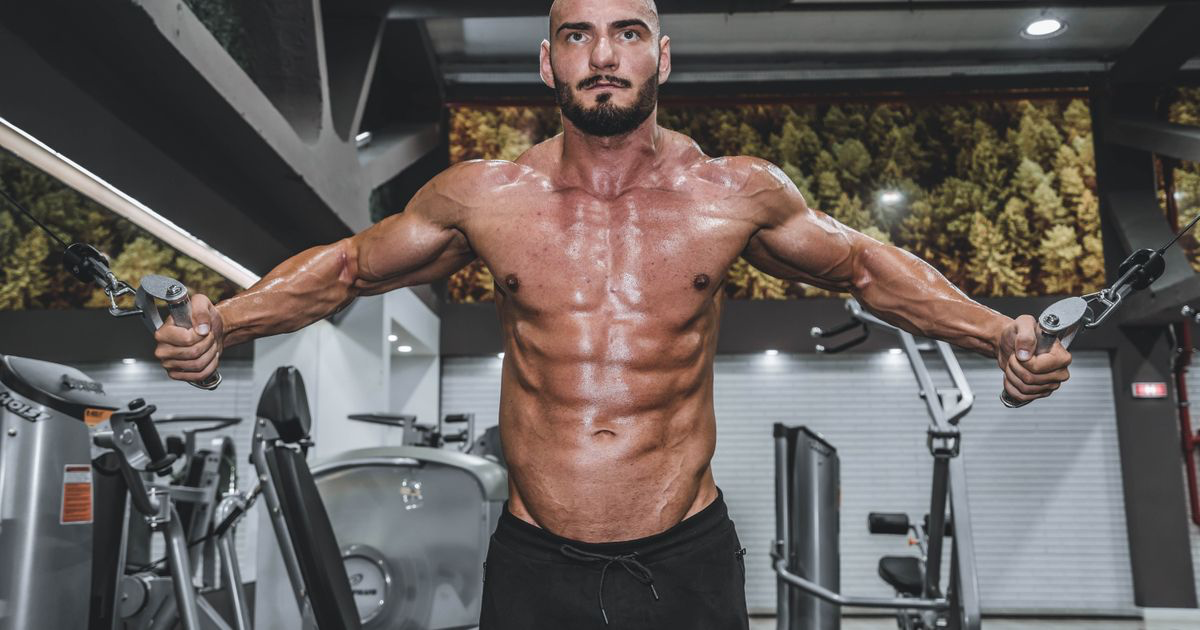
Quick answer: To do a cable fly, set both pulleys level, take a handle in each hand, and stagger your stance with a slight forward lean. Hold a fixed, soft elbow bend and sweep your hands together across your chest. Let the arms travel back until you feel a stretch. Pulley height biases upper, mid, or lower chest.
Most people learn the bench press first, notice their chest still looks flat, and go hunting for the exercise that fixes it.
The cable fly usually gets picked, then quietly ruined. Elbows collapse, the weight creeps up, and within three weeks it is a standing press with cables attached.
What muscles does a cable fly work?
The pectoralis major does almost all of the work. A press splits the load between chest, shoulders, and triceps. The fly is single-joint, so nearly all of it lands on the chest, with the anterior deltoid assisting on the way in and your core stopping the torso from rotating.
The pec has two regions worth knowing. The clavicular head runs from the collarbone (upper chest) and the larger sternal head from the breastbone (mid and lower chest). Which one takes more of the load depends on the direction your arms travel, which is why cable height matters.
Flies hold up well against pressing. In the University of Wisconsin-La Crosse EMG study commissioned by ACE Fitness, 14 trained men performed nine chest exercises at 80% of their one-rep max. The pec deck reached 98% of the barbell bench press's pectoralis activation and the bent-forward cable crossover reached 93%, with no significant difference between the three.
So the fly is a real chest builder, not a finisher you tack on when you are tired.
Which cable angle should you use: high, mid, or low?
Cable height changes the direction your arms travel, and direction is what biases one part of the chest over another. Run all three across a training week.
High to low (pulleys above shoulder height)
Your hands sweep down and in, finishing near your waist. Arms travelling downward across the body is the sternal head's job, so this angle biases the mid and lower chest.
Mid (pulleys at roughly chest height)
Hands meet straight out in front of your sternum. This is the closest match to a flat dumbbell fly and hits the bulk of the sternal head, so it is the sensible default if you only do one version.
Low to high (pulleys at or near the floor)
Hands sweep up and in, finishing around collarbone height. Upward arm travel is the clavicular head's territory, so this is the cable version of incline work. Research on bench inclination found upper chest activity peaked at a 30-degree incline, so aim the arms slightly upward, not overhead. If the upper chest is your weak point, pair this with incline bench press.
Do not chase the angles too hard. The differences are real but modest, and chest growth still comes mostly from doing enough hard sets.
How do you set up and perform a cable fly?
Set the height, then the stance, then the elbows.
- Set both pulleys to the same height for the angle you want.
- Take a handle in each hand and step forward, so the cables are under tension before you start.
- Stagger your feet, one slightly in front, and lean forward 10 to 20 degrees from the hips.
- Bend your elbows to a fixed 10 to 30 degrees and hold that angle for the whole set.
- Sweep your hands together along the line the pulleys set, squeezing as they meet or cross.
- Let the arms travel back slowly until you feel a stretch across the chest.
Keep your shoulder blades pulled back and down against your ribs. If they slide forward as the cables pull your arms back, the stretch lands on your shoulder joint instead of your chest.
Why does everyone turn the cable fly into a press?
Because pressing lets you use more weight, and the weight is what people notice. The tell is the elbow: if it bends on the way out and straightens on the way in, you are pressing.
The fly is one joint. The shoulder opens and closes and the elbow does nothing. Once the elbow starts flexing, the triceps join in and the load spreads off the chest.
Fix it by freezing the elbow angle. If you cannot hold that angle for ten reps, the stack is too heavy.
How much range of motion do cable flys need?
Go far enough back that you feel a genuine stretch across the chest, then stop. The stretched position is where the fly earns its place next to pressing.
Look at how far the chest will grow from length alone. In a 2024 trial in the European Journal of Applied Physiology, 81 participants either stretched the pectoralis 15 minutes a day, four days a week, or trained the machine butterfly three days a week. After eight weeks the stretching group gained 6.5% pectoralis thickness and the training group 7.3%, with no significant difference, according to Wohlann and colleagues.
The pec responds strongly to load at long lengths, which the fly delivers better than any press. We cover the mechanism in stretch-mediated hypertrophy.
Stop going back where you feel the chest stretch, before your shoulders roll forward. Pain at the front of the shoulder is not a stretch, it is a signal to shorten the range.
How many sets and reps should you do?
Three or four sets of 10 to 15 reps, one or two chest sessions a week. Flies suit moderate loads and controlled reps, and they punish heavy grinding.
- Rest 60 to 90 seconds. This is accessory work, not a heavy compound.
- Take two to three seconds returning to the stretched position.
- Run flies after your press, unless you are deliberately pre-exhausting the chest.
- Progress on reps first. Cable stacks jump in big increments.
Cable fly vs dumbbell fly vs pec deck
All three train the same movement. The differences are resistance profile and stability, not quality.
- Cable fly. Tension through the full arc and an adjustable angle, but you stabilise your own torso.
- Dumbbell fly. Hardest at the bottom stretch, near weightless at the top. Where it loads best is also where it is riskiest.
- Pec deck. Fixed path, no balance needed, so it is the easiest to take close to failure safely. In the ACE data it hit 98% activation.
A 2020 study in the Journal of Sports Science and Medicine found the barbell bench press produced 8% to 81% higher pectoralis major activation than dumbbell flyes across most of the lifting phase. Flies are the accessory, the bench press is the anchor.
Why are cable flys so hard to track?
Because the number on a cable stack does not mean the same thing in two different gyms.
Some stacks are marked in kilograms, some in pounds, and some in unnamed "plates" numbered 1 to 20. Two machines can show the same 40 and deliver different loads, because pulley ratios differ. Then there is the per-side question: on a crossover you load two stacks, so "50" might mean 50 per hand or 50 total.
| Physical Notebook | Notes App | Traditional Gym App | Gym Note Plus | |
|---|---|---|---|---|
| Recording an odd stack unit | Free text, works | Free text, works | Often forces kg or lb | Free text, works |
| Noting pulley height | Manual scribble | Manual note | Rarely a field | Written in the line |
| Per-side vs total clarity | Whatever you wrote | Whatever you wrote | Fixed assumption | Whatever you wrote, kept |
| Charting the trend | None | None | Charts | Charts from your text |
| Finding last session fast | Flip pages | Text search | Structured search | Structured search |
The fix is boring and it works: write the pulley height, the stack number, and whether it is per side, every time. Our guide to logging machine weights covers the same problem across the rest of the gym floor.
A simple cable fly starting plan
- Pick one angle for four weeks. Mid-height is the safest default, and changing it every session makes progress impossible to read.
- Choose a weight you can control for 12 reps with a frozen elbow angle and a full stretch.
- Log the line as soon as you rack the handles, height and side included: "Cable fly mid, 15 per side, 3x12".
- Add reps until you hit 15 on every set, then move one plate up and drop back toward 10.
- Check last session before you start. If you cannot tell whether that 15 was per side or total, the log has failed you.
Keep logging the way you already do
If you type sessions into your phone's notes app, you already have the right habit for an exercise this fiddly. Plain text holds "low to high, plate 7, per side" without a form field arguing with you.
Gym Note Plus is built on that. You write the line the way you already write it, and it groups every set by exercise and date, so your cable fly history becomes a chart instead of a wall of text.
- Type the set in plain text, units and quirks included.
- See the trend per exercise, so you know if the fly has moved in three months.
- Pull up last session in a tap, before you set the pulleys.
Paste an old chest session into the free notes to workout translator and see what your accessory work has been doing.
The cable fly works when the elbow stops moving and the stretch at the back of the rep is real. Everything else is a standing press with handles.
Frequently Asked Questions
How do you do a cable fly with correct form?
Set both pulleys to the same height, grab a handle in each hand, and step forward into a staggered stance with a slight forward lean. Hold a fixed, soft elbow bend, then sweep your hands together in an arc across your chest. Return slowly until you feel a chest stretch, keeping the elbow angle unchanged.
What is the best cable height for chest growth?
There is no single best height for cable flys. High pulleys sweep the arms downward and bias the mid and lower chest, mid pulleys hit the bulk of the sternal head, and low pulleys sweep upward and bias the upper chest. Rotating all three across a training week covers the whole pectoralis major.
Are cable flys better than dumbbell flys?
Cable flys keep tension on the chest through the whole arc, while dumbbell flys lose nearly all resistance at the top because the load line passes through the shoulder joint. Dumbbells load the stretched position well, cables load everything. For most lifters the cable version is the more useful default.
Why does my shoulder hurt during cable flys?
Front-of-shoulder pain during a cable fly usually comes from letting the shoulder blades slide forward at the back of the rep, which shifts the stretch from the pectoralis major onto the shoulder joint. Pull the shoulder blades back and down, shorten the range until the stretch is felt in the chest, and reduce the weight.
Final Takeaways
- The cable fly is single-joint. If the elbow bends and straightens, it is a press.
- Pulley height sets the bias. High for mid and lower chest, mid for the bulk, low for upper.
- The stretch is the point. Go back until the chest lengthens, stop before the shoulders roll.
- Use 10 to 15 reps with a controlled tempo and 60 to 90 seconds of rest.
- Write down height, stack number, and per side or total. The same number means different loads in different gyms.

Josh Ibbotson
Josh is the creator of Gym Note Plus, building tools that make workout tracking as simple as taking notes.
Ready to try it out?
Download Gym Note Plus and start tracking your workouts the way you want.
Download on App Store