
How to Pause Squat: Benefits, Form and How Much Weight
Quick answer: A pause squat is a back squat where you stop at the bottom and hold still for about two seconds before standing up. The pause removes the bounce, so your quads, glutes and trunk have to drive the bar up from a dead stop. Start around 70 to 80 percent of your normal squat working weight.
Your squat feels fine until the bottom. You come down, the bar slows, and the climb out turns into a grind. Some days you cut depth a little without meaning to.
A pause squat targets that weak spot. It is the same lift with one rule added: stop at the bottom and stay there.
What is a pause squat?
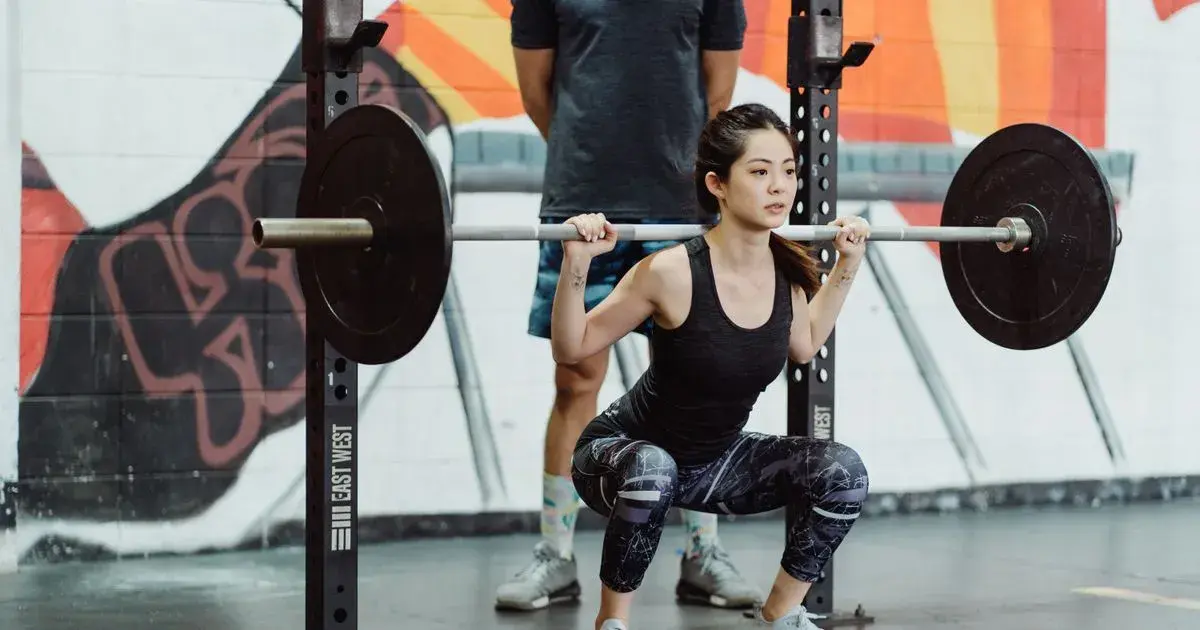
A pause squat is a regular barbell back squat with a deliberate stop in the bottom position. You lower the bar as normal, hold the bottom for a set count, then stand up without any rebound.
In a normal squat, the muscles stretch on the way down and give some of that tension back as you reverse. Lifters call that the bounce. The pause takes most of it away, so the start of the climb comes from muscle force alone.
That is why a paused squat feels heavier than its weight suggests. In time under tension tempo notation, the pause is the second digit.
What muscles does the pause squat work?
The pause squat works the same muscles as the back squat: quads, glutes and adductors, with the lower back and trunk holding your position. StrengthLog's pause squat guide lists quads, glutes, adductors and lower back as the primary movers and calves as secondary.
What changes is where the work lands. The pause makes you produce force from the deepest part of the lift, the position where most people stall. Your trunk also has to stay braced for longer, because the bar sits on your back while you hold still.
Do pause squats actually make you stronger?
One 10-week trial says yes, and found paused squats improved strength more than normal squats. In a 2021 study in the International Journal of Sports Physiology and Performance, Martínez-Cava and colleagues split 26 men into two groups. Both trained the squat for 10 weeks with the same program, except one group used a pause of about two seconds and the other bounced out of the bottom.
Both groups improved on most strength tests. The pause group showed larger gains, with effect sizes of 0.76 to 1.12 against 0.45 to 0.92 for the rebound group.
The bounce still has a job, though. The rebound group did better on the countermovement jump and on the 10 to 20 metre sprint split. The authors suggest pauses suit sports that rely on starting from still, while jumping athletes may want normal squats or a mix of both.
Pauses also make your numbers easier to compare. An earlier 2014 study in the Journal of Sports Sciences by Pallarés and colleagues tested 17 trained lifters with and without a two-second pause. In the squat, the error of the normal technique was 57.5 percent higher than with the pause, so paused numbers are easier to compare from session to session.
How do you do a pause squat with good form?
Set up exactly like your normal back squat, then change only the bottom of the rep. If the base movement is still new to you, start with our guide on how to squat first.
- Unrack and brace. Bar on your upper back, take a big breath and tighten your trunk before you take two steps back.
- Lower under control. Same depth you would hit on a good normal squat, at least thighs parallel.
- Stop and hold. Stay tight at the bottom. Do not relax onto your hips or let your knees drift forward.
- Count the pause. Two seconds is the common target, the same length used in both studies above.
- Drive up hard. Push through your whole foot and keep your chest up as you stand.
Common pause squat mistakes
- A soft pause. If the bar keeps creeping down or bounces slightly, that was not a pause. A real one is completely still.
- Relaxing in the hole. Losing your brace at the bottom is how the lower back rounds on the way up.
- Counting too fast. StrengthLog's guide recommends filming a few sets, because the pause is often shorter than it feels.
- Going too heavy too soon. If the weight forces a short pause or a shallow depth, it is too heavy.
How much weight should you use for pause squats?
Start well below your normal squat, around 70 to 80 percent of your usual working weight, and build from there. The pause takes away the bounce, and the first few sessions feel awkward even when you are strong.
Over time the gap closes. StrengthLog's guide says that with practice you can expect to pause squat around 90 percent of your regular squat, depending on your squat style and weak points.
Keep reps low, around 2 to 5 per set, because the pause gets sloppy once you tire. For a percentage-based start, plug a recent squat set into the one rep max calculator and work from that estimate.
How do you progress pause squats?
Progress them the way you progress any lift: add a little weight when every rep hits the full pause at the right depth. A rep only counts if the hold was real.
- Add weight in small jumps once all your sets are clean.
- Lengthen the pause from two to three seconds before adding load.
- Add a set before adding weight, if your recovery allows it.
What are good pause squat alternatives?
Any variation that removes the bounce gives you a similar effect.
- Pin squat. Lower the bar to safety pins set at the bottom, settle, then stand up. It is a true dead stop.
- Box squat. Sit back onto a box and pause there. It is easier to judge depth, though the box takes some of the load off.
- Tempo squat. A slow lowering phase, often three to five seconds, with or without a pause.
- Paused front squat. The same idea with the bar on the front of your shoulders, which shifts more work to the quads and upper back. See how to front squat.
How do you log a pause squat?
Log it as its own exercise, with the pause length in the name or note. If you log a pause squat as plain "Squat", your normal squat history looks like it suddenly dropped.
A simple notes-app entry that stays readable a year from now:
Pause squat (2s)
80kg x 3
80kg x 3
80kg x 3
85kg x 3, last rep pause short
A two-second and a three-second pause are different lifts, so keep the length in the name.
| Physical Notebook | Notes App | Traditional Gym App | Gym Note Plus | |
|---|---|---|---|---|
| Logging speed | Fast | Fast | Slow (menus) | Fast (plain text) |
| Pause and tempo notes | Written by hand | Typed freely | Often a separate field or missing | Typed freely, kept with the set |
| Data visualization | None | None | Charts | Charts from your notes |
| Flexibility | Total | Total | Limited to built-in exercises | Total |
| Searchability | Poor | Decent | Good | Good |
A simple starting plan
- Pick one day a week. Add pause squats after your main squat, or as the first lift on a lighter leg day.
- Start light. Around 70 to 80 percent of your normal squat working weight, for 3 sets of 3 with a two-second pause.
- Film one set. Check that the pause is really still and really two seconds.
- Add weight only when every rep is clean. Small jumps, every week or two.
- Log it separately so your normal squat history and your pause squat history each show a true trend.
Keep logging your pauses the way you already do
If you log in a notebook or a notes app, you already write down what you did, pause notes and all. Seeing the trend is the hard part, because twelve weeks of "pause squat 2s" lines are hard to compare by scrolling.
Gym Note Plus keeps the plain-text logging and does the tracking for you.
- Type
pause squat 2s 80kg 3,3,3and it becomes structured sets. - Your pause squat and back squat stay as separate exercises with separate progress charts.
- Notes like "last rep pause short" stay attached to the set.
Paste a recent session into the free notes to workout translator to see how your own shorthand reads.
A pause squat takes away the bounce, so strength has to do all the work out of the bottom. Count the pause honestly and log it as its own lift.
Frequently Asked Questions
What are the benefits of pause squats?
Pause squats build strength out of the bottom of the squat, improve depth consistency and teach you to stay braced under load. In a 2021 International Journal of Sports Physiology and Performance trial, a group squatting with a two-second pause for 10 weeks made larger strength gains than a group using normal rebound squats.
How long should you pause in a pause squat?
A pause squat usually uses a pause of about two seconds at the bottom. Both the 2014 Journal of Sports Sciences study and the 2021 training study by Martínez-Cava and colleagues used roughly two seconds. Some lifters progress to three seconds. Whatever length you pick, hold completely still and keep it the same each session.
How much lighter is a pause squat than a regular squat?
A pause squat is lighter than a regular squat because the pause removes the bounce out of the bottom. Beginners to the lift should start around 70 to 80 percent of their usual working weight. StrengthLog's guide says practiced lifters can expect to pause squat around 90 percent of their regular squat.
Are pause squats good for building muscle?
Pause squats train the same quads, glutes and adductors as the back squat, with more time under load in the deepest position. They are a useful variation for muscle growth, but the lighter loads mean they work best alongside regular squats rather than as a full replacement for them in a hypertrophy program.
Should you pause squat every week?
Pause squats work well once a week, either after your main squat or as the main lift on a lighter lower-body day. Keep reps low, around 2 to 5 per set, so every pause stays clean. You can also run them for one training block, then rotate to another variation such as pin or tempo squats.
Final Takeaways
- A pause squat is a back squat with a roughly two-second hold at the bottom. The bar stays completely still before you stand up.
- Research favours it for strength. A 10-week trial found larger strength gains with pauses, while bouncing helped jump performance more.
- Start around 70 to 80 percent of your normal working weight and keep reps low.
- Film your pauses, because they are usually shorter than they feel.
- Log pause squats as their own exercise, with the pause length in the name, so both histories stay honest.

Josh Ibbotson
Josh is the creator of Gym Note Plus, building tools that make workout tracking as simple as taking notes.
Ready to try it out?
Download Gym Note Plus and start tracking your workouts the way you want.
Download on App Store