
How to Romanian Deadlift: Form, Muscles Worked, and Progression
Quick answer: To Romanian deadlift, stand holding a barbell at hip height, push your hips straight back with a soft bend in the knees, and lower the bar along your thighs until you feel a deep hamstring stretch around mid-shin. Then drive your hips forward to stand. The bar never touches the floor between reps.
Everyone at your gym does deadlifts. Far fewer do Romanian deadlifts, and most of the ones who do are squatting the weight down instead of hinging.
The difference is one instruction: your hips go back, not down.
What is a Romanian deadlift?
The Romanian deadlift (RDL) is a hip hinge performed from the top down, with the bar staying off the floor. You start standing, lower under control, and stop when your hamstrings run out of stretch.
That is the whole distinction from a conventional deadlift, which starts on the floor, involves far more knee bend, and resets each rep.
- Conventional deadlift. Starts from the floor. Knees bend significantly. Heavy quad and full-body involvement.
- Romanian deadlift. Starts from standing. Knees stay softly bent throughout. Hamstrings and glutes do nearly all the work.
- Stiff-leg deadlift. Similar to an RDL but with straighter legs and usually a floor start.
If you want the floor-based lift instead, we cover it in how to deadlift.
What muscles does the Romanian deadlift work?
The Romanian deadlift primarily trains the hamstrings and glutes, with the spinal erectors, lats, and grip working hard to hold position.
An electromyographic and kinetic comparison of conventional and Romanian deadlifts found the conventional deadlift produced greater rectus femoris (quadriceps) activation at 58.6% peak versus 25.3% for the RDL, and slightly greater gluteus maximus activation at 51.5% versus 46.9%.
That quad number is the useful one. The RDL is not a worse deadlift. It is a more selective one. By removing most of the knee bend, it strips the quads out of the movement and forces the posterior chain to handle the load.
- Hamstrings. The primary target, loaded hardest in the stretched position near the bottom.
- Glutes. Drive the hip extension that brings you back to standing.
- Spinal erectors. Work isometrically to keep your back flat under a long lever.
- Lats and upper back. Hold the bar tight to your body throughout.
- Grip and forearms. Often the first thing to fail on heavier sets.
How do you perform a Romanian deadlift with correct form?
Set up standing, hinge back, stop at the stretch, drive the hips forward. Here is the rep in order.
The setup
- Take the bar from a rack at hip height if you can. Deadlifting it off the floor first is fine but wastes energy.
- Grip just outside your thighs, double overhand, hands about shoulder width.
- Stand tall with feet hip-width apart, toes forward, bar resting against your upper thighs.
- Brace your midsection as if about to take a light punch, and pull your shoulders back so the bar sits close.
The descent
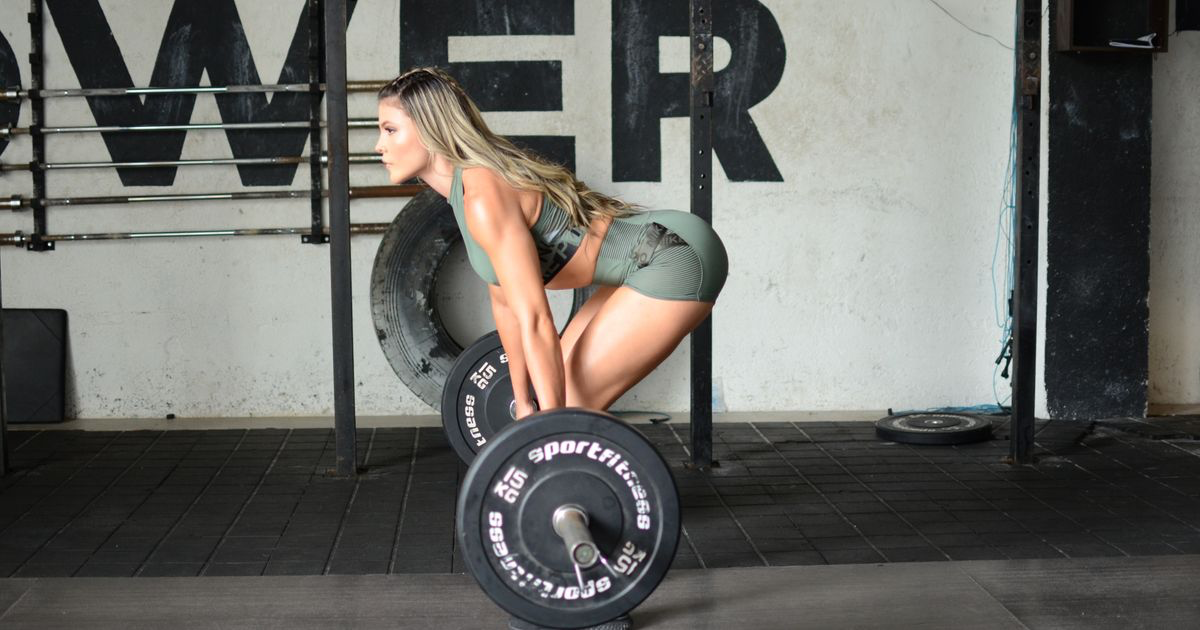
- Push your hips straight back. This is the whole movement. Imagine reaching your backside toward a wall behind you.
- Let the knees bend slightly and stop there. Around 15 to 20 degrees of bend, then no more. The knees do not continue traveling forward.
- Keep the bar in contact with your legs, dragging down your thighs. If it drifts forward, your back is taking the load instead of your hamstrings.
- Stop when your hamstrings run out of stretch, usually somewhere between just below the knee and mid-shin. Depth is set by your flexibility, not by the floor.
The ascent
- Drive your hips forward into the bar to stand back up. Do not pull with your lower back.
- Finish standing tall, glutes squeezed, without leaning back or overextending your spine.
- Do not rest the bar down. Go straight into the next rep, keeping tension.
What are the most common Romanian deadlift mistakes?
Almost every RDL error is the same error: turning the hinge into a squat.
- Bending the knees too much. If your knees travel forward as you descend, you are squatting. Push the hips back instead and let the knees stay where they are.
- Rounding the lower back. Usually a sign the weight is too heavy or you are chasing extra depth your hamstrings cannot support. Stop where the stretch stops.
- Letting the bar drift away from the body. Every inch of distance multiplies the load on your spine. Keep it dragging down your thighs.
- Going too deep. Touching the floor is not the goal. The rep ends when your hamstrings can no longer keep your back flat.
- Hyperextending at the top. Leaning back at lockout stresses the spine and adds nothing. Stand tall and stop.
- Starting too heavy. The RDL is a stretch-loaded exercise with a long lever. It humbles people who load it like a conventional deadlift.
One cue fixes most of this. Stand about a foot from a wall, facing away, and hinge until your backside touches it. That is the movement.
How much weight should you use and how do you progress?
Start light enough that you can feel your hamstrings, not your lower back. For most lifters that is an empty bar to 95 lb for the first few sessions, regardless of what they deadlift.
Sets of 8 to 12 suit the RDL better than heavy triples. The exercise earns its value from loaded stretch and controlled tension, and both survive better at moderate loads.
Progress it with double progression. Pick a range like 3x8-12. Add reps within the range each week until you hit 12 on every set, then add weight and drop back to 8. We cover the method in double progression vs linear progression.
Because the RDL is rarely trained near a true one rep max, use an estimate rather than testing. Plug a hard set into the free one rep max calculator to see where you actually stand and to set sensible working weights.
What are good Romanian deadlift alternatives?
Any hinge that loads the hamstrings in a stretched position will do a similar job.
- Dumbbell RDL. Easier to learn, kinder on the lower back, and the dumbbells can pass beside your legs for a deeper range.
- Single-leg RDL. Fixes side-to-side imbalances and demands far less load.
- Good morning. Bar on your back instead of in your hands. Removes grip as a limiter.
- Seated or lying leg curl. Isolates the hamstrings with almost no lower back involvement. A good complement rather than a replacement.
- Hip thrust. Glute-dominant rather than hamstring-dominant, but a strong pairing with RDLs.
How should you log Romanian deadlifts?
Log the weight, sets, reps, and where you stopped. That last part matters more on the RDL than on almost any other lift, because depth is the variable most likely to drift without you noticing.
A good log line is short:
RDL 3x10 @ 135, stopped mid-shin, hamstrings smoked
If you write that every week, a stall becomes obvious. If you write only "RDL 3x10", you will never know whether last month's version was two inches deeper.
| Physical notebook | Notes app | Traditional gym app | Gym Note Plus | |
|---|---|---|---|---|
| Logging speed | Fast | Fast | Slow, lots of taps | Fast, plain text |
| Room for form notes | Yes | Yes | Usually cramped | Yes, free text |
| Data visualization | None | None | Charts | Automatic charts |
| Searchability | None | Keyword only | Yes | Yes |
| Flexibility | Total | Total | Rigid fields | Total, free text |
A simple starting plan
- Learn the hinge with no weight. Stand a foot from a wall, hinge back until your backside touches, ten reps.
- Add an empty bar for two sessions. Focus entirely on hips back, bar on thighs, flat back.
- Run 3 sets of 10 at a light weight once or twice a week, stopping the moment your back wants to round.
- Use double progression. Build from 8 to 12 reps, then add 10 lb and start again at 8.
- Log depth alongside the numbers. "Mid-shin" or "just below knee" takes two seconds and makes the record honest.
Keep logging the way you already do
If you already type your sets into your phone's notes between exercises, you are doing the hard part. Plain text is the fastest way to record a lift, and the extra note about depth or how the stretch felt is exactly the detail structured apps push you to skip.
Gym Note Plus keeps that habit and adds the part notes apps cannot do. You log in plain text, and it turns those lines into per-exercise history and charts, so your RDL progression is a line you can see rather than a scroll you have to reconstruct.
- Log at notes-app speed. Type the set, move on.
- Keep your form notes. Free text stays free text.
- Watch each lift over time. Automatic charts show whether your hinge is actually progressing.
See how it handles your existing entries by pasting a session into the free notes to workout translator.
The Romanian deadlift is not a deadlift you do badly. It is a hinge you do deliberately, and the hamstrings only get paid if the hips go back.
Frequently Asked Questions
What is the difference between a Romanian deadlift and a conventional deadlift?
The Romanian deadlift starts from standing, keeps the knees only slightly bent, and lowers the bar to around mid-shin without touching the floor. The conventional deadlift starts from the floor with substantially more knee bend. EMG research shows the conventional deadlift produces far greater quadriceps activation, while the Romanian deadlift concentrates the work in the hamstrings and glutes.
How low should you go on a Romanian deadlift?
Lower the bar until your hamstrings reach the end of their stretch and your lower back is about to round, which for most lifters is somewhere between just below the knee and mid-shin. Depth on a Romanian deadlift is set by hamstring flexibility, not by reaching the floor. Going deeper than your hamstrings allow shifts load onto the spine.
How much weight should you Romanian deadlift?
Start much lighter than your conventional deadlift, often an empty barbell up to about 95 lb while learning the hinge. The Romanian deadlift loads a long lever with the hamstrings in a stretched position, so it feels far heavier than the number suggests. Progress in sets of 8 to 12 reps rather than heavy singles or triples.
Should Romanian deadlifts be done on leg day or back day?
Romanian deadlifts fit naturally on leg day, since they primarily train the hamstrings and glutes. They also work well on a pull day in a push pull legs split, because the lats, upper back, and grip are heavily involved in holding the bar. Place them after your main squat or hinge rather than before it.
Are Romanian deadlifts bad for your lower back?
Romanian deadlifts are not inherently bad for your lower back, but they punish poor technique. The two habits that cause problems are letting the bar drift away from the legs and forcing depth past the point where the back rounds. Keeping the bar dragging along the thighs and stopping at the end of the hamstring stretch keeps loading on the hamstrings.
How many sets and reps of Romanian deadlifts should you do?
Three to four sets of 8 to 12 reps once or twice a week suits most lifters. That rep range lets you accumulate meaningful hamstring volume without loading the spine as heavily as low-rep work. Progress by adding reps within the range first, then adding weight and returning to the bottom of the range.
Final Takeaways
- Hips back, not down. If your knees travel forward, you turned a hinge into a squat.
- Depth is set by your hamstrings. Stop at the stretch, not at the floor.
- Keep the bar on your legs. Distance from the body is what turns an RDL into a back exercise.
- Start lighter than you think. The RDL humbles people who load it like a conventional pull.
- Log the depth, not just the weight. Range of motion drifts silently, and only a written note catches it.

Josh Ibbotson
Josh is the creator of Gym Note Plus, building tools that make workout tracking as simple as taking notes.
Ready to try it out?
Download Gym Note Plus and start tracking your workouts the way you want.
Download on App Store