
How to Deadlift: Muscles, Form & Progression
Quick answer: To deadlift, stand with the bar over your mid-foot, hinge at the hips and bend your knees to grip it just outside your legs, then set your back flat and chest up. Push the floor away and stand tall, keeping the bar close the whole way. The deadlift trains your posterior chain: glutes, hamstrings, back, and grip.
You watch someone pull a loaded bar off the floor and it looks like the simplest lift in the gym. Bend down, stand up.
Then you try it, your lower back lights up the next morning, and you wonder if you did something wrong.
What muscles does the deadlift work?
The deadlift is the closest thing to a full-body lift. One rep pulls in your legs, hips, back, and grip, which is why it builds so much strength for the time it takes.
A systematic review of deadlift EMG research in PLOS One found that the erector spinae (the muscles running along your spine) and the quadriceps showed greater activation than the gluteus maximus and hamstrings during the conventional deadlift and its variants. In plain terms, your back and quads work hard to break the bar off the floor, and your glutes and hamstrings drive the lockout.
The grip and core join in too. Your forearms fight to hold the bar and your trunk braces to keep your spine safe. Few other lifts ask this much of your whole body at once.
How do you set up for a deadlift?
A good deadlift is a good starting position. Get the setup right and the pull almost happens on its own.
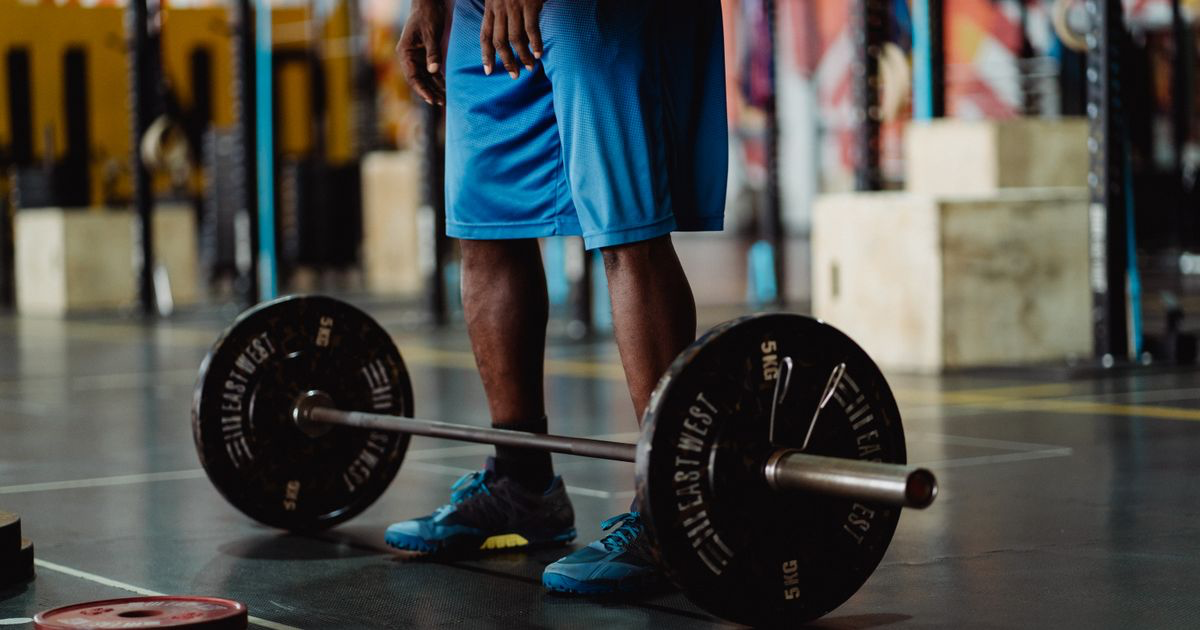
- Bar over mid-foot. Stand with the bar about an inch from your shins, positioned over the middle of your foot, feet hip-width apart.
- Hinge, then bend. Push your hips back to reach the bar, then bend your knees until your shins touch it. The hips move first, not the knees.
- Grip just outside your legs. Hands shoulder-width, arms straight and vertical, hanging naturally outside your knees.
- Set your back flat and chest up. Take the slack out of the bar, brace your core like you are about to be punched, and pull your chest tall so your spine stays neutral.
Your hips should sit higher than a squat but lower than a stiff-legged pull. Somewhere in between is your natural start.
How do you perform the deadlift with good form?
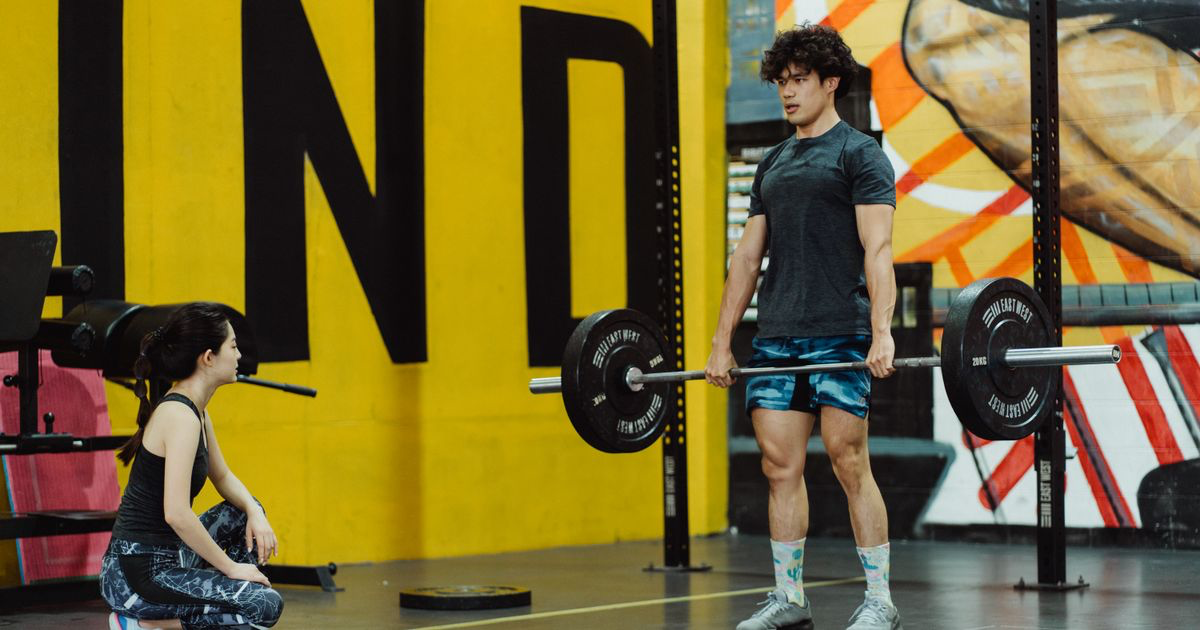
Push the floor away, keep the bar glued to your body, and stand up tall. The deadlift is a leg drive followed by a hip lockout, not a back lift.
The pull
Drive down through your whole foot and push the ground away, letting the bar travel straight up along your shins and thighs. Keep your chest up and your back flat. The bar should stay in contact with your legs the entire way, never drifting out in front of you.
The lockout
As the bar passes your knees, drive your hips forward to stand fully upright. Squeeze your glutes at the top, but do not lean back or overextend your spine. You are standing tall, not bending backward.
Then reverse it. Push your hips back first, and once the bar clears your knees, bend them to lower it. Control the way down; do not just drop it unless you are lifting very heavy.
What are the most common deadlift mistakes?
Almost every deadlift issue traces back to the same few faults. Fix these and your back thanks you.
- Rounding the lower back. The number one cause of tweaks. Brace hard and keep the spine neutral.
- The bar drifting away from you. A bar out in front turns the lift into a back extension. Keep it against your legs.
- Turning it into a squat. Hips too low and knees too far forward wastes your strongest muscles. Hinge more.
- Yanking the bar. Jerking a loose bar off the floor spikes force on your spine. Take the slack out first, then pull smoothly.
If a weight forces your back to round, it is too heavy. Reset the load and let steady progressive overload build it back safely.
How do you progress your deadlift over time?
You add strength by beating your last pull, which is impossible if you cannot remember what it was. The deadlift is heavy and taxing, so most people train it once a week, which makes tracking even more important. Miss a detail and a whole week of progress is a guess.
Because the deadlift is demanding, small, steady jumps work best. Linear progression suits it well for beginners: add 5 to 10 pounds each session while your form holds, then switch to slower double progression once the jumps stall.
To track real strength without a risky one-rep max attempt, drop your best set into the one rep max calculator and watch your estimated 1RM climb over the months.
Where should you log your deadlift numbers?
Deadlift progress depends entirely on tracking, and the tool you choose decides whether you keep it up. You only pull heavy once a week, so a forgotten number costs you a full training cycle.
Here is how the common options compare:
| Physical notebook | Notes app | Traditional gym app | Gym Note Plus | |
|---|---|---|---|---|
| Logging speed | Fast | Fast | Slow, many taps | Fast, plain text |
| Data visualization | None | None | Charts | Automatic charts |
| Flexibility | Total | Total | Rigid fields | Total, free text |
| Searchability | Flip pages | Scroll and search | Per exercise | Instant, per exercise |
A notebook or notes app is fast to write in but slow to read back. A rigid gym app charts your numbers but makes every set a tapping chore. The best option keeps the speed of plain text while pulling up last week's deadlift instantly.
A simple deadlift starting plan
- Warm up in stages. Do 2 to 3 progressively heavier sets before your working weight to groove the hinge. Our guide on how to warm up before lifting weights covers the full ramp.
- Start lighter than you think. Master the setup and bar path with a weight you could pull for 10 clean reps.
- Log every working set as you rack it. One line, like "deadlift 225 3x5," written during your rest.
- Add weight while form holds. Put 5 to 10 pounds on next session as long as your back stays flat.
- Review before you pull. Check last session's number so you know the exact target to beat.
Stick with this for a month and the deadlift becomes your most reliable strength builder.
Keep logging the way you already do
If you already type your sets into your phone's notes or write them in a notebook, you have solved the hard part: you are recording. The gap is turning that raw text into progress you can actually see.
Gym Note Plus does that automatically. You log in plain text, the same fast way you already type "deadlift 315 5x3," and it organizes every set by exercise and date. Your deadlift history turns into a chart, and last week's top set is one tap away instead of buried in a scroll.
Already have workouts sitting in Apple Notes? Paste them into the free notes to workout translator and watch that text become structured, searchable history with charts.
- Log at notes-app speed. No menus, no set-by-set tapping.
- Watch your deadlift climb. Automatic charts show when to add weight.
- Find any past pull instantly. Every lift is grouped by exercise, not lost in a note.
The deadlift rewards patience and punishes guessing. Get the hinge right, then log the number the moment the bar hits the floor.
Frequently Asked Questions
What muscles does the deadlift work?
The deadlift works the entire posterior chain and more: the erector spinae along the spine, the gluteus maximus, the hamstrings, and the quadriceps, plus the forearms for grip and the core for bracing. Research shows the erectors and quads drive the initial pull off the floor while the glutes and hamstrings power the lockout. This full-body demand is why the deadlift builds so much strength.
Is the deadlift bad for your back?
The deadlift is not inherently bad for your back and can actually strengthen it when performed correctly. Back pain from deadlifting almost always comes from rounding the lower spine or letting the bar drift away from the body under load. Keeping a flat, braced back with the bar close to your legs makes the lift safe, and starting with a manageable weight lets you groove that position.
How do I know if my deadlift form is correct?
Correct deadlift form means the bar travels in a straight vertical line, stays in contact with your legs, and your lower back stays flat rather than rounding. Your hips and shoulders should rise together, not your hips shooting up first. Filming a set from the side is the fastest way to check: look for a neutral spine, a close bar path, and a tall, controlled lockout.
How often should I deadlift?
Most lifters deadlift once or twice per week because it is heavy and taxing on the whole body and central nervous system. Once a week is plenty for many beginners and intermediates to keep progressing. Because you pull heavy so infrequently, tracking every session matters more here than on lighter lifts, so you can add weight deliberately instead of guessing.
Should beginners deadlift?
Yes, beginners can and should deadlift, because it teaches the hip hinge, one of the most useful movement patterns in and out of the gym. Start with a light weight or even an empty bar to master the setup and bar path before adding load. Beginners often progress fastest by adding a small amount of weight each session while their form holds, then slowing the jumps once they stall.
Final Takeaways
- The deadlift is a near full-body lift. It trains the back, glutes, hamstrings, quads, grip, and core.
- Set up over mid-foot, hinge your hips back, and set a flat, braced back before you pull.
- Push the floor away and keep the bar close, standing tall at the top without leaning back.
- Never let your lower back round. If a weight forces it, the load is too heavy.
- Log every set the moment the bar lands, so your once-a-week pull always moves forward.

Josh Ibbotson
Josh is the creator of Gym Note Plus, building tools that make workout tracking as simple as taking notes.
Ready to try it out?
Download Gym Note Plus and start tracking your workouts the way you want.
Download on App Store