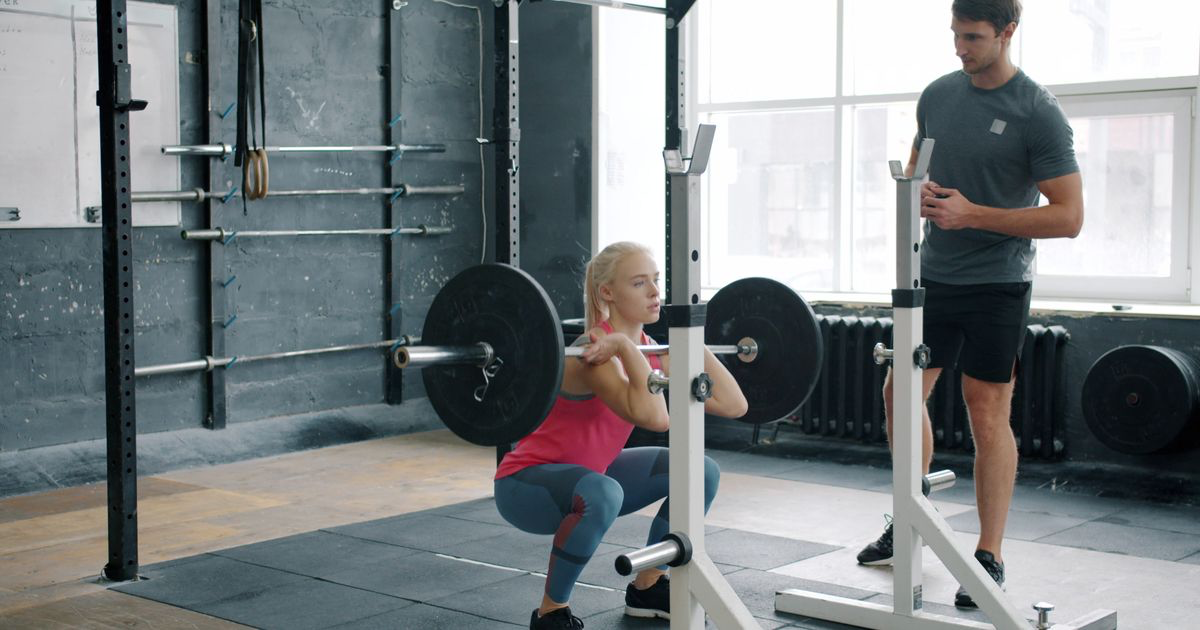


How to Warm Up Before Lifting Weights
Quick answer: Warm up before lifting with five minutes of easy cardio, a few dynamic mobility drills, then two to four ramp-up sets on your first exercise, climbing from roughly 40% to 90% of your working weight. Skip long static stretches before heavy sets, and do not log warm-up sets as working sets.
The bar is loaded, you have twelve minutes before the rack gets claimed, and the honest question is whether the warm-up is worth any of them.
It is. But not the version most people picture, where you sit on a mat pulling your foot to your backside for a minute a side.
The warm-up that helps is short, specific, and mostly consists of doing the lift you are about to do, lighter.
Does warming up before lifting actually do anything?
Yes, and the effect on performance is well documented. In a systematic review with meta-analysis published in the Journal of Strength and Conditioning Research, Fradkin and colleagues examined 32 high-quality studies and found that warming up improved performance in 79% of the outcome measures examined, with little evidence that warming up was ever detrimental.
That is the case for doing something. It is not the case for doing everything.
The nuance is what kind of warm-up. Behm and colleagues, writing in Applied Physiology, Nutrition, and Metabolism, found a clear dose-response for static stretching: holds of 60 seconds or longer per muscle group produced a 4.6% performance decline, while holds under 60 seconds cost only 1.1%.
So static stretching is not banned. It is just something you keep brief, and follow with dynamic work before you touch a heavy bar.
What should a gym warm-up actually include?
Three layers, in order, and each one is shorter than you think.
General warm-up (about five minutes). Bike, rower, or brisk incline walk. The goal is raised core temperature and blood flow, not fatigue. You should be able to hold a conversation at the end of it.
Dynamic mobility (about three minutes). Movement through range, not held positions. Leg swings, hip circles, bodyweight squats, band pull-aparts, arm circles, cat-cow. Ten to fifteen reps each of whatever the day's lifts demand.
Specific ramp-up sets (about five minutes). The actual lift, loaded progressively. This is the part that matters most and the part most commonly skipped.
Match the mobility work to the session. Squat day gets ankles and hips. Press day gets thoracic spine and shoulders. Running through a full-body routine before a session that only trains your back is time you will eventually stop spending.
How many warm-up sets should you do before a heavy lift?
Two to four on your first exercise, then one or none on everything after it. Once your chest is warm from bench pressing, the incline dumbbell press that follows does not need its own ramp from zero.
Here is a practical ramp for a 100kg working set of five:
| Set | Load | Reps | Purpose |
|---|---|---|---|
| Empty bar | 20kg | 10 | Groove the pattern |
| Warm-up 1 | 40kg | 5 | Blood flow, technique |
| Warm-up 2 | 60kg | 3 | Get used to the load |
| Warm-up 3 | 80kg | 2 | Nervous system primer |
| Warm-up 4 | 90kg | 1 | Final rehearsal |
| Working set | 100kg | 5 | The set that counts |
Reps go down as weight goes up. A warm-up set of eight at 80% is not a warm-up, it is a working set you have to recover from.
The heavier your top set, the more ramp steps you need. A 60kg bench needs two warm-up sets. A 160kg bench needs five.
If you want the percentages worked out from a set you have actually done rather than a number you half-remember, plug your best recent set into the one rep max calculator and build the ramp from there. Our guide to estimated 1RM explains what those numbers do and do not mean.
Should you log your warm-up sets?
Log them as warm-ups or not at all, but never mixed in with your working sets. This is the mistake that quietly ruins tracking data.
If you write squat 60kg 5, 80kg 3, 100kg 5, 100kg 5, 100kg 5 and something later treats all five entries as working sets, your average intensity drops, your volume number inflates, and your progress chart shows a lift that keeps getting lighter every time you add warm-up steps.
Two approaches work.
Skip them entirely. Most lifters do this, and it is fine, because warm-ups are prescribed by the working weight rather than tracked for progress.
Or mark them explicitly, with a w or a separate line:
28 Jul
Squat
  w: 60x5, 80x3, 90x1
  100kg 5,5,5
Bench 80kg 8,8,7
The second version is worth it if you are running heavy singles or coming back from a layoff, where the ramp itself tells you something about how the day is going.
Whichever you choose, be consistent. A log that sometimes includes warm-ups and sometimes does not is worse than one that never does. Our guide on how to write down your workouts covers the wider conventions, and workout shorthand explained decodes the notation.
What about stretching after you lift?
After the session is where long static stretching belongs. The performance cost documented by Behm and colleagues applies to stretching immediately before the effort, not hours later or after training.
If mobility is a genuine limiter for you, and for many people ankle or hip range is the thing capping squat depth, the fix is consistent work at the end of sessions or on rest days, not thirty seconds of desperate hamstring pulling before your first set.
A cool-down does not have to be elaborate. Five minutes of easy walking and two or three stretches for whatever felt tight. That is enough, and unlike the pre-lift version, there is no downside.
A simple starting plan
- Set a twelve minute warm-up budget. Five general, three dynamic, five specific. Enough that you will actually do it, short enough that you will not skip it.
- Write your ramp sets into the plan, not the log. Decide the loads before you get to the rack so you are not doing percentage maths mid-session.
- Ramp only your first exercise properly. Everything after it gets one light feeler set at most.
- Move long static stretches to the end of the session. Under 60 seconds per muscle beforehand if you want them at all, followed by dynamic work.
- Keep warm-ups out of your working set data. Either omit them or tag them clearly, and do it the same way every session.
Keeping the ramp separate from the record
If you log in Apple Notes or a paper notebook, warm-ups are easy to write and impossible to filter. Everything is one block of text, so the only way to exclude them later is to read every line and remember which was which.
That habit is still the fastest way to capture a session. Nothing beats typing while you rack the bar.
Gym Note Plus keeps the typing and adds the structure your notes app cannot.
- Type your sets as plain lines and they become structured, individually stored sets.
- Working sets drive your progress charts, so a heavy ramp does not distort the trend.
- Volume and estimated one rep max are calculated from the sets that actually count.
- Existing notes import, so past sessions come along too.
You keep the shorthand. It keeps the difference between preparation and performance.
A warm-up is rehearsal, not a workout. It should cost you twelve minutes and zero sets of your actual training.
Frequently Asked Questions
How long should a warm-up before weightlifting be?
A warm-up before weightlifting should take about ten to fifteen minutes: roughly five minutes of general cardio, three minutes of dynamic mobility, and two to four progressively heavier ramp-up sets on the first exercise. Longer warm-ups mainly add fatigue, and shorter ones tend to skip the specific ramp sets, which are the most valuable part.
Should you stretch before lifting weights?
Long static stretches before lifting weights are best avoided. Behm and colleagues found in Applied Physiology, Nutrition, and Metabolism that static stretches held 60 seconds or longer per muscle group reduced subsequent performance by 4.6%, while holds under 60 seconds cost only 1.1%. Use dynamic mobility drills before lifting and save longer static stretching for after the session.
Do warm-up sets count towards your total volume?
Warm-up sets should not count towards training volume. Volume calculations are meant to reflect hard, stimulating sets, and warm-up sets are performed well below the intensity needed to drive adaptation. Including them inflates weekly set counts and distorts progress tracking, which is why most lifters either omit warm-up sets from their log or tag them separately.
How many warm-up sets before a heavy squat?
A heavy squat generally needs three to five warm-up sets, starting with the empty bar and climbing in steps of roughly 20% of your working weight while reps drop from ten down to one. A lifter squatting 100kg might use 20kg, 40kg, 60kg, 80kg, and 90kg. Heavier working weights require more ramp steps, not heavier warm-up sets.
What is the best warm-up before lifting weights?
The best warm-up before lifting weights runs in three phases: about five minutes of easy cardio, about three minutes of dynamic mobility aimed at the day's lifts, then two to four ramp-up sets on the first exercise. The ramp-up sets matter most, because they rehearse the exact movement under load.
Is cardio a good warm-up for lifting?
Five minutes of easy cardio is a good general warm-up for lifting because it raises core temperature and blood flow, which is what the general phase is meant to achieve. It does not replace specific warm-up sets, since cycling does nothing to rehearse a bench press groove. Keep the cardio short and easy so it does not compete with the training session for energy.
Final Takeaways
- Warm up, but keep it to about twelve minutes. General cardio, dynamic mobility, then specific ramp sets.
- Ramp sets are the important part. Two to four on your first lift, reps falling as load climbs.
- Skip long static stretches beforehand. Under 60 seconds if at all, and follow with dynamic movement.
- Only ramp your first exercise properly. Everything after it is already warm.
- Keep warm-ups out of your working set data, or tag them consistently, so your progress charts stay honest.

Josh Ibbotson
Josh is the creator of Gym Note Plus, building tools that make workout tracking as simple as taking notes.
Ready to try it out?
Download Gym Note Plus and start tracking your workouts the way you want.
Download on App Store