
Which Muscles Benefit Most From Stretch-Mediated Hypertrophy?
Quick answer: The evidence is strongest for the hamstrings, triceps long head, quadriceps and calves, where training in a lengthened position produced clearly greater growth than training short. It is weaker and more mixed for the biceps, and there is no equivalent trial isolating the chest. Muscles that cross two joints appear to gain the most.
Stretch-mediated hypertrophy gets discussed as if it applies evenly to every muscle you own. Train long, grow more, everywhere.
The studies do not say that. They say it loudly for some muscles, quietly for others, and not at all for a couple that get talked about the most.
Worth knowing which is which before you rebuild your programme around it.
What counts as training a muscle at long lengths?
Two things qualify, and they are not the same.
Choosing an exercise that loads the stretched position. A seated leg curl stretches the hamstrings more than a lying one. An overhead triceps extension stretches the long head more than a pushdown. Same muscle, different amount of length under load.
Doing partial reps in the bottom half. Lengthened partials, where you work only the stretched portion of the range rather than the full one.
Most of the evidence below comes from the first kind, which is also the easier one to apply. Our stretch-mediated hypertrophy explainer covers the mechanism itself in more depth.
Do the hamstrings benefit from stretch-mediated hypertrophy?
Yes, and this is the clearest result in the whole literature.
Maeo and colleagues had 20 adults train one leg with seated leg curls and the other with prone leg curls for 12 weeks, matched for load and volume. The seated position, which flexes the hip and lengthens the hamstrings, produced a 14.1 percent increase in whole hamstring volume against 9.3 percent for prone.
The split by individual muscle is the interesting bit. The biceps femoris long head, which crosses both the hip and knee, grew 14.4 percent seated against 6.5 percent prone. The short head, which only crosses the knee and therefore is not lengthened any differently by hip position, showed no difference at all: 10 percent versus 9 percent.
That single contrast is the best evidence there is that the mechanism is really about muscle length rather than something about the exercise.
Do the triceps benefit?
Yes, for the long head specifically.
A 12-week study by Maeo and colleagues had 21 adults train cable elbow extensions with one arm overhead and the other in a neutral position. The overhead arm, where the long head is stretched across the shoulder, showed:
- Long head volume up 28.5 percent, versus 19.6 percent neutral
- Lateral and medial heads up 14.6 percent, versus 10.5 percent
- Whole triceps up 19.9 percent, versus 13.9 percent
Note that this happened despite lighter absolute loads being used in the overhead position. The stretch was worth more than the weight on the stack.
Same pattern as the hamstrings: the head that crosses two joints benefits most, and the ones that cross one still benefit somewhat.
Do the quadriceps benefit?
Yes, though the effect is smaller and more regional.
Pedrosa and colleagues randomised 45 untrained women across four knee extension conditions for 12 weeks: full range, a lengthened partial, a shortened partial, and a varied condition. The lengthened partial group matched or beat the full range group, particularly in the distal quadriceps, while the shortened partial group lagged behind both.
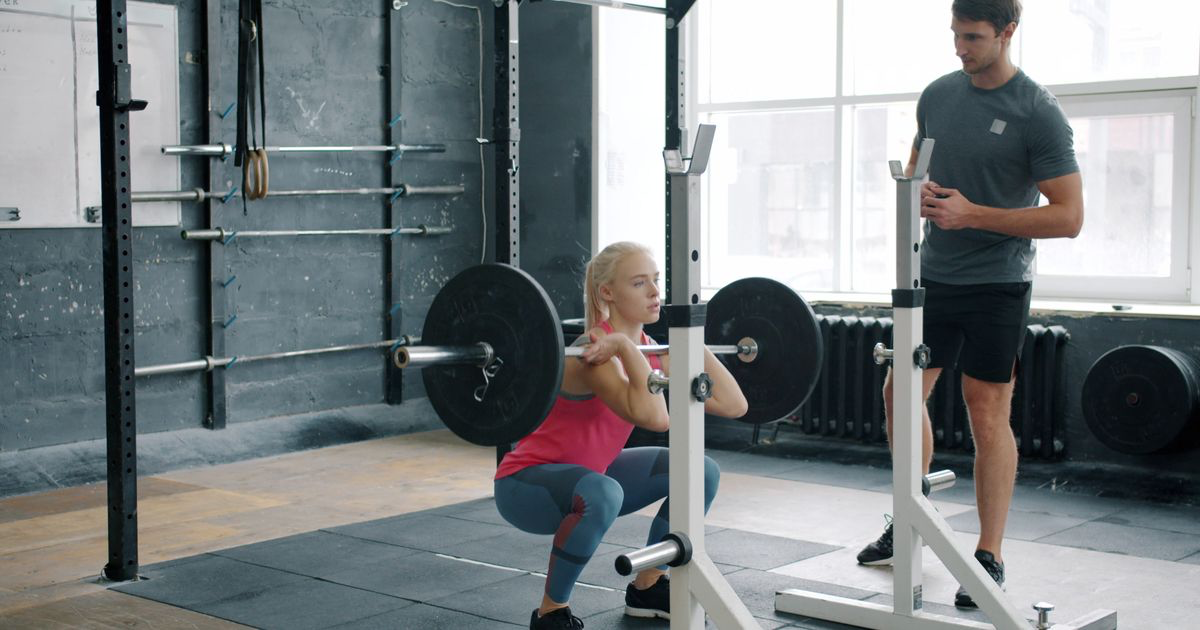
The practical version: knee extensions and squats that reach deep knee flexion are worth more than the ones that stop halfway. Half-repping the bottom out of a squat is not a neutral choice.
Do the calves benefit?
Yes. Kassiano and colleagues had 42 young women perform 8 weeks of calf raises in either full range, a lengthened partial or a shortened partial. Training at longer muscle lengths produced the greatest gastrocnemius thickness gains.
Which is a polite way of saying that bouncing through half-range calf raises has been the wrong approach the entire time.
Do the biceps benefit? This is where it gets murky
The evidence here is genuinely mixed, and you should be suspicious of anyone who says otherwise.
The theory is clean. The biceps long head crosses the shoulder, so training with the shoulder extended, as in an incline curl or a Bayesian cable curl, should lengthen it more than a preacher curl, which pins the shoulder flexed and loads the bottom of the rep hardest.
But a 2026 study in Frontiers in Physiology by Larsen and colleagues put this to a within-participant test. Twenty-four untrained men trained one arm at their individualised peak shoulder extension angle and the other at neutral, for 10 weeks with matched resistance profiles. The result was essentially a tie: 7.2 percent distal thickness in the extended arm against 6.3 percent neutral, and 7.9 percent proximal against 9.2 percent. The authors reported no meaningful differences between conditions.
Their design controlled for resistance profile, which most previous curl comparisons did not. When you remove the confound of the exercises simply being harder in different places, the shoulder angle effect largely disappears.
So the biceps look like a real exception rather than a gap in the data.
What about the chest?
There is no chest equivalent of the Maeo hamstring or triceps trials. Nobody has run a matched within-participant study isolating pectoralis major growth at long versus short lengths.
What exists is indirect: general range-of-motion research that consistently favours including the lengthened portion, plus the mechanistic argument that deep flyes and a full-depth bench press load the pecs in a stretched position.
That is a reasonable basis for doing deep chest work. It is not the same quality of evidence as the hamstring result, and treating it as if it were is how good findings turn into gym folklore.
Which muscles benefit most, ranked by evidence
| Muscle | Evidence quality | Direction of finding | Practical move |
|---|---|---|---|
| Hamstrings | Strong | Clearly favours long | Seated over lying leg curls, RDLs to full stretch |
| Triceps long head | Strong | Clearly favours long | Overhead extensions over pushdowns |
| Calves | Good | Favours long | Full stretch at the bottom, no bouncing |
| Quadriceps | Good | Favours long, regionally | Deep knee flexion, full-range extensions |
| Chest | Indirect only | Presumed, untested directly | Deep flyes and full-range pressing |
| Biceps | Mixed | No clear effect when controlled | Curl variation matters less than assumed |
The pattern worth carrying: biarticular muscles gain the most, because changing the position of the second joint genuinely changes their length. Muscles crossing one joint have less room for this to matter.
A simple starting plan
- Swap your leg curl. If you use a lying leg curl, move to a seated one. This is the single highest-confidence change on the list.
- Move one triceps exercise overhead. Replace a pushdown with an overhead cable or dumbbell extension. Keep the load lighter than feels right.
- Stop cutting range on calves and quads. Full stretch at the bottom of every calf raise and squat. No half reps, no bouncing.
- Leave your curls alone. Pick the curl variation your elbows tolerate and progress it. The shoulder angle argument is not settled.
- Give it eight weeks and check the numbers. Exercise swaps reset your loads, so you need a log to tell progress from restart.
Why this only works if you are tracking
Every change above resets a lift. Move to a seated leg curl and your working weight drops. Go overhead on triceps and it drops again. That is expected, and it is exactly why people abandon these swaps two weeks in, convinced they have gone backwards.
The only thing that tells you otherwise is a record of what you actually lifted.
Most lifters keep that record in a notes app, because typing Seated leg curl 45x12 between sets is faster than any menu. Nothing wrong with that as a capture method. It just never becomes a chart, so eight weeks later you are scrolling rather than comparing.
Gym Note Plus keeps the typing and adds the part that is missing:
- Write sets in plain language, no dropdowns and no exercise database to fight
- Seated and lying leg curls stay as separate tracked exercises, so a swap is visible rather than blurred
- Every exercise gets its own progress chart automatically
- Personal records are flagged as you hit them, including after an exercise change
- Your existing notes import, so you keep the history you have already written
If you want to see it work on your own data, paste a session into the free notes to workout translator.
The muscles that gain most from long-length training are the ones crossing two joints, because those are the only muscles whose length you can meaningfully change by moving something else.
Frequently Asked Questions
Do the biceps benefit from stretch-mediated hypertrophy?
The evidence for the biceps is mixed. A 2026 Frontiers in Physiology study trained one arm at peak shoulder extension and the other at neutral in 24 untrained men for 10 weeks with matched resistance profiles, and found no meaningful difference in elbow flexor thickness. Curl variations that lengthen the biceps long head do not appear to produce clearly greater growth once resistance profiles are controlled.
Do the triceps benefit from stretch-mediated hypertrophy?
Yes, particularly the long head. A 12-week trial by Maeo and colleagues found overhead cable elbow extensions produced 28.5 percent long head volume growth compared with 19.6 percent for the neutral arm position, and 19.9 percent versus 13.9 percent for the whole triceps. The overhead position lengthens the biarticular long head across the shoulder joint.
Does the chest benefit from stretch-mediated hypertrophy?
No study has directly compared pectoralis major growth at long versus short muscle lengths in the way hamstring and triceps trials have. The case for deep chest work rests on general range-of-motion research favouring the lengthened portion, plus the mechanical argument that deep flyes and full-depth pressing load the pecs while stretched. Treat it as plausible rather than demonstrated.
Do the quadriceps benefit from stretch-mediated hypertrophy?
Yes. Pedrosa and colleagues found that 12 weeks of knee extension training in a lengthened partial range produced equal or greater quadriceps hypertrophy than full range, especially in the distal region, while a shortened partial range produced the least. Reaching deep knee flexion in squats and leg extensions matters more than finishing the top half of the movement.
Do the hamstrings benefit from stretch-mediated hypertrophy?
Yes, and the hamstrings produce the clearest evidence of any muscle. Maeo and colleagues found the biceps femoris long head grew 14.4 percent with seated leg curls, which hold the hip flexed and the hamstring lengthened, against 6.5 percent with prone leg curls. The single-joint short head showed no difference between positions.
Do the lats benefit from stretch-mediated hypertrophy?
No trial has directly compared latissimus dorsi growth at long versus short muscle lengths. The lats cross the shoulder rather than two working joints in the way the hamstrings and triceps long head do, so the mechanical case is weaker. Favouring a full overhead stretch on pulldowns is reasonable, but it is not demonstrated.
Which muscles benefit most from training at long muscle lengths?
Biarticular muscles, which cross two joints, benefit most. The hamstrings and triceps long head show the largest and most consistent effects, because changing hip or shoulder position genuinely changes their length. The clearest demonstration is the biceps femoris long head growing 14.4 percent with seated leg curls versus 6.5 percent prone, while the single-joint short head showed no difference.
Final Takeaways
- Hamstrings and triceps long head are the strongest cases. Both come from well-controlled within-participant trials with large effect sizes.
- Biarticular muscles gain most. If a muscle crosses two joints, the second joint's position is a real training variable.
- Quads and calves benefit from range, not tricks. Stop cutting the bottom off the movement.
- The biceps case is weaker than its reputation. A controlled 2026 trial found no meaningful effect of shoulder angle.
- The chest case is untested. Deep pressing is still sensible; just do not cite evidence that does not exist.

Josh Ibbotson
Josh is the creator of Gym Note Plus, building tools that make workout tracking as simple as taking notes.
Ready to try it out?
Download Gym Note Plus and start tracking your workouts the way you want.
Download on App Store