


The 6 Best Hevy Alternatives in 2026 (Apps Like Hevy, Ranked)
Quick answer: The best Hevy alternatives depend on why you are leaving. Choose FitNotes for a genuinely free offline logger, Strong for the fastest tap-to-log interface, Boostcamp for ready-made programs, a plain notes app for total flexibility, a spreadsheet for full control, and Gym Note Plus if you want to log in plain text and still get automatic charts.
Hevy is a good app. That is worth saying up front, because most "alternatives" articles pretend the incumbent is terrible.
People usually leave it for one of three reasons: they hit a free-tier limit, they find the set-by-set tapping slower than just typing, or they never wanted a social feed in the first place.
Why do people look for a Hevy alternative?
The complaints cluster into four groups, and which group you are in determines which alternative fits.
- Free-tier limits. Hevy's free plan caps how many routines you can save and how far back your history goes. Those limits have changed over time, so check Hevy's own site for the current numbers before assuming.
- Logging friction. Tap the exercise, tap the set, tap the weight field, type, tap the reps field, type, tap check. That is fine for one set and grating for twenty.
- Rigid structure. Hevy expects you to build routines. If your training changes based on what equipment is free, fixed templates fight you.
- Social features. Some lifters want the feed and the followers. Others find it noise.
Be honest about which one is yours. Switching apps for the wrong reason means you switch again in three months.
The first group is worth a note, because Hevy is far from the worst offender on it. Apps like Alpha Progression put charts and progression recommendations behind the paywall entirely, which is why the Alpha Progression alternatives come down to which gated feature you are replacing. Hevy's free tier is more generous than that, so a cap is not automatically a reason to leave.
What is the best free Hevy alternative?
FitNotes
FitNotes is the strongest choice if "free" is the requirement and you are on Android. It has no premium tier and no ads, which is genuinely rare.
It is a fast offline logger with clean progress graphs and no video demos, no AI suggestions, and no social feed. That minimalism is either exactly what you want or exactly what you will miss.
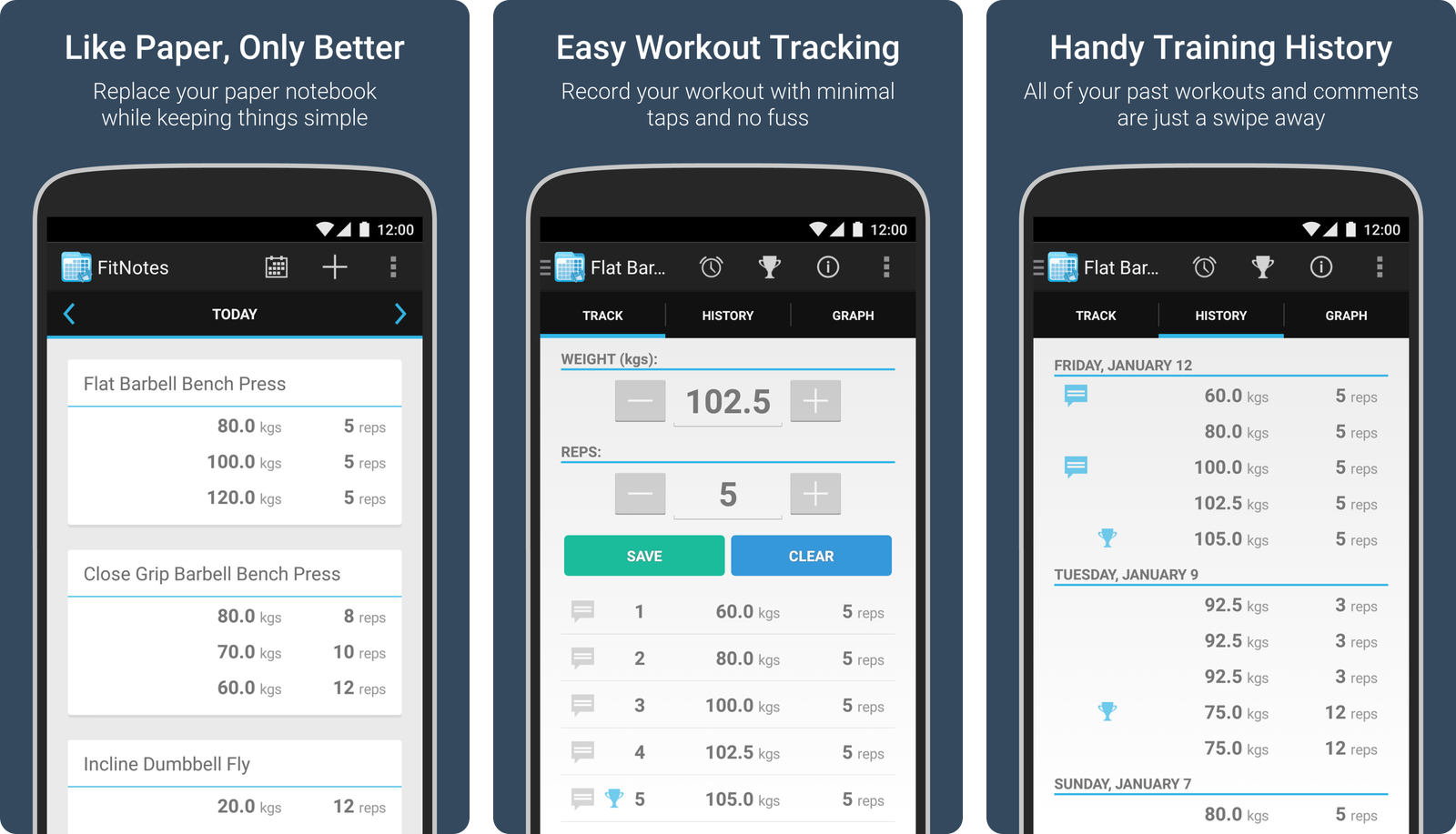
- Best for: Android lifters who want a free, permanent, offline log.
- Watch out for: No iOS version, and the interface looks its age.
A plain notes app
Your phone already has a workout tracker. Apple Notes, Google Keep, or any notes app handles logging faster than most dedicated apps, because there is nothing to navigate.
The tradeoff is total. You get infinite flexibility and zero analysis. Nothing charts your bench, nothing counts your weekly sets, nothing tells you last week's numbers without scrolling.
We covered the honest version of this in best notes app for workout tracking.
- Best for: Lifters who value speed above everything and are happy reading their own history.
- Watch out for: No trends, no charts, no set counts. Ever.
What is the fastest Hevy alternative for logging?
Strong
Strong has the most refined tap-to-log interface in the category. Previous weights auto-populate, the rest timer is well built, and the Apple Watch app is genuinely usable mid-session.
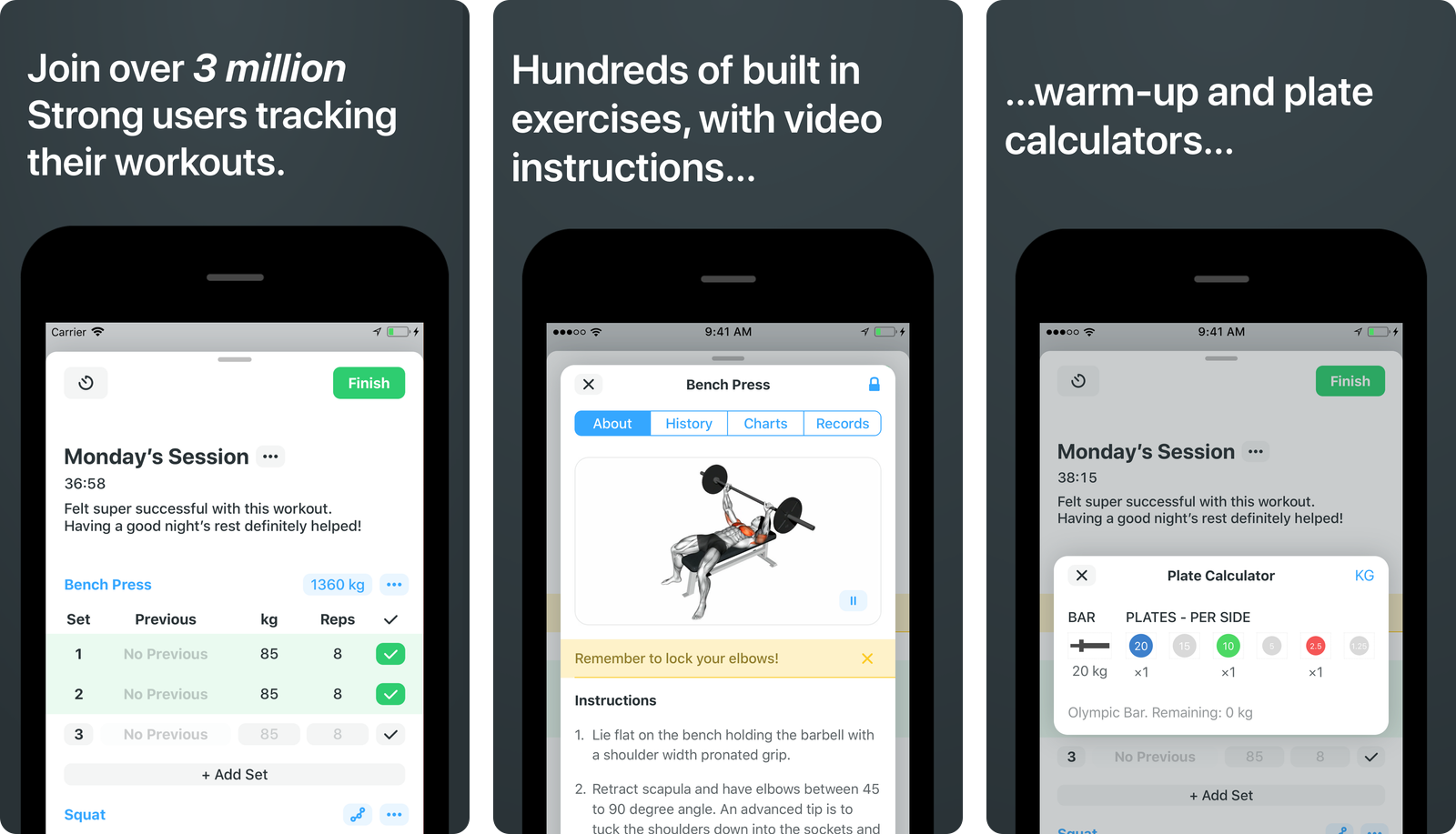
It is closer to Hevy than most alternatives, so switch to it for polish rather than for a different philosophy. The free tier is limited, and the paid tier is the real product.
If you are specifically weighing this one, we went deeper in Strong app alternatives.
- Best for: Lifters who like structured apps and want the best-executed one.
- Watch out for: Same fundamental model as Hevy, so it does not solve rigidity or tapping.
A spreadsheet
A spreadsheet is the most powerful and least convenient option. You get complete control over what you track and how it is calculated, and you get to build all of it yourself.
The killer problem is not the setup, it is the gym floor. Typing into cells on a phone between sets is miserable, and that friction is why most spreadsheet systems die by week four. Our take on making one work is in workout tracker spreadsheet.
- Best for: People who genuinely enjoy building systems and mostly log after the session.
- Watch out for: Phone usability. It is the reason spreadsheets get abandoned.
What if you want programs instead of just logging?
Boostcamp
Boostcamp is a different product category wearing similar clothes. Instead of building your own routine, you pick a known program (5/3/1, nSuns, GZCL, Greyskull and others) and it handles progression and tracking.
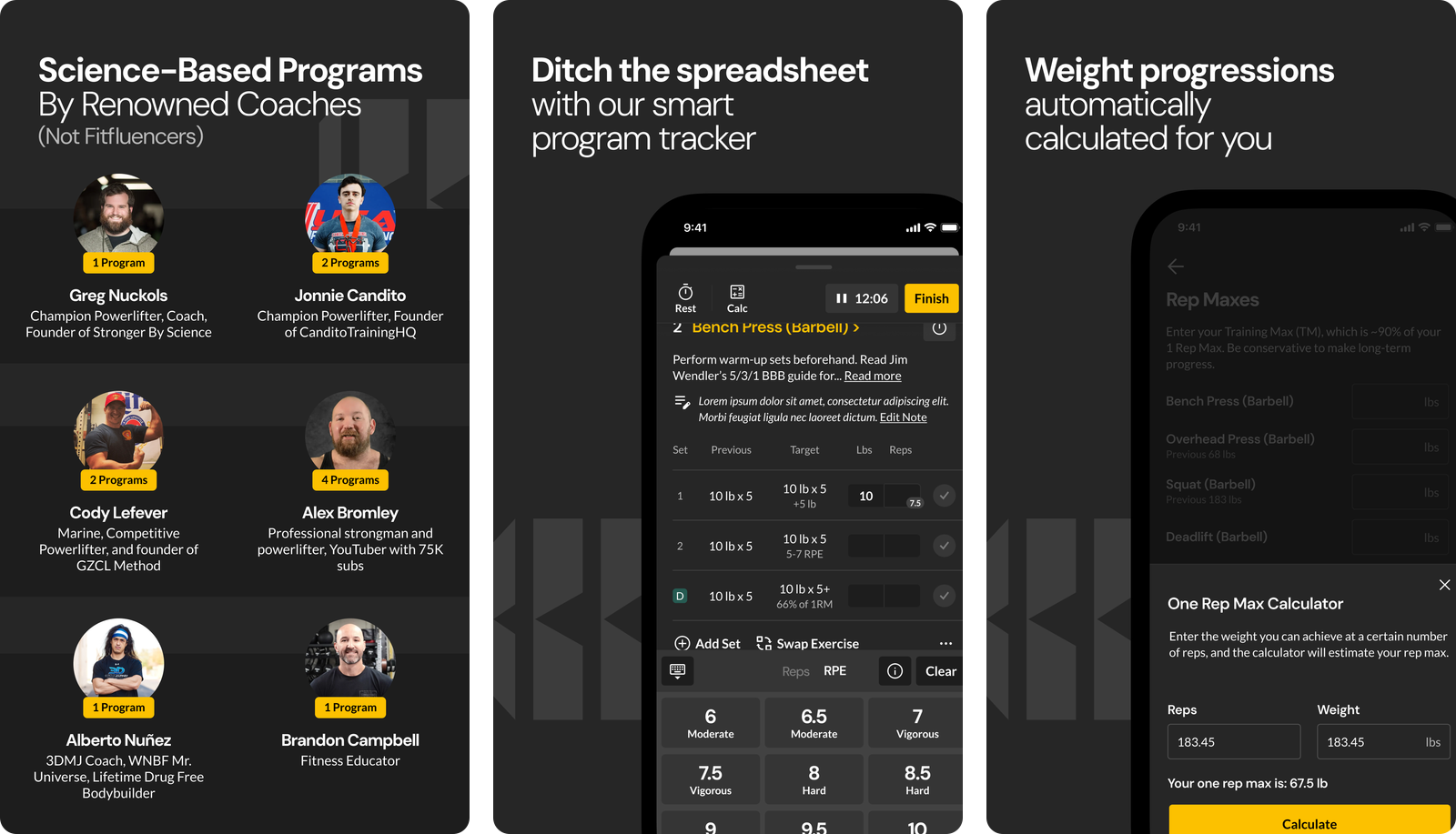
That is the right trade if your real problem is not the logging app but not knowing what to do. It is the wrong trade if you already program your own training, because following someone else's block is the whole point of the app.
- Best for: Lifters who want an expert program run for them.
- Watch out for: Less freedom if you like improvising or running your own template.
Where does Gym Note Plus fit?
Gym Note Plus exists for the group nobody else serves: people whose logging habit is already plain text.
If you left Hevy because typing beats tapping, the usual advice is to go back to a notes app and give up on charts. Gym Note Plus removes that tradeoff. You write your session the way you always have, and it parses the text into structured sets, per-exercise history, and charts automatically.
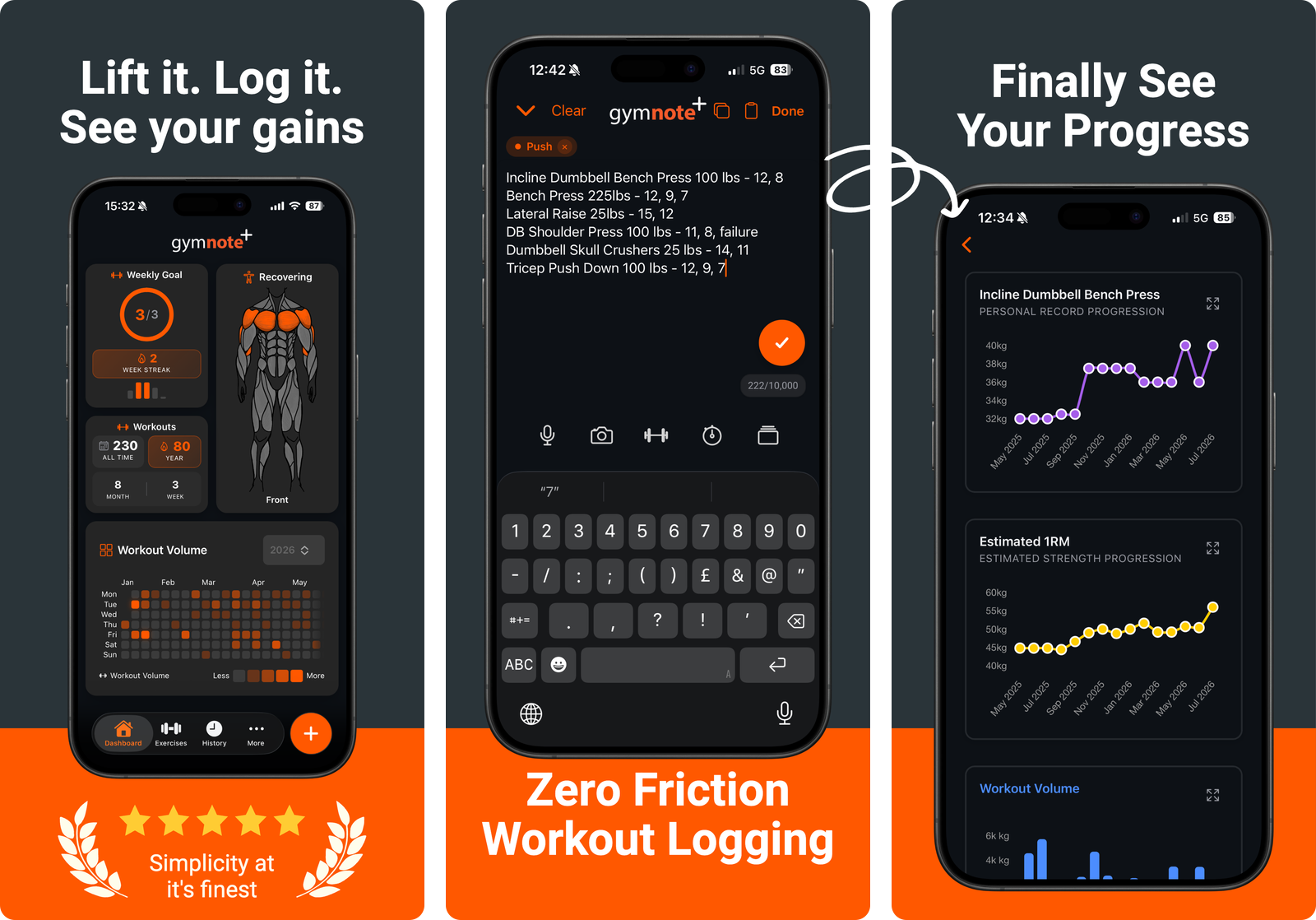
- Log at notes-app speed. Type
Bench 3x8 @ 135, move on. No fields, no menus, no set-by-set taps. - Keep your own shorthand. Your notation, your abbreviations, your free-text comments about how it felt.
- Get the analysis anyway. Charts, personal records, and searchable history build themselves from the text.
- No feed. There is no social layer to opt out of.
It is not the right pick for everyone. If you like picking exercises from a library and tapping through prescribed sets, a structured app like Hevy or Strong will suit you better, and that is a legitimate preference.
How do the options actually compare?
| Physical notebook | Notes app | Traditional gym app (Hevy, Strong) | Gym Note Plus | |
|---|---|---|---|---|
| Logging speed | Fast | Fast | Slow, lots of taps | Fast, plain text |
| Data visualization | None | None | Charts | Automatic charts |
| Flexibility | Total | Total | Rigid fields and templates | Total, free text |
| Searchability | None | Keyword only | Yes | Yes |
| Works offline | Yes | Yes | Usually | Yes |
| Free tier limits | None | None | Routines and history capped | Generous |
| Social feed | No | No | Often, sometimes optional | No |
For the wider field beyond Hevy's direct rivals, we ranked the best workout tracking apps in 2026 on the same four questions.
The pattern in that table is the whole market. Paper and notes apps buy speed and flexibility by giving up analysis. Structured apps buy analysis by giving up speed and flexibility. Almost every workout tracker sits on one side of that line.
A simple starting plan for switching
- Name the actual reason you are leaving. Free-tier limit, logging speed, rigidity, or social features. Write it down.
- Export your Hevy data first. Do this before you cancel anything. History you cannot get back is history you lose.
- Pick the alternative that solves your reason. Free tier means FitNotes. Speed means plain text. Programs mean Boostcamp.
- Run both for two weeks. Log every session in the old app and the new one. It is annoying and it prevents a bad switch.
- Judge it on week three. If you are still logging every session without dreading it, the switch worked.
If you are leaving because typing is faster
This is the most common reason people churn out of structured gym apps, and it is the one the market handles worst. The usual answer is "go back to Apple Notes", which trades your charts away entirely.
Gym Note Plus was built for exactly that trade. You keep logging in plain text, at the speed you already log, and it turns those lines into the trackable data a structured app would have given you.
Head to head, the split is clean. Hevy wins on structure: routines, a social feed, and an exercise library with demo videos, none of which Gym Note Plus offers. Gym Note Plus wins on input: no routine to build first, no menus per set, and no cap on how you phrase a session. If you liked Hevy's flow and only wanted a cheaper version, the picks above serve you better than we do.
You do not have to install anything to see whether it reads your style of shorthand. Paste a real session from your notes into the free notes to workout translator and see what it makes of it. If it parses your notes correctly, the app will too.
The best workout tracker is not the one with the most features. It is the one you still open on the fourth set of a bad Tuesday.
Frequently Asked Questions
What is the best free alternative to Hevy?
FitNotes is the best fully free alternative to Hevy for Android users, since it has no premium tier and no ads, offering offline logging and progress graphs at no cost. On iOS, a plain notes app is the most common free option, though it provides no charts or automatic analysis. Gym Note Plus offers plain-text logging with automatic charts.
Is Strong better than Hevy?
Strong and Hevy are close competitors with similar structured-logging models. Strong is generally regarded as having the more polished tap-to-log interface and Apple Watch experience, while Hevy has a stronger free tier and built-in social features. Neither solves the underlying friction of tapping through fields for every set, so switching between them is a preference choice. Our full Hevy vs Strong app comparison breaks down the pricing and free tiers.
How does Gym Note Plus compare to Hevy?
Hevy gives you a structured template flow, a social feed, and a large exercise database with built-in demos. Gym Note Plus has none of that. You type each session as plain text and it builds the charts and personal records from what you wrote. Pick Hevy for structure, Gym Note Plus for speed.
Can you use Apple Notes to track workouts instead of Hevy?
Yes, Apple Notes works as a workout tracker and is faster to write in than most dedicated apps, since there are no fields or menus. The limitation is that Apple Notes stores text and nothing else: it cannot chart your bench press over time, count weekly sets per muscle, or show you last week's numbers without manual scrolling.
Does Hevy have a free version?
Yes, Hevy has a free version. It limits how many routines you can save and how far back your workout history is accessible, with unlimited routines and full history reserved for Hevy Pro. Those limits have changed over time, so check Hevy's own website or the app for the current free-tier restrictions before deciding.
Does Hevy work offline?
Yes. Hevy logs workouts offline and syncs when your phone reconnects, which matters in basement gyms with no signal. The social feed, exercise demos and cloud backup all need a connection. If offline reliability is your main reason for leaving, FitNotes stores everything locally on Android and needs no account.
How do I export my data out of Hevy?
Hevy provides a data export through its web interface at hevy.com, typically as a CSV file containing your logged workouts. Export your history before cancelling a subscription or deleting the app, since access to older history may be restricted on the free tier. Most alternative trackers accept CSV import or let you keep the file as an archive.
What should I look for in a workout tracker?
Look for logging speed first, since an app you abandon tracks nothing. Then check whether it shows progress over time through charts or history, whether it fits how you actually train (fixed routines versus improvised sessions), whether your data is exportable, and whether the free tier covers your needs long term rather than for the first month.
Final Takeaways
- Diagnose before you switch. Free-tier limits, tapping friction, rigidity, and social features need different solutions.
- FitNotes is the free answer on Android. No tier, no ads, no catch.
- Strong solves polish, not philosophy. It is the same model as Hevy, executed slightly better.
- Boostcamp solves a different problem. Pick it if you want the program, not the logger.
- Export first, always. Get your history out before you cancel anything.

Josh Ibbotson
Josh is the creator of Gym Note Plus, building tools that make workout tracking as simple as taking notes.
Ready to try it out?
Download Gym Note Plus and start tracking your workouts the way you want.
Download on App Store