

The 6 Best Strong App Alternatives in 2026, Ranked & Compared
Quick answer: The best Strong app alternatives in 2026 are Hevy (generous free tier and social feed), FitNotes (free and simple on Android), Fitbod (AI-built workouts), Jefit (huge exercise library), and Gym Note Plus (log in plain text like notes, and it builds the charts). Pick the one whose logging speed you will actually keep using.
You downloaded Strong because everyone recommends it. Then you hit the wall: three routines on the free plan, a paywall for the rest, and a set-by-set tapping flow that slows you down between working sets.
Strong is a good app. It is just not the only one, and for a lot of lifters it is not the simplest.
Why look for a Strong app alternative?
Two reasons come up again and again: the paywall and the friction.
Strong's free plan caps you at 3 custom routines, and Premium runs $4.99 a month or $29.99 a year, per its App Store listing and a 2026 fitness-app pricing comparison. If you run more than a couple of programs, you are paying or juggling.
The bigger complaint is logging speed. Every set is a tap through menus. That friction adds up, and friction is the number-one reason tracking dies. A scoping review of lifestyle apps found a median of 70% of users quit within the first 100 days, reported by Kidman and colleagues.
So the alternative you want is not just "cheaper Strong". It is the one you will still open in three months.
What are the best Strong workout app alternatives?
Here are the trackers lifters switch to most, and who each one actually fits.
Hevy: the most popular like-for-like swap
Hevy is the closest thing to Strong, done a little cleaner. Clean interface, a social feed, and a genuinely usable free tier.
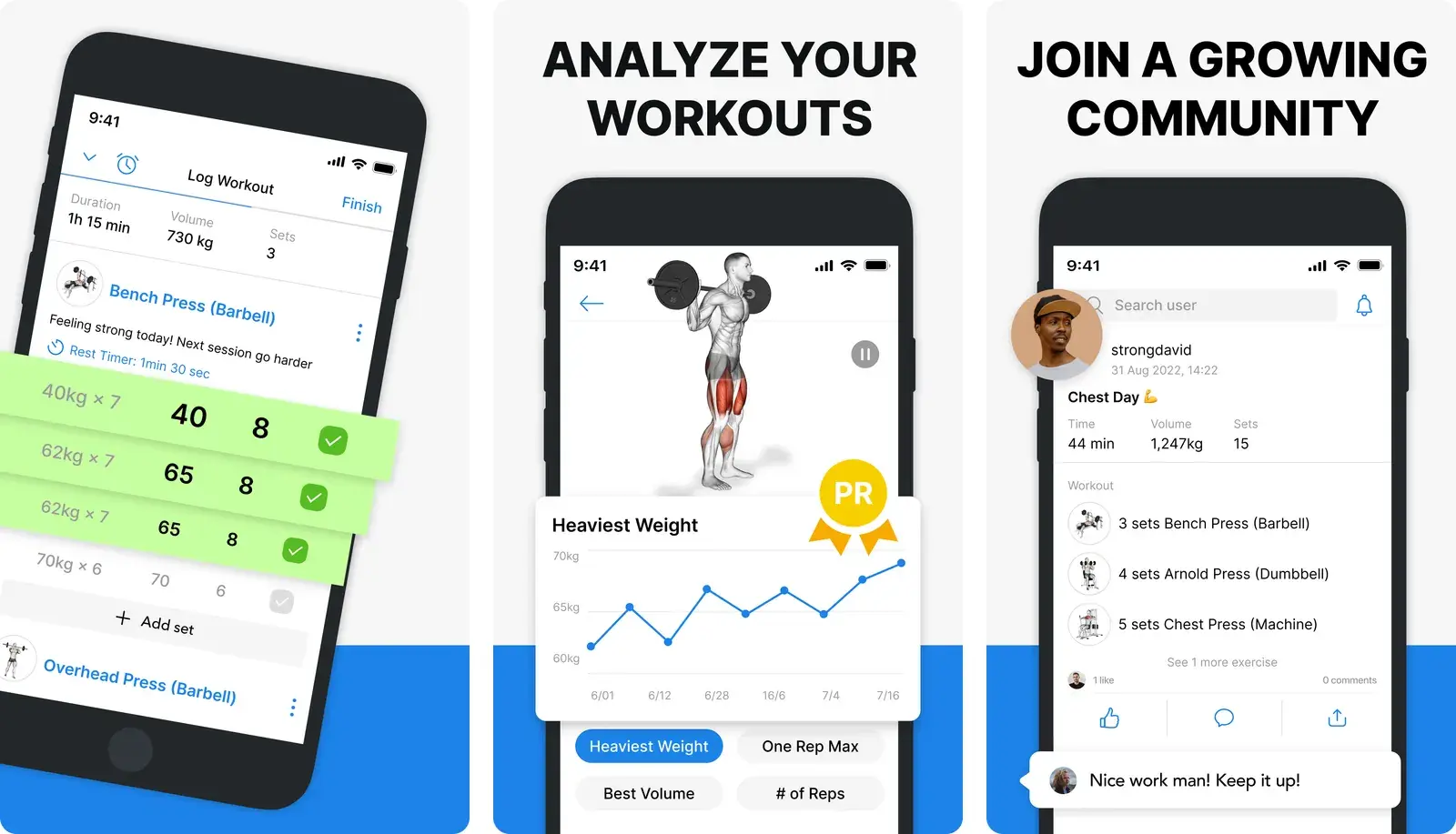
The free plan covers 4 routines, 7 custom exercises, and about 3 months of history, and Pro is $2.99 a month, $23.99 a year, or $74.99 for lifetime, per Hevy's pricing. That lifetime option is something Strong does not offer.
Pick Hevy if you want Strong's template-based flow with a friendlier free tier and a community feed.
FitNotes: free and no-nonsense on Android
FitNotes is the free favorite for Android lifters. No account, no ads, no subscription, just a fast log and clean charts.
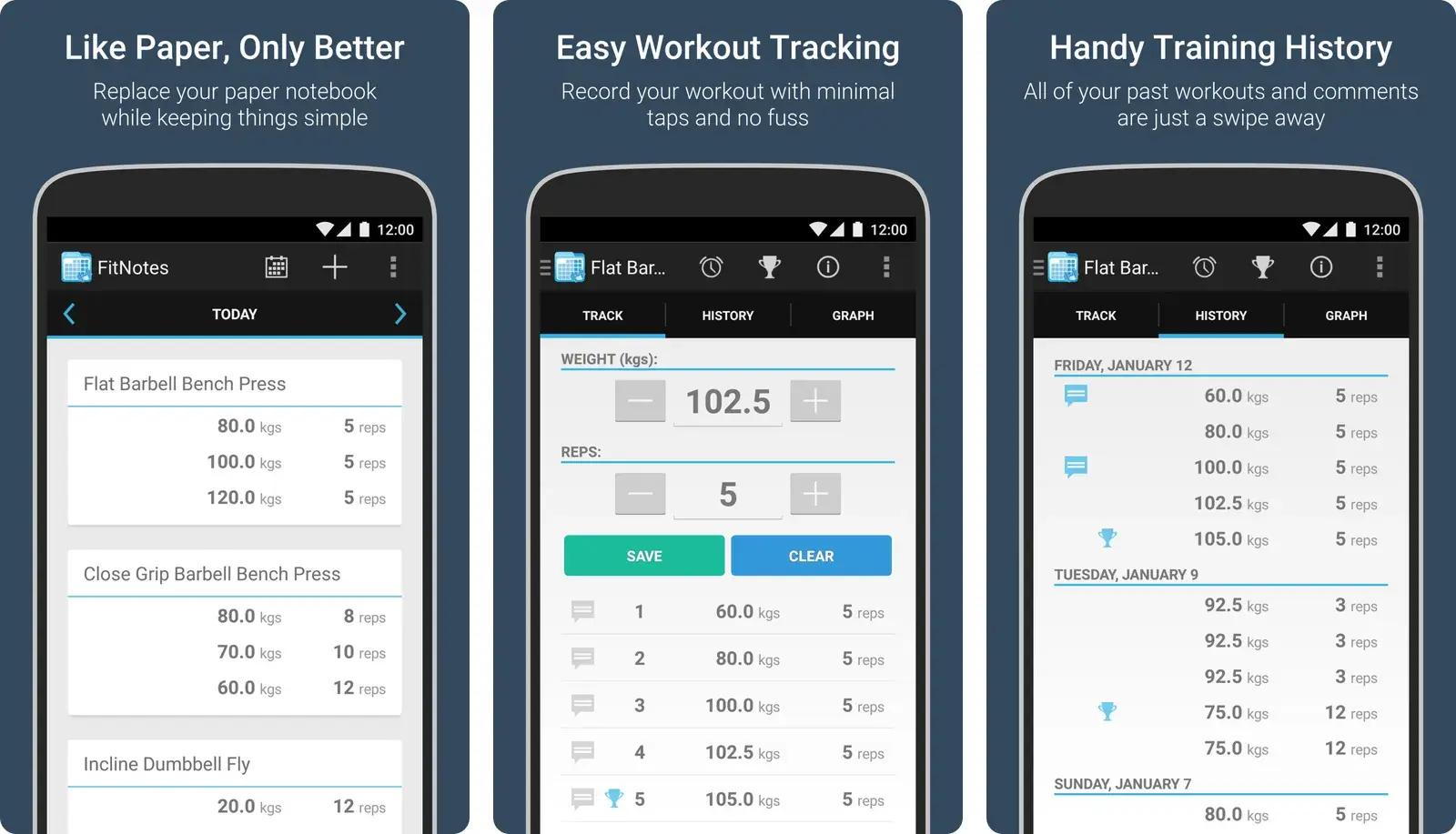
The catch: it is Android-first and the interface looks dated. If you are on iPhone, this one is not really for you. If you are on Android and want zero cost with zero fuss, it is hard to beat.
Fitbod: when you want the app to program for you
Fitbod builds the workout, you just show up. Its algorithm picks your next session based on recovery and muscle balance.
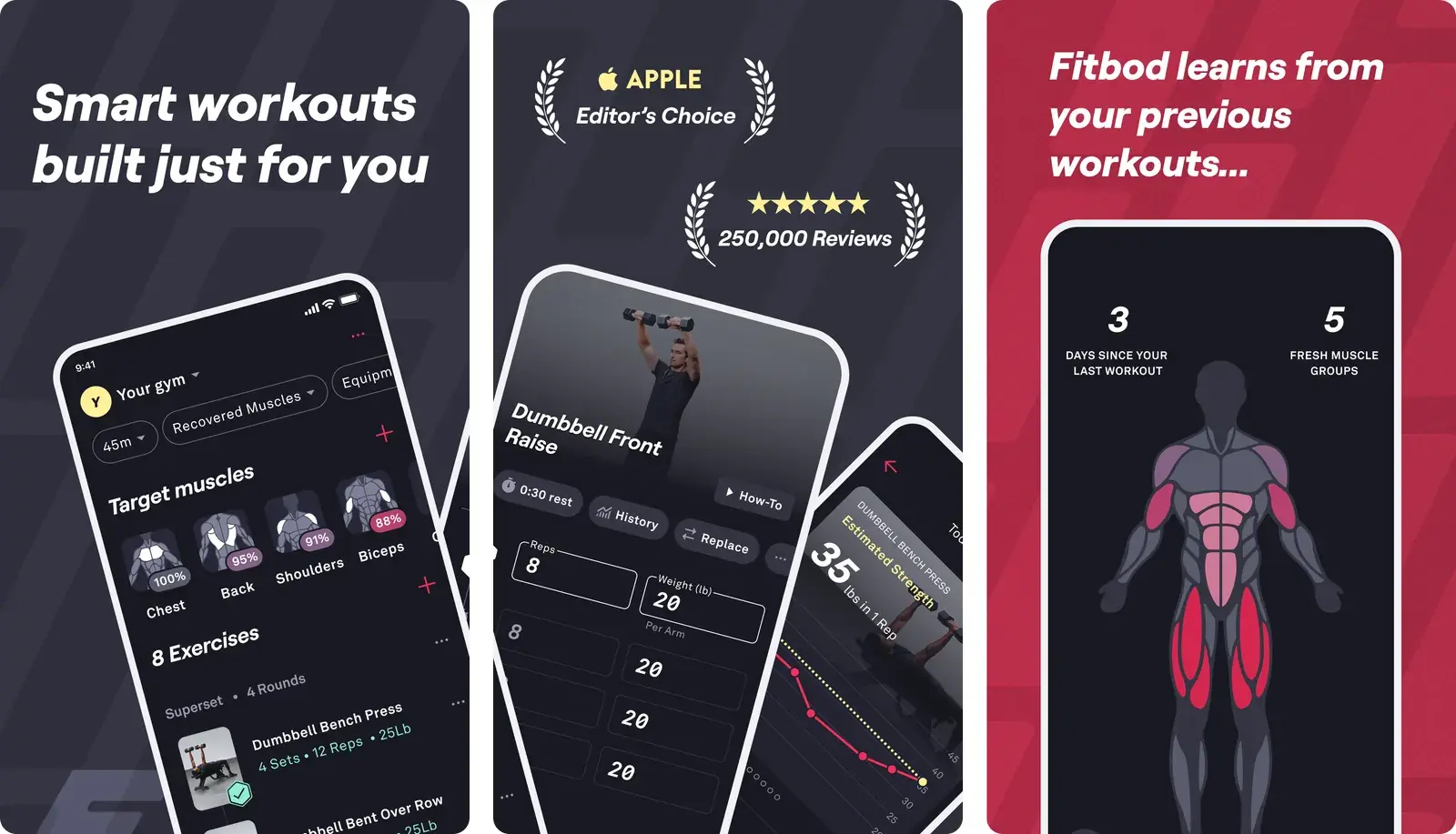
That is the opposite of a simple logger, and it is a paid subscription, so it fits people who want guidance more than speed. If you already know what you are doing, it can feel like overkill. Our Strong vs Fitbod comparison sets the two side by side.
Jefit and StrongLifts 5x5: library versus single program
Jefit has one of the biggest exercise libraries and detailed routines, with a free tier that carries ads. Good if you want structure and exercise demos. If the ads are what put you off, we rank the ad-free Jefit alternatives separately.
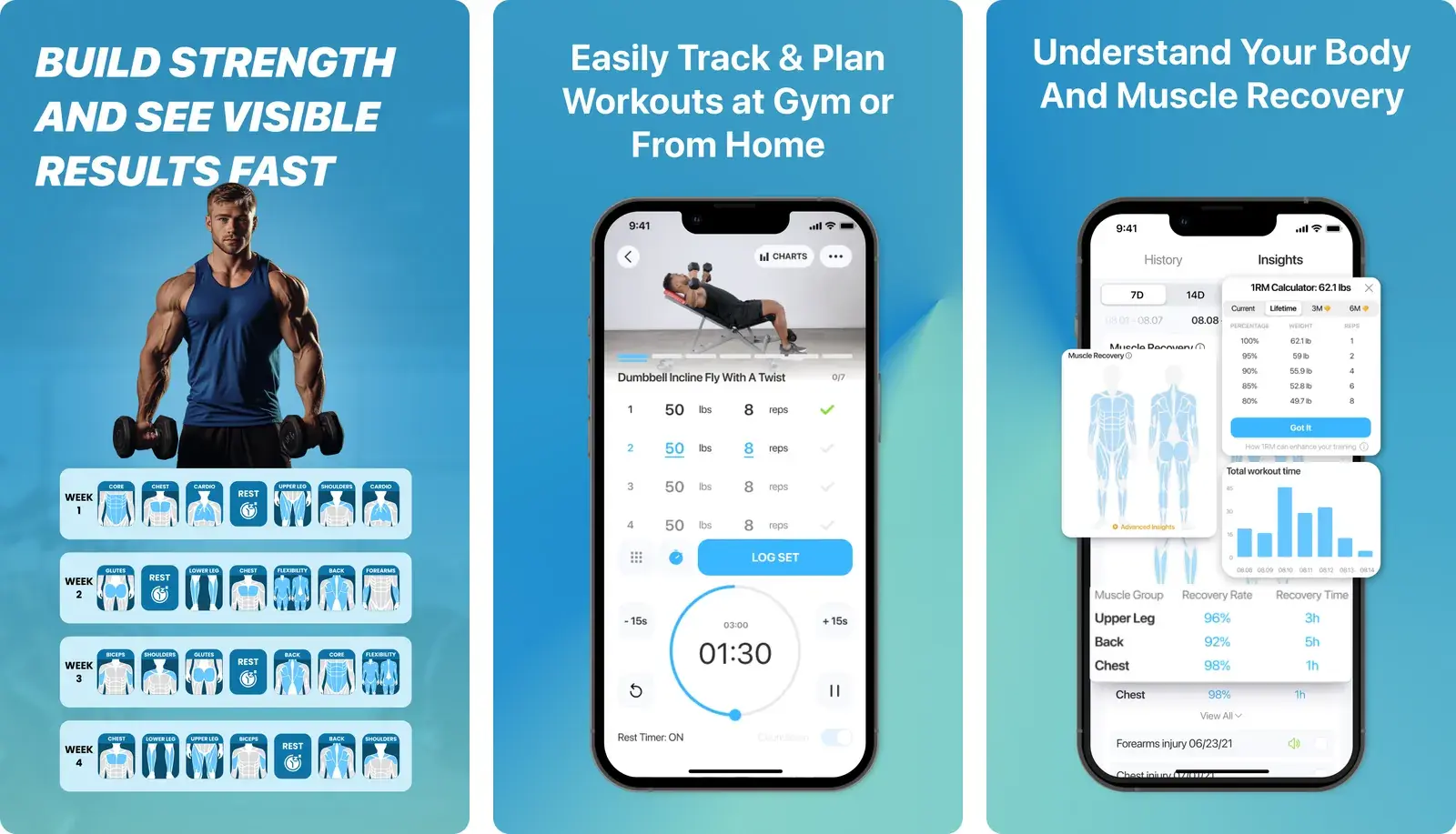
StrongLifts 5x5 is not a general tracker at all. It runs one program, and it runs it well. Great if 5x5 is your plan, not much use if it is not. Note that it is a different app from Strong despite the name, and it now requires a subscription to use, so if it was StrongLifts you meant we ranked the StrongLifts alternatives separately.
Gym Note Plus: log like notes, get the charts anyway
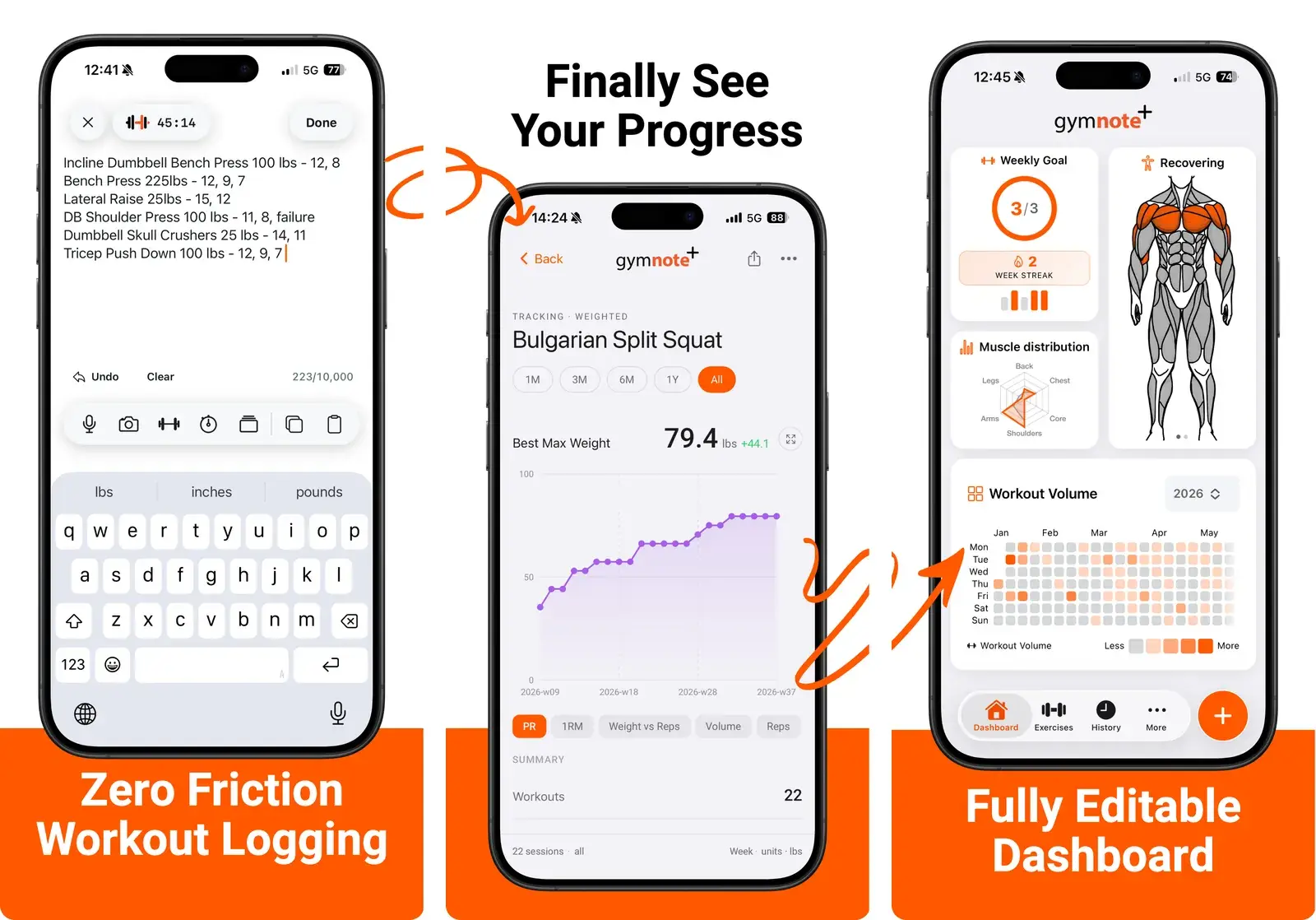
Gym Note Plus takes a different route entirely. Instead of tapping through menus, you type your workout as plain text, the way you would in your notes app, and it reads that text and builds the tracking for you. More on this below.
How do these approaches compare?
Step back from individual apps and the real choice is about how you log. Here is how the main approaches stack up, including the paper and notes methods most roundups ignore.
| Feature | Physical Notebook | Notes App | Traditional Gym App (Strong-style) | Gym Note Plus |
|---|---|---|---|---|
| Logging speed | Very fast | Very fast | Slow (menus, taps) | Very fast (plain text) |
| Data visualization | None | None | Strong | Strong |
| Flexibility | Total | Total | Rigid templates | Total (free-form text) |
| Searchability | None | Basic text search | Strong | Strong |
| Free-tier limits | None | None | Capped routines | Full logging |
| Distraction risk | None | Low | High (notifications) | Low |
For the full field rather than just Strong's rivals, see our ranking of the best workout tracking apps in 2026.
The traditional-app column is where Strong, Hevy, and Jefit all live: great data, slower input. The last column is the one that refuses to trade speed for data.
How do you choose the right Strong alternative?
Start from what made you leave Strong, not the feature list.
Pick Hevy if you liked Strong and just want a better free tier and a social feed.
Pick FitNotes if you are on Android and want it free forever with no fuss.
Pick Fitbod if you want the app to decide your workouts for you.
Pick a plain-text tracker like Gym Note Plus if the tapping was the problem: you want to log as fast as a notebook and still get charts. For the wider paper-versus-app trade-off, see workout notebook vs app, and for the in-app version of that choice, Strong app note vs sticky note.
Keep logging like notes, get the data of an app
If what pushed you off Strong was the menu tapping, not the app itself, the fix is not another template-based tracker. It is a faster way to log.
That is exactly the gap Gym Note Plus fills. Full disclosure: it is our own app, so this is the one pick here we are not neutral about. You write your sets in plain text, the same way you would jot them in Apple Notes, and it turns that text into structured, trackable data.
- Log in free-form text, as fast as a notebook or your notes app.
- Automatic charts, volume, and estimated 1RM, with no menus to tap.
- No routine paywalls, so you are not capped at three programs.
- Nothing to relearn, because your notes are the input.
You can judge that claim without installing a fourth app: paste one of your Strong sessions, written out how you would type it, into the free notes to workout translator. If you already keep your workouts in your phone, here is how to convert iPhone gym notes into trackable data. And if you want the broader case for minimalist tools, see why a simple workout tracker beats a bloated one.
The best Strong alternative is not the one with the most features. It is the one whose logging is so fast you never think about quitting.
A simple way to pick this week
You do not need a month of research. You need three sessions.
- List your one real dealbreaker. Price, speed, Android, or automatic programming. Just one.
- Install two alternatives, not five. Analysis paralysis is how you end up back on Strong by default.
- Log three real workouts in each. Time how long one set takes to record. Speed is the habit's make-or-break.
- Check recall on day four. Try to answer "am I stronger than last week" in under a minute. If you cannot, the tool is too slow at giving data back.
- Commit for four weeks. Head-hopping between apps is how tracking dies. Give one a real month before judging.
Frequently Asked Questions
What is the best alternative to Strong?
For most lifters, Hevy is the best direct alternative to Strong: it offers a similar template-based flow with a more generous free tier and a lifetime pricing option Strong lacks. If your main frustration with Strong was slow, menu-based logging rather than price, a plain-text tracker like Gym Note Plus is a better fit because it logs at notebook speed and still builds charts automatically.
Is there a free alternative to the Strong app?
Yes. FitNotes is completely free with no account required, though it is Android-first and looks dated. Hevy also has a free tier covering 4 routines and about 3 months of history. Gym Note Plus lets you log workouts in plain text without routine caps. The right free option depends on your platform and whether you want automatic charts or just a simple log.
Which free workout app gives you unlimited routines?
FitNotes places no cap on routines or history and stays free forever on Android. Hevy's free tier allows 4 routines, and Strong allows 3. Gym Note Plus does not use routine templates at all: you type each session as plain text, so there is nothing to run out of.
Why do people switch away from Strong?
The two most common reasons are the paywall and logging friction. Strong's free plan limits you to 3 custom routines, and full features cost $4.99 a month or $29.99 a year. Others leave because logging every set through menus feels slow between working sets, which is a leading reason lifters abandon tracking apps altogether within a few months.
Is Gym Note Plus a good Strong app alternative?
It depends on what pushed you off Strong. If you liked the structure and only wanted a cheaper version, Hevy or FitNotes fit better. If the tapping was the problem, Gym Note Plus is the closer match: you type sets as plain text and it builds the charts. Full disclosure, it is our app.
What is the fastest workout app to log in?
Speed comes down to input method. Template-based apps like Strong and Hevy are quick once a routine is built but still need taps per set. Plain-text trackers such as Gym Note Plus are typically fastest for freestyle sessions, because you type sets the way you would in a notes app, with no menus, and the app parses the text into tracked data.
Can I switch from Strong without losing my history?
It depends on the app. Some trackers let you import a CSV export, while others start fresh. If you have been logging in Strong, export your data before switching so you keep your records. If you prefer a plain-text approach, you can paste past sessions straight into Gym Note Plus and let it read them into your history rather than retyping each set.
Final Takeaways
- Hevy is the easiest like-for-like swap, with a friendlier free tier and lifetime pricing Strong lacks.
- FitNotes wins on Android for free, as long as you can live with a dated look.
- Fitbod is for guidance, not speed, since it programs your workouts for you.
- If tapping was the problem, change the input, not just the app. Plain-text logging keeps notebook speed and still charts your progress.
- Run the three-session test. Pick one dealbreaker, try two apps, and commit for a month before switching again.

Josh Ibbotson
Josh is the creator of Gym Note Plus, building tools that make workout tracking as simple as taking notes.
Ready to try it out?
Download Gym Note Plus and start tracking your workouts the way you want.
Download on App Store