
How to Do Leg Curls: Muscles Worked, Form, and Variations
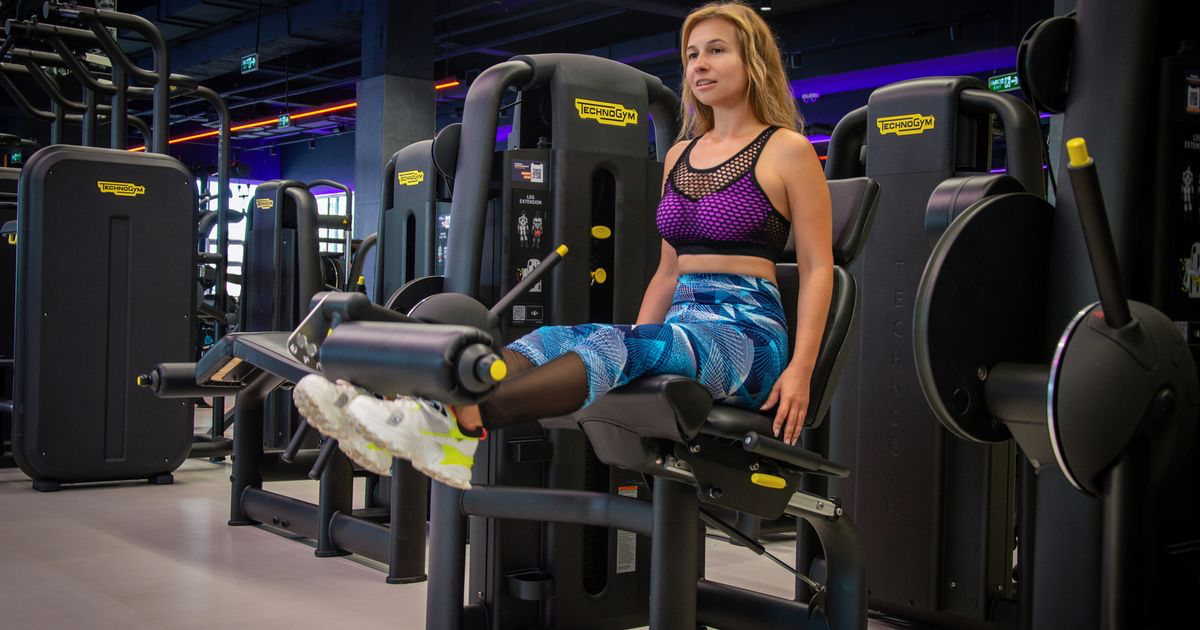
Quick answer: To do leg curls, set the machine's pivot level with your knee joint, place the pad just above your heels, and curl your ankles toward your backside without letting your hips lift. Lower over three seconds. Leg curls train the hamstrings, and the seated version grows them more than the lying one.
Most people put the leg curl last, do three loose sets, and never write it down.
Squats and deadlifts already train the hamstrings as hip extensors. Almost nothing in a normal leg day trains them as knee flexors, which is the other half of their job, and that is what the leg curl is for. Which version you pick matters more than the number on the stack.
What muscles do leg curls work?
The hamstrings, all four of them. Biceps femoris long head, biceps femoris short head, semitendinosus and semimembranosus. Three of those cross both the hip and the knee. The short head of biceps femoris crosses only the knee, which is why hip position changes what happens to the other three but not to that one.
The calves join in more than people expect. The gastrocnemius crosses the back of the knee, so it helps flex it. A study by Li and colleagues in the Journal of Electromyography and Kinesiology stimulated the gastrocnemius in 17 participants and found its knee flexion moment was largest with the knee straight and dropped sharply as the knee bent.
So the calf helps most at the very start of the curl, when your leg is still close to straight, and the hamstrings do the rest.
Foot position does not change the outcome. Pointing your toes to "take the calves out" is a popular cue with no support behind it. In a study by Cadeo and colleagues in the European Journal of Sport Science, ten weeks of prone leg curls with the ankle dorsiflexed versus plantarflexed produced no difference in hamstring EMG, biceps femoris thickness, or isometric torque.
Which is better, the seated or lying leg curl?
The seated leg curl, and the gap is not small. Sitting flexes your hip, which lengthens the three biarticular hamstrings before the set even starts. That puts the muscle under load in a stretched position, which is where hamstrings appear to respond best.
Maeo and colleagues tested this directly. Twenty adults trained one leg with seated leg curls and the other prone at 70 percent of 1RM, five sets twice a week for 12 weeks, with load and volume matched. Whole hamstring volume grew 14 percent in the seated leg against 9 percent in the prone leg.
The split showed up exactly where the anatomy predicts. Every biarticular hamstring grew more in the seated condition, while the monoarticular biceps femoris short head grew the same either way. Our guide to stretch-mediated hypertrophy covers why long-length training keeps producing results like this.
Where does the standing leg curl fit?
Standing curls put your hip near neutral, so they sit alongside the lying version rather than the seated one on the length scale. They train one leg at a time, which exposes side-to-side differences, and they are easy on the lower back.
No training study has compared standing leg curls head to head for hypertrophy, so treat them as a useful unilateral option rather than an upgrade. If your gym only has a standing unit, it is still far better than skipping knee flexion work.
How do you set up and perform a leg curl?
Setup is where most of the exercise is won, and it takes about twenty seconds.
- Line the pivot up with your knee. The machine's rotation point should sit level with the side of your knee joint. Move the seat or the back pad until it does, and note the number.
- Set the ankle pad just above your heels. Sitting on your calves shortens the lever and lets you swing. Sitting on the Achilles is where the load belongs.
- Lock your thighs down. On a seated machine, pull the thigh pad tight so your legs cannot lift. On a lying machine, keep your hips pressed into the bench.
- Curl for one to two seconds. Pull your heels toward your backside as far as the machine allows, then hold the squeeze for a beat.
- Lower for three seconds to a full stretch. Straighten until your hamstrings are genuinely long again. Stopping halfway removes the part of the range that produced the growth in the Maeo study.
Keep your toes neutral and your hips down. If your hips rise off the pad on a lying curl, or your backside slides forward on a seated one, the weight is too heavy and the hamstrings are getting less of it than you think.
What are the most common leg curl mistakes?
Cutting the bottom of the range. The most common fault, and the most expensive one, because the stretched position is where the seated advantage comes from.
Lifting the hips. Turning a lying curl into a partial hip extension recruits the glutes and shortens the hamstrings at the same time.
Slamming the stack back down. The eccentric on a leg curl is the half that most reliably produces soreness and adaptation. Fight it for three seconds.
Going heavy enough to need help. Hamstrings cramp readily and get strained more than almost any other muscle. Moderate loads with a controlled negative beat a stack you can only move by jerking.
Doing only Romanian deadlifts. Hip-dominant work does not fully cover knee flexion, and knee-dominant work does not fully cover hip extension. You want both.
How many sets and reps should you do?
Two to four sets of 8 to 15 reps, one to three times a week. Leg curls are a single-joint movement with a long lever, so very low reps are uncomfortable and rarely worth it.
Add reps before you add weight. Machine stacks jump in 5kg or 10kg steps, which on an isolation lift can be a 15 to 20 percent increase. Push to the top of your rep range across every set first, then move the pin.
Then add difficulty at the same load. A one second pause at peak contraction or a four second lowering phase raises the demand without touching the stack, which is useful when the next plate is out of reach.
To track whether the load is actually climbing, run your best set through the free one rep max calculator and watch the estimate across a block rather than the raw stack number.
What are the best leg curl alternatives?
Romanian deadlifts load the hamstrings at the hip instead of the knee and build far more total mass than any curl. They are the complement, not the substitute. Our Romanian deadlift guide covers the hinge in detail.
Nordic curls are the bodyweight version of the movement and are punishingly hard. In Bourne and colleagues' EMG and MRI study, the Nordic recruited semitendinosus more than the biceps femoris long head, while a 45 degree hip extension gave the most selective long head activation of the ten exercises tested.
Glute ham raises sit between the two, combining knee flexion with hip extension in one rep.
Cable or band curls with an ankle strap replicate the movement in a gym with no curl machine at all.
Pair these with the leg extension on the front of the thigh and you have both sides of the knee covered.
How should you log machine leg curls?
"Leg curl 6" tells you nothing next month. Pin six on your gym's seated unit is not pin six on the lying machine, and it is not pin six once you have moved the seat.
A leg curl entry needs four things: which variation, the stack number, the reps, and the seat or pad setting. Most people record one of those, which is why the exercise looks flat for years.
| Logging method | Speed per set | Keeps variations separate | Shows progress over months | Searchable later |
|---|---|---|---|---|
| Physical notebook | Fast | Only if you write it | Flick back through pages | No |
| Notes app | Fastest | Only if you write it | Plain text, no trend | Text search only |
| Traditional gym app | Slow, menus per set | Yes, from a dropdown | Charts | Inside the app |
| Gym Note Plus | Fastest, plain text | Yes, from what you typed | Automatic per-exercise trends | Whole history |
Our guide to logging machine weights covers the shorthand that keeps stack numbers comparable between machines and between gyms.
A four-week starting plan
- Week one: pick seated and find your settings. Light stack, three sets of 12. Write down the seat position, the pad hole, and the pin number next to your reps.
- Week two: fix the range. Same weight, three sets of 12, with a full stretch at the bottom and a one second squeeze at the top. Expect the weight to feel harder.
- Week three: push the reps. Same weight, three sets taken to roughly two reps in reserve. Note where each set landed.
- Week four: move the pin. One increment up, back to 10 reps, same tempo. If your hips start lifting, drop back and repeat week three.
- Compare week four against week one. If nothing moved, the fix is usually more weekly sets or better records, not a different machine.
Where Gym Note Plus fits
If you already type your sets into Apple Notes between rounds, the habit is right and the storage is wrong.
Gym Note Plus reads plain text the way you already write it and turns it into tracked data.
- Type
seated leg curl 40kg 12,12,10and it becomes structured, charted sets. - Seated, lying and standing curls stay separate exercises because you typed different names, not because you hunted through a dropdown.
- Setup details such as seat position stay attached to the exercise.
- Estimated one rep max and weekly hamstring volume are calculated for you.
Paste a recent session into the free notes to workout translator to see what your own shorthand becomes.
Most hamstring training fails at the bottom of the rep and in the notes app, not at the top of the stack.
Frequently Asked Questions
What muscles do leg curls work?
Leg curls train the four hamstring muscles: biceps femoris long head, biceps femoris short head, semitendinosus and semimembranosus. The gastrocnemius also assists, since it crosses the back of the knee, contributing most when the knee is close to straight at the start of the curl.
Are seated leg curls better than lying leg curls?
Seated leg curls produce more hamstring growth. In Maeo and colleagues' 12-week within-person trial, whole hamstring volume rose 14 percent with seated leg curls against 9 percent prone, with every two-joint hamstring favouring the seated position. The hip flexion of sitting lengthens those muscles under load.
How many sets and reps of leg curls should you do?
Two to four sets of 8 to 15 reps suits the leg curl for most lifters, performed one to three times a week. The long lever and single-joint action make very heavy low-rep sets awkward, while moderate loads let you reach a full stretch at the bottom and control the lowering phase.
Should you point your toes during leg curls?
Ankle position does not change the result. A ten-week study by Cadeo and colleagues found dorsiflexed and plantarflexed ankles produced the same hamstring EMG, the same biceps femoris long head thickness gain, and the same strength gain during prone leg curls. Choose whichever feels more stable.
Can Romanian deadlifts replace leg curls?
No. Romanian deadlifts train the hamstrings as hip extensors and leg curls train them as knee flexors, and neither fully covers the other. Bourne and colleagues found the exercises produce different activation patterns across the hamstring group, so most programs benefit from running one of each.
Final Takeaways
- Leg curls are the knee flexion half of hamstring training that squats and Romanian deadlifts leave uncovered.
- Use the seated version as your default. It grew whole hamstring volume 14 percent against 9 percent prone in a matched 12-week trial.
- The bottom of the rep is the point. Full stretch, three second lowering, hips flat on the pad.
- Skip the toe-pointing debate. Ten weeks of training showed no difference between ankle positions.
- Log the variation, the stack number and the seat setting, or next month's set is a guess rather than a comparison.

Josh Ibbotson
Josh is the creator of Gym Note Plus, building tools that make workout tracking as simple as taking notes.
Ready to try it out?
Download Gym Note Plus and start tracking your workouts the way you want.
Download on App Store