
How to Do Glute Kickbacks: Muscles Worked, Form, and Variations
Quick answer: To do a cable glute kickback, strap the cuff to one ankle, set the pulley low, hinge forward slightly and hold the frame. Keep your knee soft, drive your heel back until your hip is straight, pause, then lower over two seconds. The kickback works the gluteus maximus, with the gluteus medius helping.
Most people do cable kickbacks with far too much weight and swing the leg up by arching their lower back.
The glute kickback is a small exercise: one leg, a light stack and a short range of hip extension. Done well, it adds glute work without loading the spine. Done badly, it becomes a lower back exercise with a strap on it.
What muscles do glute kickbacks work?
The gluteus maximus does most of the work. It is the main hip extensor, and a kickback is hip extension with almost nothing else going on. In Boren and colleagues' EMG study, a bodyweight quadruped kickback with the knee bent to 90 degrees reached 59.7 percent of maximal voluntary contraction in the glute max of the working leg.
Upper and lower glutes both work. Selkowitz and colleagues used fine-wire electrodes in 20 people and found that exercises based mainly on hip extension activated the superior and inferior portions of the glute max to a similar degree. The upper portion only pulled ahead in exercises that added hip abduction or external rotation.
The gluteus medius helps. The same Boren study recorded 46.7 percent of maximal contraction in the glute med during the quadruped version. An earlier Selkowitz study found both gluteal muscles were significantly more active than the tensor fascia lata during quadruped hip extension, with the knee bent or extending.
The hamstrings join in, especially with a straighter leg. In a study of 15 trained men by Stien and colleagues, a machine kickback performed with the knee nearly straight produced much higher biceps femoris activity than the leg press, while glute max activity was not significantly different between the two.
How do you do a cable glute kickback?
Most bad kickbacks start with a rushed setup, and a good one takes about a minute.
- Set the pulley at its lowest point. Clip an ankle cuff to the cable and strap it around the working ankle, just above the foot.
- Step back until the cable is taut. Stand one or two small steps from the stack, facing it, and hold the frame with both hands.
- Hinge forward a little. Lean your torso about 30 to 45 degrees, soften the standing knee, and brace your stomach as if you were about to be poked.
- Keep the working knee slightly bent. A small bend keeps the load on the glutes. A fully straight leg shifts more of it onto the hamstrings.
- Drive your heel back and slightly up. Push until your hip is straight, or just past it, without your lower back arching. Squeeze for one second at the top.
- Lower over two seconds. Let the working leg come forward until your hip is flexed and the glute is stretched, then start the next rep without letting the stack touch down.
How do you keep your lower back out of it?
Stop the rep when your hip stops. The hip can only extend a small amount past neutral. Everything beyond that comes from the lumbar spine arching, which feels like a bigger kick but moves the work away from the glute.
Bend the knee more. Jeon and colleagues compared three prone hip extension exercises in 16 healthy men. The version with the knee bent to 90 degrees produced significantly more glute max activity than both straight-leg versions, without raising erector spinae or biceps femoris activity.
Keep your hips square. If the working hip rotates open towards the ceiling, the pelvis is doing the moving. Imagine two headlights on the front of your hips pointing at the floor.
Brace before each rep. A light brace, ribs down, stops the torso from rocking. If you cannot hold it, the stack is too heavy.
What are the most common glute kickback mistakes?
Swinging the leg. Momentum lifts the weight at the top and leaves the glute with little to do. If you cannot pause at the top, the stack is too heavy.
Arching to get extra height. This is the most common fault. The extra few centimetres come from your lumbar spine, not your hip.
Rotating the foot outwards. Turning the toes out brings in hip external rotation. That is fine if you want to bias the upper glute, but do it deliberately and log it as a different variation.
Standing too close to the stack. With a slack cable, the bottom of the rep has no tension, and the stretched position is where you want the load.
What are the best glute kickback variations?
Cable kickback. The standard version. The pulley keeps tension on the leg through the whole rep, and changing the load is a matter of moving a pin.
Glute kickback machine. Most machines have you kneel or stand with your chest on a pad and push a footplate or lever back. The pad stops your torso from rocking, which makes the movement easier to learn.
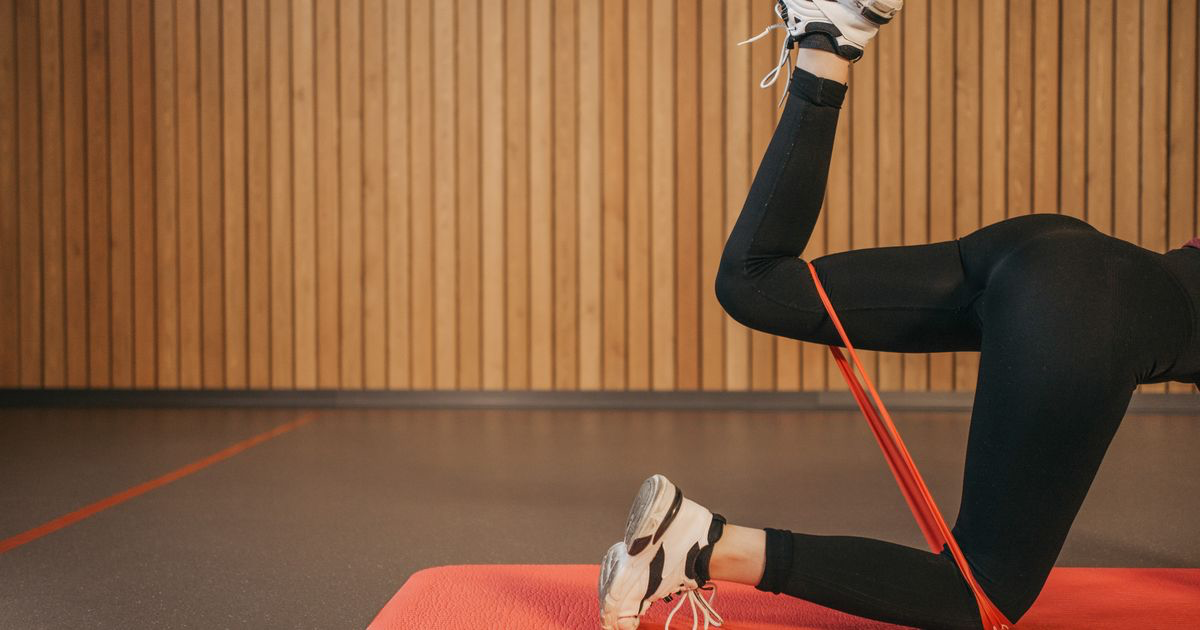
Band kickback. Loop a mini band around both feet or anchor a long band low. Tension rises as you extend, so the top of the rep is hardest and the stretched position is easiest.
Quadruped kickback (donkey kick). On all fours, knee bent to 90 degrees, press your foot towards the ceiling. Most of the research above used this version. Add an ankle weight once bodyweight becomes easy.
Are cable kickbacks better than hip thrusts?
No, they do different jobs. The hip thrust lets you load both glutes with a barbell and a lot of weight. A 2020 systematic review by Neto and colleagues classed several barbell hip thrust variations as producing very high glute max activation, above 60 percent of maximal contraction, alongside step-ups, deadlifts, lunges and split squats.
Kickbacks add volume without spinal load. They need very little weight, so they fit at the end of a session when your lower back is already tired from compound lifts.
Most lifters do best with the hip thrust as the main glute lift and the kickback as an accessory. Our hip thrust guide covers setup, bar position and progression for that side of the plan.
How many sets and reps of glute kickbacks should you do?
Two to four sets of 10 to 20 reps per leg, one to three times a week. The load is light and the movement is short, so higher reps suit it better than heavy sets of five.
Use the smallest cable increments you have. A jump from one pin to the next can be a large percentage of a light kickback load. If your stack has a half-plate or add-on weight, use it. If not, add reps across every set before you move the pin.
Then make the same weight harder. A two second hold at the top or a three second lowering phase adds difficulty without changing the stack.
Match your legs. Always start with the weaker side, and stop the stronger side at the same rep count. Our piece on unilateral vs bilateral training explains why single-leg work is useful for evening out differences.
What are the best glute kickback alternatives?
Hip thrusts and glute bridges are the heavy option for the same hip extension action.
Step-ups were the highest glute max exercise group in the Neto review, and they train one leg at a time like the kickback.
Romanian deadlifts load the glutes and hamstrings together through a long range. Our Romanian deadlift guide covers the hinge.
How should you log glute kickbacks?
"Kickbacks 3x15" hides almost everything that matters. Which leg, what pin, cable or machine, and did the weak side keep up?
A useful kickback entry has the variation, the stack number, the reps for each leg, and any add-on plate. Cable stacks are not labelled consistently from gym to gym, so a pin number is only comparable on the same machine.
| Logging method | Speed per set | Tracks each leg | Shows progress over months | Searchable later |
|---|---|---|---|---|
| Physical notebook | Fast | Only if you write both | Flick back through pages | No |
| Notes app | Fastest | Only if you write both | Plain text, no trend | Text search only |
| Traditional gym app | Slow, menus per set | Sometimes, via a per-side toggle | Charts | Inside the app |
| Gym Note Plus | Fastest, plain text | Yes, from what you typed | Automatic per-exercise trends | Whole history |
Our guide to logging machine weights covers shorthand for stack numbers, pins and add-on plates.
A four-week starting plan
- Week one: find your setup. Light load, three sets of 15 per leg. Write down the pulley height, how far you stood from the stack, and the pin number.
- Week two: fix the range. Same weight, three sets of 15, with a one second squeeze at the top and no arch in your lower back.
- Week three: push the reps. Same weight, three sets taken to about two reps in reserve. Note the reps on each leg separately.
- Week four: add the smallest increment. Use the add-on plate or the next pin, drop to 12 reps, keep the tempo. If your back starts arching, go back to week three.
Where Gym Note Plus fits
If you already type your sets into Apple Notes between rounds, you have the right habit. Scrolling back through weeks of plain text to find your left leg's reps is the part that breaks down.
Gym Note Plus reads plain text the way you already write it and turns it into tracked data.
- Type
cable kickback 15kg L 15,15,13 R 15,15,15and it becomes structured sets for each leg. - Cable, machine and band kickbacks stay separate exercises because you typed different names.
- Pin numbers and add-on plates stay in the note with the set.
- Weekly glute volume and per-exercise trends are calculated for you.
Paste a recent session into the free notes to workout translator to see what your own shorthand turns into.
A higher kick is not a better kick. Stop the rep where your hip stops.
Frequently Asked Questions
What muscles do glute kickbacks work?
Glute kickbacks mainly work the gluteus maximus, with the gluteus medius and hamstrings helping. In Boren and colleagues' EMG study, the quadruped kickback reached 59.7 percent of maximal contraction in the glute max and 46.7 percent in the glute med. A straighter knee shifts more of the load onto the hamstrings.
Should your knee be bent or straight during glute kickbacks?
Keep the knee bent during glute kickbacks if you want the glutes to do the work. Jeon and colleagues found that prone hip extension with the knee bent to 90 degrees produced significantly more glute max activity than straight-leg versions, without increasing lower back or hamstring activity.
Are cable kickbacks better than hip thrusts?
Cable kickbacks and hip thrusts do different jobs, so neither replaces the other. The hip thrust lets you load both glutes heavily with a barbell, while the cable kickback trains one leg at a time with light weight and no spinal load. Most programmes use the hip thrust as the main lift and kickbacks as an accessory.
How many sets and reps of glute kickbacks should you do?
Two to four sets of 10 to 20 reps per leg suits the glute kickback for most lifters, done one to three times a week. Use the smallest cable increment available, add reps before adding weight, and always start with your weaker leg so both sides do the same work.
Why do I feel glute kickbacks in my lower back?
You feel glute kickbacks in your lower back when you kick past the point where your hip stops and your spine arches to finish the rep. Shorten the range, bend the working knee, brace your stomach, and lighten the stack until the top of the rep ends with your back flat.
Final Takeaways
- The glute kickback is a glute max isolation exercise, with the glute med and hamstrings helping.
- Bend the knee and stop where the hip stops. Arching the lower back to kick higher takes the work away from the glutes.
- Use it as an accessory to the hip thrust, not a replacement for heavy hip extension.
- Progress in small steps. Add reps first, then the smallest cable increment you can find.
- Log each leg, the variation and the pin number, or next month's session is a guess.

Josh Ibbotson
Josh is the creator of Gym Note Plus, building tools that make workout tracking as simple as taking notes.
Ready to try it out?
Download Gym Note Plus and start tracking your workouts the way you want.
Download on App Store