
Split Squat vs Bulgarian Split Squat: Which Is Harder?
Quick answer: The split squat has both feet on the floor. The Bulgarian split squat elevates your rear foot on a bench. Elevating the back foot removes most of its support, so the front leg takes more load and the balance demand rises sharply. Start with the split squat, move to the Bulgarian version once you can hold position under load.
Someone tells you to add single-leg work, so you look it up, and you find two exercises that look almost identical in the thumbnail.
One has a bench behind it. That is the only visible difference.
The bench changes more than it looks like it should.
What is the difference between a split squat and a Bulgarian split squat?
The split squat and the Bulgarian split squat differ by one variable: where your back foot rests.
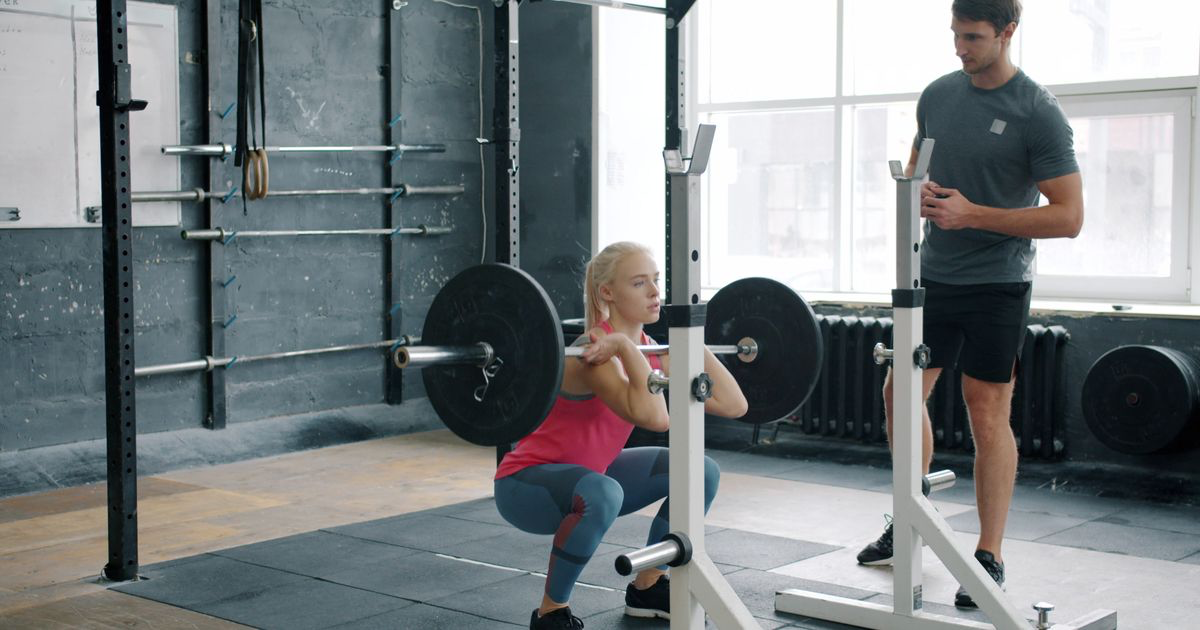
In a split squat, you stand in a staggered stance with both feet flat on the floor. Your rear leg still carries a share of the load and, more importantly, it keeps you balanced.
In a Bulgarian split squat, your rear foot rests on a bench roughly knee height behind you. The back leg can no longer push. It becomes a kickstand, and the front leg does the work.
That single change produces three knock-on effects:
- More load per rep on the front leg, because the rear leg is no longer sharing it
- A much higher balance demand, because your base of support shrank
- More hip flexor stretch on the trailing leg, which some people feel immediately and some never notice
Everything else is the same movement. Same descent, same knee tracking, same core bracing.
Which one is harder?
The Bulgarian split squat is harder than the split squat by a comfortable margin, but not always for the reason people assume.
It is harder partly because the front leg is doing more, and partly because staying upright is now a skill. Most lifters new to it fail on balance long before their quads or glutes are anywhere near done. That is a frustrating way to train, because the set ends without the muscles getting the stimulus.
The split squat rarely has that problem. Both feet on the floor means the limiting factor is the leg, which is the whole point of the exercise.
This is the practical case for starting with the plain split squat. Not because it is easier, but because the difficulty lands where you want it.
What do the muscles actually do differently?
Both exercises train the quads and glutes of the front leg, with the hamstrings and adductors contributing and the trunk working to keep you upright. The muscle list barely changes between them.
What does change is emphasis, and it changes more with your torso than with the bench.
A 2025 study in BMC Sports Science, Medicine and Rehabilitation put 21 trained female athletes through Bulgarian split squat variations while measuring eight lower body and trunk muscles with surface EMG. Leaning the torso into flexion increased activation of the gluteus maximus, biceps femoris (a hamstring) and rectus femoris compared with a neutral trunk position. Performing the movement with the rear foot in a suspension strap instead of on a bench raised erector spinae activation.
The useful takeaway is not "lean forward for glutes". It is that your torso angle is a bigger lever than your equipment choice. Upright is quad-biased. Hinged forward at the hip is more glute and hamstring. That holds for both versions of the exercise.
If you want the full setup detail for each, our guides on how to Bulgarian split squat and how to split squat walk through them step by step.
When should you use the split squat?
Use the regular split squat when you want the leg to be the limit.
It earns its place in a few specific situations:
- You are new to single-leg work. Learn the pattern before you take away the support.
- You are training heavy. Holding a barbell or heavy dumbbells is far more manageable with both feet down.
- You are coming back from injury or a long break. Lower balance demand means you can load conservatively without wobbling.
- It is late in the session. When you are already tired, balance goes first. A split squat still gives you a productive set at that point.
- Your gym is packed. No bench required.
When should you use the Bulgarian split squat?
Use the Bulgarian split squat when you want a lot of stimulus from a manageable load.
- You train at home with light dumbbells. The rear foot elevation makes 20kg feel like real work.
- You want more range of motion. The front leg usually travels further before anything jams.
- You have a side that is clearly weaker. Both exercises expose an imbalance, but the Bulgarian version makes it obvious within two reps.
- Your lower back is the limiting factor on barbell squats. Holding dumbbells at your sides keeps spinal loading low while still hammering the legs.
The trade is that it is genuinely unpleasant, and it takes longer per set because you do each side separately with a setup in between.
If you also want to know how these fit alongside the barbell version, our how to squat guide covers where bilateral work still earns its slot.
How do you progress either one?
Both exercises are awkward to load, which is why so many people do the same twelve bodyweight reps for a year and wonder why nothing changed.
Progress them in this order:
- Reps first. Work up to around 12 clean reps per leg with whatever you are holding.
- Then load. Add the smallest dumbbell increment available and drop back to 8 reps.
- Then range. Once loading is comfortable, deepen the bottom position or raise the front foot slightly.
- Then the harder variation. Split squat to Bulgarian split squat is itself a progression step.
For loaded singles or when you are comparing a dumbbell version to a barbell one, running your best set through the free one rep max calculator gives you a consistent number to compare weeks against.
The catch: none of that works unless you write down which leg did what. "Bulgarian split squats, 20s, felt ok" is not a training record.
How do the ways to track this compare?
Single-leg work is the exact case where memory fails. Two legs, two rep counts, two possible weights, plus the setup details that changed the difficulty.
| Physical Notebook | Notes App | Traditional Gym App | Gym Note Plus | |
|---|---|---|---|---|
| Logging speed | Fast | Fastest | Slow, lots of tapping | Fastest |
| Recording left and right separately | Yes, free text | Yes, free text | Often forced into one field | Yes, free text |
| Noting bench height or torso angle | Yes | Yes | Only if there is a notes field | Yes |
| Data visualization | None | None | Charts | Charts |
| Flexibility | Total | Total | Locked to their exercise list | Total |
| Searchability | None | Text search only | Good | Good |
Writing Bulgarian split squat 20x10 L, 20x8 R, upright takes about five seconds and captures everything that matters. That is why so many lifters end up in a notes app rather than a structured tracker.
A simple starting plan
- Spend three weeks on the plain split squat. Bodyweight or light dumbbells, 3 sets of 10 per leg, focused on keeping the front shin steady.
- Add load until 10 reps is genuinely hard. If you can do 15 without effort, the exercise is doing nothing.
- Switch the rear foot to a bench. Drop the weight by roughly half on the first session. It will still be hard.
- Pick a torso angle and keep it. Upright for quads, hinged forward for glutes and hamstrings. Changing it every week makes your numbers meaningless.
- Log both legs, every session.
20x10 L, 20x8 Rtells you whether the gap is closing. A single number does not.
If you already log your workouts as text
Lots of lifters keep training notes as plain lines on their phone, because between sets there is no time for dropdowns and forms.
The habit is right. The problem is that a year of Bulgarian split squat 20x10 L / 20x8 R lines never becomes a chart, and you cannot search them to find out when your weaker side last caught up.
Gym Note Plus is built for that habit:
- Type your sets the way you already type them, no exercise pickers
- Weights and reps are parsed automatically into per-exercise charts
- Setup notes like bench height or torso angle stay attached to the exercise
- Personal records are flagged as you hit them
- Existing notes import, so you keep the history you already wrote
Paste an old leg session into the free notes to workout translator if you want to see what that looks like before installing anything.
The bench is not the point. Loading one leg properly and writing down what each side did is the point, and both exercises can do that.
Frequently Asked Questions
What is the difference between a split squat and a Bulgarian split squat?
A split squat is performed with both feet flat on the floor in a staggered stance, so the rear leg helps with balance and carries part of the load. A Bulgarian split squat elevates the rear foot on a bench roughly knee height behind you, which removes that support and shifts most of the work onto the front leg while raising the balance demand.
Is the Bulgarian split squat better than the split squat?
Neither exercise is better in general. The Bulgarian split squat produces more stimulus per kilogram held, which suits home training and lighter dumbbells. The regular split squat allows heavier loading and lower balance demand, which suits beginners, heavy barbell work and the end of a session. Most lifters benefit from starting with the split squat and progressing to the Bulgarian version.
Do Bulgarian split squats work glutes or quads?
Bulgarian split squats train both, and torso angle decides the emphasis. A 2025 EMG study of 21 trained female athletes found that trunk flexion increased gluteus maximus, biceps femoris and rectus femoris activation compared with a neutral trunk position. Keeping the torso upright leaves more of the work on the quadriceps. Pick one angle and stay consistent so your loading numbers remain comparable.
Is a Bulgarian split squat better than a regular squat?
A Bulgarian split squat and a barbell back squat do different jobs. The back squat loads both legs and allows far heavier absolute weight, which drives overall leg strength. The Bulgarian split squat loads one leg at a time, exposes side-to-side differences, and reaches a useful stimulus with much lighter dumbbells. Most programs use both.
What is the difference between a Romanian and a Bulgarian split squat?
There is no established exercise called a Romanian split squat; the name is usually a mix-up with the Romanian deadlift, which is a hip hinge rather than a squat. The Bulgarian split squat is the version with the rear foot elevated on a bench. Some lifters also call it a rear-foot-elevated split squat.
How high should the bench be for a Bulgarian split squat?
Set the rear foot at roughly knee height, which a standard flat gym bench usually provides. Higher elevation increases hip flexor stretch and makes balance harder without adding useful load. If you feel a sharp pull in the front of the rear hip, lower the surface, using a low box or a step, until the position is comfortable.
Should you do split squats before or after regular squats?
Do barbell squats first if strength on the squat is the priority, since it is the more technically demanding lift and suffers most from fatigue. Place split squats or Bulgarian split squats afterwards as accessory work. If single-leg strength or fixing a side-to-side imbalance is the current goal, reverse the order for a training block.
How many reps should you do for split squats?
Eight to twelve reps per leg works well for both split squats and Bulgarian split squats. Lower rep ranges are hard to load safely because balance fails before the muscles do, and very high reps turn the set into a coordination test. Perform two to four sets per leg and record each side separately.
Final Takeaways
- The only mechanical difference is the rear foot. Everything else follows from removing that support.
- The Bulgarian version is harder, often for balance reasons first. If you fall over before your quads burn, you are training the wrong thing.
- Torso angle decides emphasis more than the bench does. Upright biases quads, hinged forward biases glutes and hamstrings.
- Start with the split squat, then progress to the Bulgarian. The switch is itself a progression step, worth a real drop in load.
- Log both legs separately. A single line per exercise hides the imbalance you took up single-leg work to fix.

Josh Ibbotson
Josh is the creator of Gym Note Plus, building tools that make workout tracking as simple as taking notes.
Ready to try it out?
Download Gym Note Plus and start tracking your workouts the way you want.
Download on App Store