
What Body Measurements Should You Track?
Quick answer: Track four things: bodyweight as a weekly average, waist circumference at the navel, one upper-body measurement (chest or arms), and one lower-body measurement (thighs). Waist is the most informative single number, because waist-to-height ratio predicts health risk better than BMI. Measure every two weeks, same conditions.
The scale said the same thing for three weeks, so you assumed nothing was happening.
Then a shirt fitted differently and you realised the scale had been telling you almost nothing the whole time.
That is the case for a tape measure, and for tracking more than one number.
Why is bodyweight alone a bad progress metric?
Because bodyweight measures everything at once and nothing specifically. Food volume, water, sodium, glycogen, and where you are in the day all move it by a kilo or more, and none of them are the thing you care about.
The bigger problem is directional. If you are gaining muscle and losing fat at the same time, which is exactly what a new lifter should be doing, the scale can sit flat for months while your body changes substantially.
Track it, but track the weekly average, not the daily number. One weigh-in is noise. Seven averaged is a signal. We cover the research on weighing frequency in how often should you weigh yourself.
The scale is one input. It needs at least three others.
Which body measurement matters most?
Waist circumference, and it is not close. Of everything you can measure with a tape at home, waist is the one with real evidence behind it.
Waist-to-height ratio, your waist measurement divided by your height, consistently outperforms BMI as a health risk predictor. Research covered by the University of Pittsburgh School of Medicine, drawing on a study of 2,721 adults published in The Lancet Regional Health Americas, found that a waist-to-height ratio at or above 0.5 indicated elevated coronary artery calcification risk, and that only waist-to-height ratio retained predictive value after adjusting for classic risk factors like age, sex, smoking, and cholesterol.
The practical rule that comes out of that literature is memorable: keep your waist under half your height. A study by Ashwell and Gibson in BMJ Open argued for exactly this boundary value as a simple early health risk indicator.
For lifters, waist does double duty. It is the health metric and the recomposition metric, because it moves when body fat moves and stays put when you are gaining mostly muscle.
What should you actually measure, and how often?
Four measurements, every two weeks, same conditions.
| Measurement | Where | What it tells you |
|---|---|---|
| Bodyweight | Scale, weekly average | Overall energy balance trend |
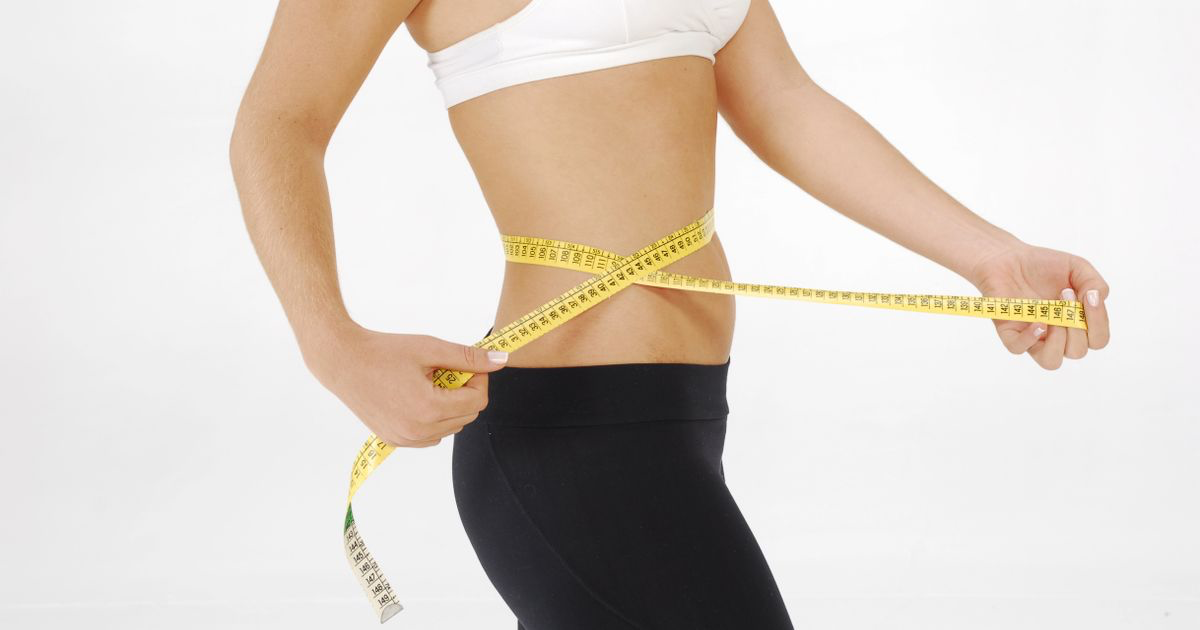
| Waist | At the navel, relaxed, exhaled | Body fat direction, health risk |
| Chest or arms | Nipple line / mid-bicep flexed | Upper-body muscle gain |
| Thighs | Mid-thigh, both legs | Lower-body muscle gain |
Optional extras if you like data: hips, neck, and calves. They add resolution, not insight, and each one is another thing to skip.
Same conditions is the part people get wrong. First thing in the morning, after the bathroom, before eating or drinking, same tape, same spot, no flexing on the waist. A waist measured after dinner is three centimetres of fiction.
Mark the measurement points. A tape at your navel and a tape three centimetres above it are measuring different bodies.
How do you read the numbers together?
The combination tells the story, not any single line. Here is how the common patterns decode.
- Weight up, waist flat. You are gaining and it is going where you want. Keep doing exactly this.
- Weight up, waist up. You are gaining faster than you can build. Reduce the surplus.
- Weight flat, waist down, limbs up. Recomposition. Very common in the first year, and totally invisible to the scale.
- Weight down, waist down, limbs down. Fat loss with some muscle loss. Add protein, keep training hard, slow the deficit.
- Weight down, waist flat. Usually water or measurement error. Wait two more weeks before reacting.
Nothing here is readable from one data point. Every one of these patterns needs at least a month of measurements before you act on it, which is the main reason people abandon measuring: they check twice, see noise, and conclude it does not work.
If you are trying to gain and are not sure what your calorie target should be, work out your maintenance first with the TDEE calculator, then read how many calories to build muscle for the size of the surplus.
What about progress photos and lift numbers?
Photos catch what tapes miss. Shape changes without circumference changes all the time, particularly in shoulders and back, where a tape is almost useless.
Take them every four weeks, same light, same position, same time of day. The specifics matter more than people expect, and how to take progress photos covers them.
Your training log is the fourth pillar and the most reliable of all. Body measurements move slowly and noisily. Your working weights move weekly and unambiguously.
If your squat, press, and row are all climbing over eight weeks, you are making progress regardless of what the tape says that fortnight. If they are flat, no measurement is going to save you. How to track gym progress covers what to watch.
A simple starting plan
- Pick a fixed measuring slot. Sunday morning, before breakfast, every other week. Put it in your calendar or it will not happen.
- Take the four core measurements. Weight, waist, chest or arms, thighs. Write them in the same place every time.
- Calculate your waist-to-height ratio once. Waist divided by height, same units. Under 0.5 is the target. Recheck it every couple of months, not every session.
- Photograph yourself every four weeks. Front, side, back. Same spot, same light, same time.
- Review after eight weeks, not two. Read the pattern across all four numbers together, then change one thing.
Keeping body data next to your training data
Most people end up with measurements in one place and workouts in another. Weight in a health app, waist in the notes app, lifts in a notebook.
Split like that, the interesting question never gets asked, because answering "did my bench go up while my waist stayed flat?" means cross-referencing three sources by hand.
If you already log training in plain text, keeping bodyweight and measurements in the same stream costs you one extra line per session.
Gym Note Plus reads those lines the same way it reads your sets.
- Log bodyweight alongside your workouts and see it charted next to your lifts.
- Every exercise gets its own progress graph, so strength trends sit beside body trends.
- Volume and estimated one rep max are calculated automatically per exercise.
- Your existing notes import, so historic entries are not stranded.
One stream of plain text in, two kinds of progress out.
The scale answers one question badly. A tape, a camera, and a training log answer four questions well.
Frequently Asked Questions
What body measurements should you take to track muscle gain?
To track muscle gain, measure bodyweight, waist circumference, chest or flexed arms, and mid-thigh, taken every two weeks under identical conditions. Limb measurements increasing while waist stays flat is the clearest tape-measure evidence of muscle gain. Because circumference changes slowly, training log data such as rising working weights is usually a faster indicator than any measurement.
How often should you measure your body?
Measure your body every two weeks rather than weekly or daily. Circumference changes from muscle gain or fat loss are small enough that shorter intervals mostly capture measurement error, hydration, and digestion rather than real change. Bodyweight is the exception and can be measured daily, provided you look at the weekly average instead of individual readings.
Where exactly should you measure your waist?
Measure your waist at the level of your navel, standing relaxed, with the tape snug but not compressing the skin, after a normal exhale. Do not suck in. Consistency of location matters more than picking the anatomically perfect spot, so mark your reference point and use the same one every time. Morning measurements before eating are the most comparable.
Is waist-to-height ratio better than BMI?
Waist-to-height ratio predicts health risk better than BMI in a growing body of research, because it captures central and visceral fat rather than total mass. A study published in The Lancet Regional Health Americas found waist-to-height ratio retained predictive value for coronary artery calcification after adjusting for classic risk factors, while BMI did not. A ratio below 0.5 is the commonly cited target.
Do body measurements matter if my lifts are going up?
Rising lift numbers are strong evidence that training is working, but body measurements answer a different question: where the added bodyweight is going. A lifter whose bench climbs while their waist grows two inches is gaining, but not the way they intended. Tracking both together is what lets you adjust calories without guessing.
Final Takeaways
- Track four numbers, not one. Bodyweight, waist, an upper-body site, and a lower-body site.
- Waist is the highest-value measurement. Waist-to-height ratio under 0.5 is a well-supported target.
- Same conditions every time. Morning, before eating, same tape, same marked spot, no flexing.
- Read the numbers as a pattern over eight weeks. Any single fortnight is noise.
- Your training log is the fastest progress signal. Measurements tell you where the weight went, lifts tell you whether the training is working.

Josh Ibbotson
Josh is the creator of Gym Note Plus, building tools that make workout tracking as simple as taking notes.
Ready to try it out?
Download Gym Note Plus and start tracking your workouts the way you want.
Download on App Store