

Strong vs Fitbod in 2026: Which Workout App Should You Use?
Quick answer: Strong is a logger and Fitbod is a coach. Strong records the workout you already planned, has a free tier, and costs $4.99 a month for PRO. Fitbod generates each session for you and costs $15.99 a month with no ongoing free tier. Pick by whether you want a plan or a record.
Most "Strong vs Fitbod" comparisons line the two up feature by feature, which makes them look like near-identical rivals.
They are not. One of them assumes you know what you are training today. The other assumes you do not. That single difference decides which one you should install, and it costs three times as much to get it wrong in one direction than the other.
What are Strong and Fitbod?
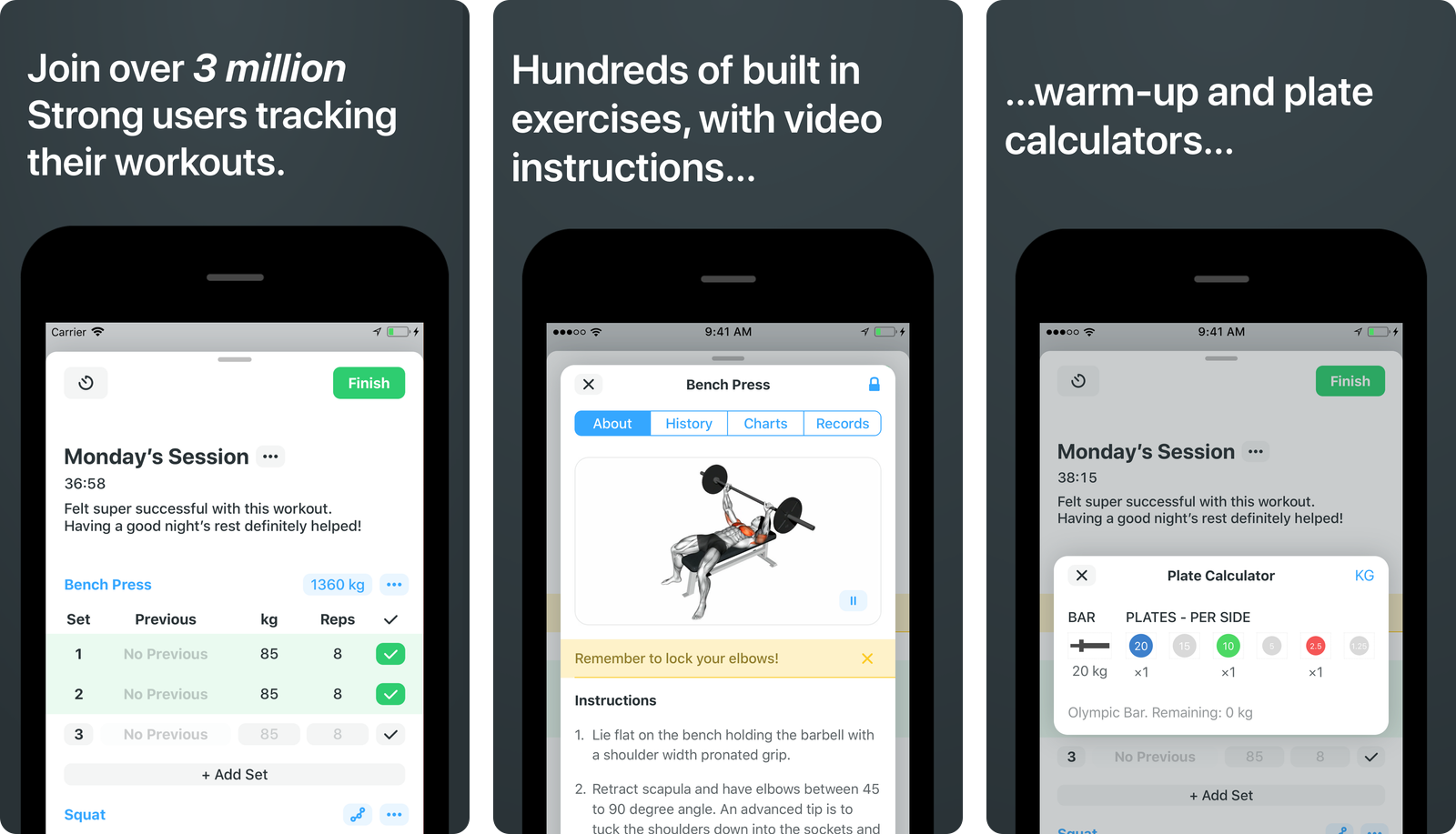
Strong is a workout logger. You build a routine, start a session, and tap in each set. It has been around a long time, and its whole design argument is that a training log should get out of the way.
The App Store listing for Strong shows a 4.9 rating from around 108,000 ratings. The description is blunt about the goal: record your workouts as quickly as possible, without distractions.
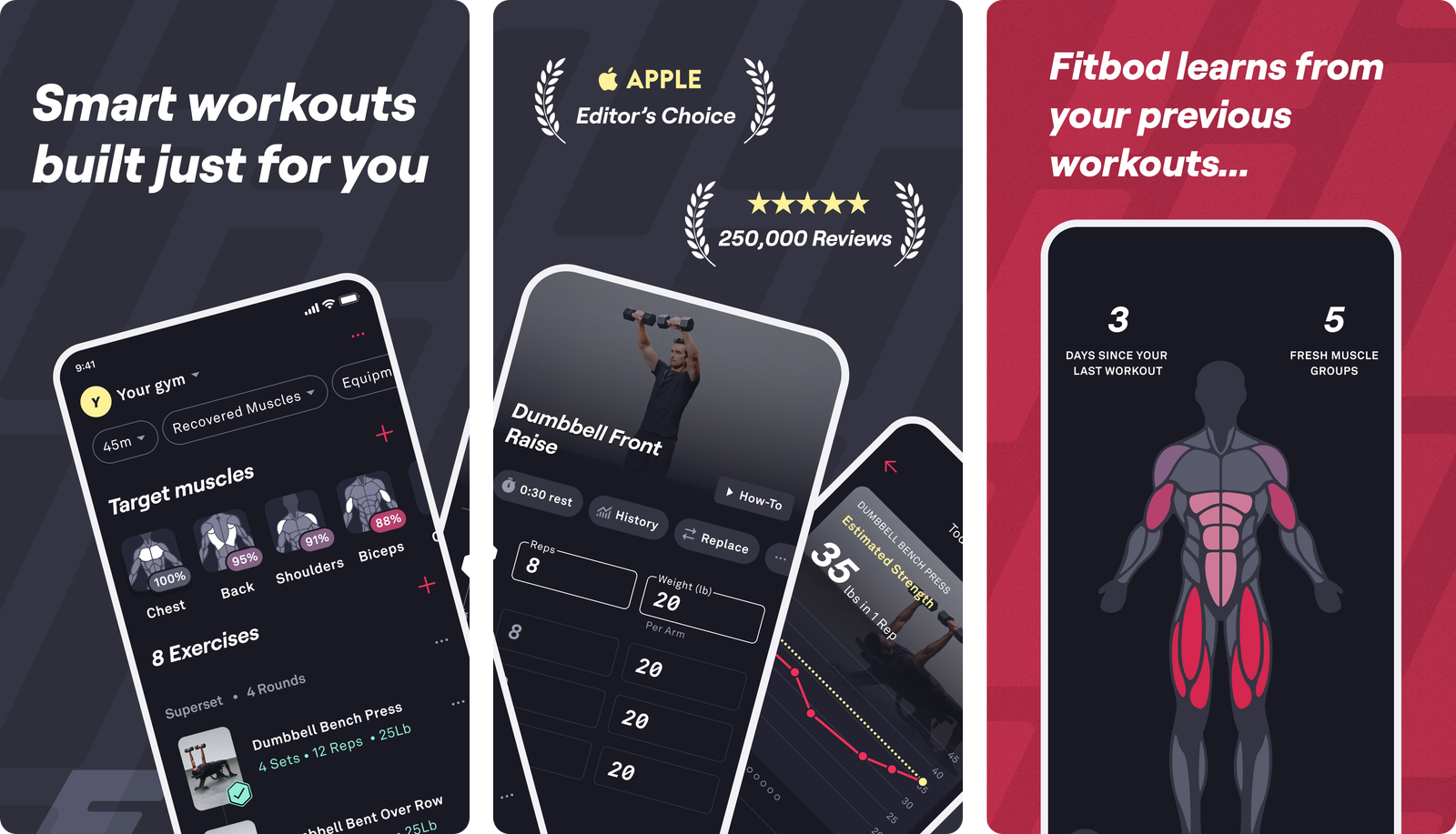
Fitbod is a workout generator. You tell it your goal, equipment, and experience, and it builds each session for you, choosing exercises based on which muscles it thinks are recovered.
The Fitbod listing shows a 4.8 rating from around 280,000 ratings, an exercise library of over 1,000 movements with video demonstrations, and non-linear periodization built into the plan generation.
Both log sets. Only one decides what those sets should be.
How much do Strong and Fitbod cost?
This is the widest gap between them, and it is not close.
| Strong | Fitbod | |
|---|---|---|
| Standout feature | Fast, minimal set logging | Generates the session for you |
| Free tier | Yes, with a routine limit | No ongoing free tier |
| Monthly | $4.99 (Strong PRO) | $15.99 |
| Yearly | $23.99 to $29.99 | $95.99 |
| Lifetime | $79.99 to $99.99 | Not offered |
| App Store rating | 4.9 (around 108K ratings) | 4.8 (around 280K ratings) |
| Best for | Lifters who already have a plan | Lifters who want one made |
Prices come from the current US App Store in-app purchase listings for both apps. Prices and features shift over time and vary by region, so check the current listings before you subscribe.
Fitbod's trial ends hard. Fitbod's help centre states that once the trial period is over, you can no longer start or log workouts without a subscription. Strong's free tier keeps working indefinitely, capped on custom routines, and Strong PRO removes that limit.
That difference matters more than the headline price. With Strong you can stop paying and keep your logbook usable. With Fitbod, stopping paying stops the app. If that is the sticking point, we rank the cheaper Fitbod alternatives that keep a usable free tier.
Which one is faster to use in the gym?
Strong, comfortably. It has fewer screens, and a routine you have run twenty times needs almost no thinking.
Fitbod is fast at a different thing: deciding. If you arrive at the gym with no plan, Fitbod has a full session ready with target weights and reps before you have finished putting your bag down. That is a real service and it is why people pay for it.
But generated sessions create their own friction. Fitbod picks exercises based on its recovery model, so the session changes week to week. That is intentional, and it also means the machine you wanted is sometimes not on today's list, and the exercise it picked is on the other side of the gym.
For a lifter running a fixed program, that variety is noise. For a lifter who would otherwise wander, it is the whole point.
Does Fitbod's AI programming actually work?
It works well for general fitness and poorly for specific strength goals. Fitbod is built to keep you training productively without a coach, not to run a powerlifting peaking block.
The recovery model is the interesting part. Fitbod tracks which muscles you have hit recently and biases the next session toward the ones it considers fresh, which produces reasonable weekly coverage without you counting anything. That is genuinely more than most lifters manage on their own.
Where it struggles is progression on a specific lift. If you want your bench press to go up 2.5kg a fortnight for six months, you want the same lift in the same slot with a predictable jump, which is exactly what a rotating generated session does not give you. Our guide to double progression vs linear progression covers what that requires.
Rule of thumb. Fitbod for "I want to train and I do not want to think". A written program plus Strong or any logger for "I have a number I am chasing".
Which should you pick?
- Pick Strong if you already follow a program, want a free option, or care about logging speed above everything.
- Pick Fitbod if you do not have a plan, do not want to write one, and the $15.99 a month buys back the decision-making you were skipping.
- Pick neither if your problem is that structured apps slow you down, which is the most common reason lifters quit both.
- Consider Hevy if you want Strong's model with a more generous free tier and a social feed.
- Consider Fitbod alternatives if the AI programming appeals but the price does not.
What both apps have in common
Both assume your session will go the way the screen says it will.
The squat rack is taken, so you do leg press instead. You add a set because you felt good. You drop an exercise because your shoulder is grumpy. In a tap-based app, each of those is a small negotiation with the interface: find the exercise, add it, reorder, edit the set count.
That is the friction that sends a lot of lifters back to their notes app after three weeks, and it applies to Strong and Fitbod equally. We wrote about the pattern in why a simple workout log usually beats a complex one.
| Physical Notebook | Notes App | Traditional Gym App | Gym Note Plus | |
|---|---|---|---|---|
| Logging speed | Fast | Fast | Slow, tap per field | Fast, plain text |
| Handling an unplanned swap | Write it | Type it | Edit the routine | Type it |
| Data visualization | None | None | Charts | Charts from your text |
| Searchability | Flip pages | Text search | Structured search | Structured search |
| Cost | Price of a notebook | Free | $5 to $16 a month | Free tier |
Keep logging the way you already do
If you have tried Strong or Fitbod and drifted back to typing sessions into your phone's notes app, that is not a discipline problem. Plain text is faster than any form, and it never argues with a session that went sideways.
Gym Note Plus starts from that habit instead of trying to replace it. You write the workout the way you already write it, and it turns those lines into tracked sets, per-exercise history, and progress charts.
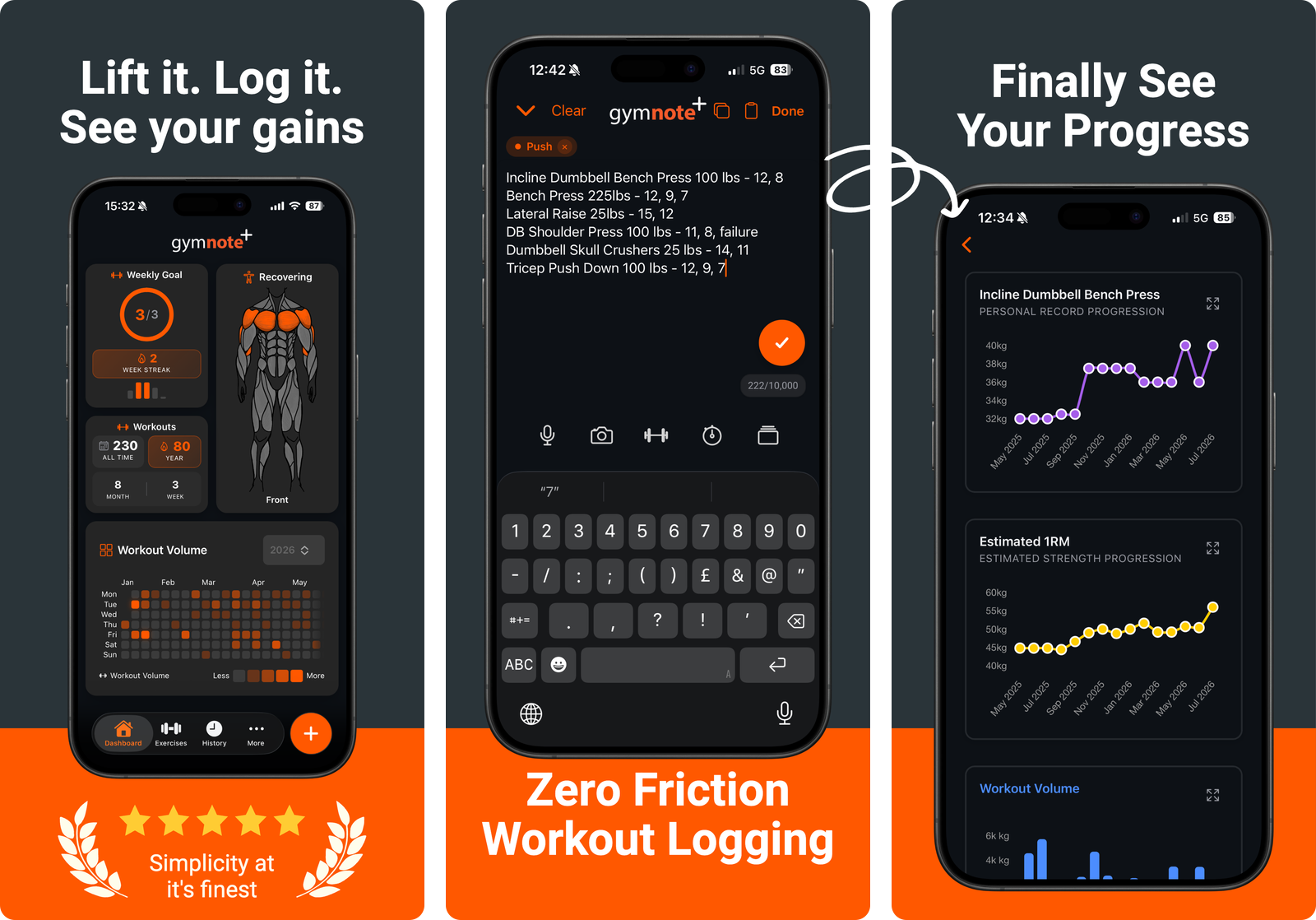
- Type the session in plain text, swaps and notes included.
- See the trend per exercise, without tagging anything.
- Pull up last session in a tap, before you load the bar.
Paste an old workout into the free notes to workout translator and see what your own notes turn into.
Strong records the plan you brought. Fitbod writes the plan for you. Neither fixes the real reason most lifters abandon workout apps, which is that logging in a form is slower than writing a line.
Frequently Asked Questions
Is Fitbod better than Strong?
Fitbod is better than Strong if you want workouts generated for you, because Fitbod builds each session around which muscles it considers recovered. Strong is better if you already follow a program, since it logs faster, has a free tier, and costs $4.99 a month against Fitbod's $15.99. They solve different problems.
Is Strong or Fitbod cheaper?
Strong is substantially cheaper. Strong PRO is $4.99 a month, $23.99 to $29.99 a year, or a one-off lifetime purchase, and Strong keeps a free tier with a routine limit. Fitbod costs $15.99 a month or $95.99 a year with no ongoing free tier and no lifetime option.
Does Fitbod have a free version?
Fitbod has no ongoing free version. New users get a trial period, and Fitbod's help centre states that once the trial ends you can no longer start or log workouts without a subscription. Strong, by contrast, keeps working for free with a cap on how many custom routines you can save.
Can you use Fitbod with your own workout program?
Fitbod allows custom workouts, but running your own fixed program removes most of what you are paying for. Fitbod's value is the generated session and its muscle recovery model. If you already have a written program, a plain logger like Strong or a notes-based tracker records it faster and costs far less.
Which app is better for tracking progressive overload?
Strong tracks progressive overload more usefully than Fitbod, because a fixed routine keeps the same lifts in the same slots so weight and rep changes are directly comparable week to week. Fitbod's rotating exercise selection makes per-lift progression harder to read, even though its charts and history are perfectly capable.
Final Takeaways
- Strong logs, Fitbod plans. That is the decision, not the feature list.
- The price gap is three times. $4.99 a month against $15.99, and only Strong keeps a free tier.
- Fitbod stops working when you stop paying. Strong's logbook does not.
- Generated sessions fight per-lift progression. Rotating exercises make a bench press trend hard to read.
- Both slow you down on a session that changes. If that is your problem, neither app is the fix.

Josh Ibbotson
Josh is the creator of Gym Note Plus, building tools that make workout tracking as simple as taking notes.
Ready to try it out?
Download Gym Note Plus and start tracking your workouts the way you want.
Download on App Store