
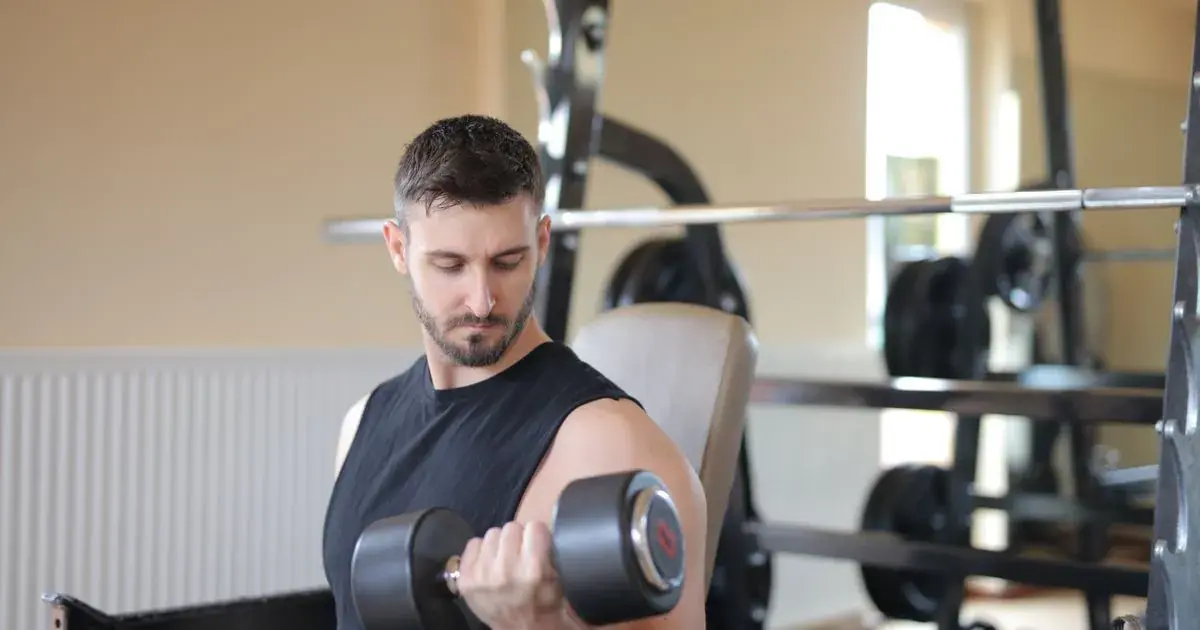
How Many Sets and Reps Should a Beginner Do?
Quick answer: As a beginner, do 2 to 3 sets of 8 to 12 reps per exercise, on the big compound lifts, 2 to 3 times per week. That is enough to build noticeable strength and muscle without burning out. Pick a weight where the last rep or two feel genuinely hard, and add a little each week.
You are standing at the dumbbell rack on your first real week of lifting. You know roughly which exercises to do, but nobody told you the part that actually matters: how many times.
Three sets? Five? Eight reps or fifteen? It feels like everyone online has a different answer, and most of them are shouting.
What do sets and reps actually mean?
A rep is one full movement. A set is a group of reps done back to back. If you press a dumbbell overhead ten times, rest, then do it ten more, that is two sets of ten reps, written as 2x10.
The number people argue about is really two numbers: how many reps per set, and how many sets per exercise. Beginners overthink both.
If the notation still trips you up, our guides on what 3x8 means and what 3x10 means break the shorthand down in one read, and gym terms explained covers the rest of the vocabulary you will hear on the floor.
How many sets and reps should a beginner do?
Start with 2 to 3 sets of 8 to 12 reps per exercise. This is the classic beginner prescription, and it holds up because it balances three things at once: enough reps to practice the movement, enough weight to challenge the muscle, and enough total work to grow without wrecking you.
The 2009 ACSM position stand on resistance training recommends novices train each major muscle group with 1 to 3 sets of 8 to 12 reps, two to three days per week. Seventeen years of research later, that advice still lands in the same place.
You do not need more than that yet. The updated 2026 ACSM position stand, which synthesized data from 137 systematic reviews covering more than 30,000 participants, confirms that even low volumes drive real gains in newer lifters. Beginners are the group that responds to almost everything, so simple wins.
Why 8 to 12 reps?
The 8 to 12 range is forgiving. Go lower (like 3 to 5 reps) and small errors in form or weight selection get punished fast. Go much higher (20-plus) and the set becomes more about grit than muscle.
Eight to twelve gives you room to learn the lift while still building both strength and size. You can drift a rep or two either side and nothing breaks. For the full picture on how ranges map to goals, see rep ranges explained.
How much weight should a beginner lift?
Pick a weight where the last two reps are hard but your form stays clean. If you finish a set of ten and could have done eight more, it is too light. If your back rounds on rep six, it is too heavy.
A good target is stopping two or three reps short of failure. That effort level is enough to grow, and it leaves a safety margin while you are still learning to brace and balance.
As you get stronger, you will want to know your rough max without actually maxing out. Plug your best set into the one rep max calculator to estimate it, then use a comfortable percentage of that number for your working sets.
How many exercises and how often?
Cover your whole body 2 to 3 times a week with a handful of big lifts. You do not need fifteen exercises. Six or seven compound movements hit everything.
A simple full-body template covers a squat, a hinge, a push, a pull, and some core:
- Squat or leg press for quads and glutes
- Romanian deadlift or hip hinge for hamstrings and glutes
- Bench press or push-up for chest and triceps
- Row for back and biceps
- Overhead press for shoulders
- Plank or carry for the core
Do 2 to 3 sets of each, and you have a complete session in under an hour. Training each muscle two to three times a week beats hammering it once, which is also why total weekly volume matters more than any single workout. Our guide on how many sets per week to build muscle covers that math.
How do you progress from here?
Add a little each week: a rep, a set, or a small jump in weight. This is progressive overload, and it is the entire game. The beginner version is almost embarrassingly simple.
The rule most coaches use: when you can hit the top of your rep range on all your sets with good form, add weight next time. If you did 3x12 clean, bump the load and drop back to 3x8, then climb again.
The catch is memory. Progression only works if you know what you did last time. Guess wrong and you either stall by repeating the same weight for weeks or spike too hard and grind out ugly reps.
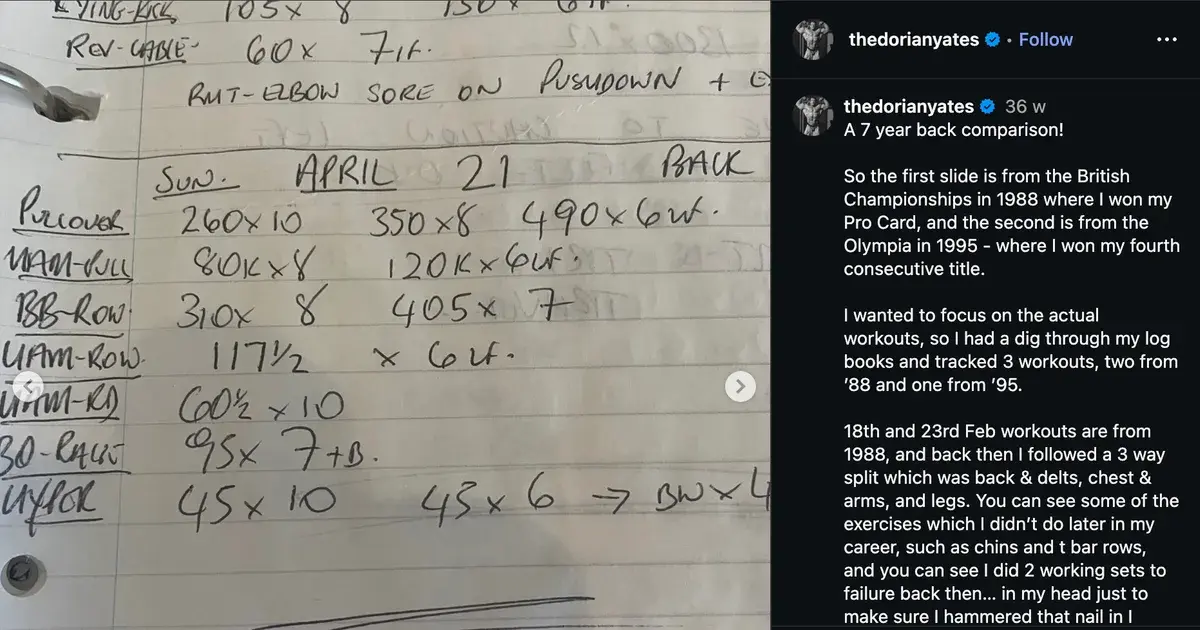
That is where writing it down turns a vague plan into an actual one. Even a single line in your notes ("squat 95 lb 3x10, last rep hard") tells next week's you exactly what to beat.
How beginners lose track (and why it matters)
Most beginners do not stall because their program is wrong. They stall because they cannot remember whether last leg day was 85 or 95 pounds, so they play it safe and repeat.
Here is how the common ways to keep score stack up:
| Physical notebook | Notes app | Traditional gym app | Gym Note Plus | |
|---|---|---|---|---|
| Logging speed | Fast | Fast | Slow, many taps | Fast, plain text |
| Data visualization | None | None | Charts | Automatic charts |
| Flexibility | Total | Total | Rigid fields | Total, free text |
| Searchability | None | Keyword only | Yes | Yes |
| Shows if you progressed | Manual flip-back | Manual scroll | Yes | Yes, automatic |
Paper and your notes app are fast but silent: they store the numbers without ever telling you the trend. A rigid gym app shows trends but slows every set to a crawl. The sweet spot logs as fast as text and still charts the climb for you.
A simple starting plan for your first month
- Pick one full-body routine with the six movements above and run it three days a week, resting a day between sessions.
- Do 3 sets of 10 on everything to start, choosing weights where rep nine and ten are hard.
- Write down every set the moment you finish it: exercise, weight, reps. One line is enough.
- Add weight when 3x12 feels clean. Small jumps: 5 pounds on upper body, 10 on lower.
- Review your log weekly and confirm at least one lift went up. If nothing moved for two weeks, add a set or a small load bump.
Keep it simple, and let the app do the math
If you already jot workouts into your phone's notes or a paper book, you are doing the single most important thing a beginner can do. The only weak spot is reading it back: flipping through pages to check last week's weight is exactly the friction that makes people quit tracking.
Gym Note Plus removes that friction. You log in plain text, the same fast way you would type into Notes, and it turns those entries into charts and per-exercise history automatically. Next week's target is right there, no scrolling required.
- Log at notes-app speed. No menus, no set-by-set tapping.
- See each lift climb over time. Automatic charts show progress you would otherwise miss.
- Keep every session searchable. Your whole beginner journey stays one tap away.
Want the bigger picture on tracking? Start with how to track gym progress.
As a beginner, the perfect program you forget beats a fancy one you never write down. Log the simple thing, add a little each week, and let the numbers pull you forward.
Frequently Asked Questions
What does 2x10 mean in a workout?
2x10 means 2 sets of 10 reps. You perform the exercise 10 times in a row, rest, then do a second round of 10, for 20 total reps. In workout notation the first number is always the sets and the second is the reps per set, so 3x8 is three sets of eight and 4x6 is four sets of six.
How do you read sets and reps?
Read sets and reps as "sets times reps", left to right. A line like Squat 3x8 @ 60kg means three sets of eight repetitions using 60 kilograms. A hyphen in the second number, as in 3x8-12, marks a rep range: aim for at least 8 reps and no more than 12 on every set before adding weight.
Is 3 sets of 10 good for beginners?
Yes, 3 sets of 10 reps is an excellent default for beginners. It sits inside the well-supported 8 to 12 rep range, gives you enough practice to learn each movement, and builds both strength and muscle. Choose a weight where reps nine and ten are genuinely challenging but your form stays clean, and add load once all three sets of ten feel easy.
How many reps should a beginner do to build muscle?
A beginner should do 8 to 12 reps per set to build muscle, performing 2 to 3 sets per exercise. This range balances enough weight to stimulate growth with enough reps to reinforce good technique. The key factor is effort: each set should end about two to three reps short of failure, with the last reps feeling hard.
How many days a week should a beginner lift?
Beginners should lift 2 to 3 days per week, training the whole body each session. This frequency lets you hit every major muscle group two to three times weekly, which research shows drives better results than training a muscle only once. Rest at least one day between sessions so muscles recover and grow.
Should beginners lift to failure?
No, beginners should generally not lift to failure. Stopping two to three reps short of failure builds strength and muscle almost as effectively while keeping form safe and recovery manageable. Training to failure adds fatigue and injury risk that outweigh the small extra benefit, especially while you are still learning to control the weight.
How do I know when to add weight?
Add weight when you can complete the top of your rep range on every set with clean form. For example, if your target is 8 to 12 reps and you hit 3 sets of 12, increase the load next session and drop back toward 8 reps. Use small jumps: about 5 pounds for upper-body lifts and 10 pounds for lower-body lifts.
Final Takeaways
- Start with 2 to 3 sets of 8 to 12 reps. It is the research-backed beginner default and it works.
- Effort matters more than volume. Stop two to three reps short of failure with clean form.
- Train the whole body 2 to 3 times a week using six or seven compound lifts, not fifteen exercises.
- Progress by adding a little each week: a rep, a set, or a small weight jump when the top of your range feels clean.
- Write down every set. Progression only works if you remember what you did last time.

Josh Ibbotson
Josh is the creator of Gym Note Plus, building tools that make workout tracking as simple as taking notes.
Ready to try it out?
Download Gym Note Plus and start tracking your workouts the way you want.
Download on App Store