
Machines vs Free Weights: Which Should You Use?
Quick answer: Machines and free weights build muscle at similar rates when you push both close to failure. Machines guide the path, so they are easier to learn and safer alone. Free weights demand balance and carry over to real strength. Most lifters should use both, choosing per exercise.
You finish a set on the chest press machine and glance at the bench area, where somebody is unracking a barbell. A small voice says the barbell is the real work and you are cheating.
That voice has cost a lot of beginners a lot of progress. The evidence does not back it.
What actually differs between machines and free weights?
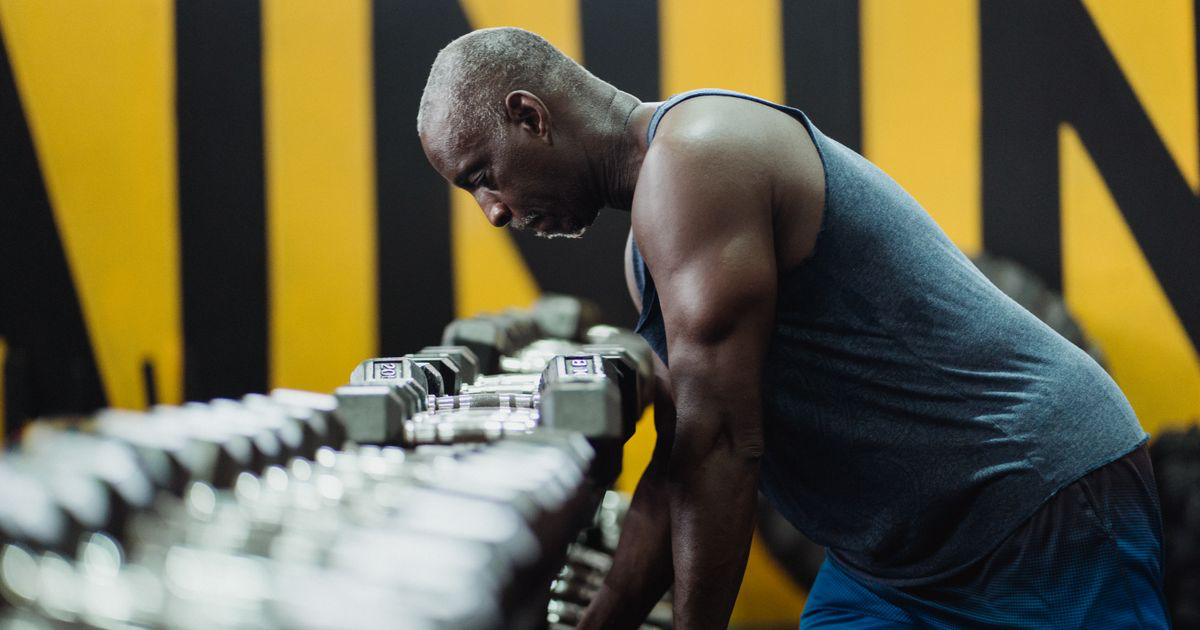
The real difference is who controls the path of the weight. A machine fixes the movement along a track. A dumbbell or barbell leaves the path entirely up to you, so your stabilising muscles work to keep the bar going where you want it.
Everything else people argue about follows from that one fact.
Stability demand
Free weights ask your torso, hips, and smaller shoulder muscles to hold a position while the prime movers do the lifting. A machine takes most of that job away and hands it to the frame.
Neither is automatically better. Extra stability demand involves more total muscle, but it also means the stabilisers often fail first, capping how hard you can push the muscle you were trying to train.
Learning curve
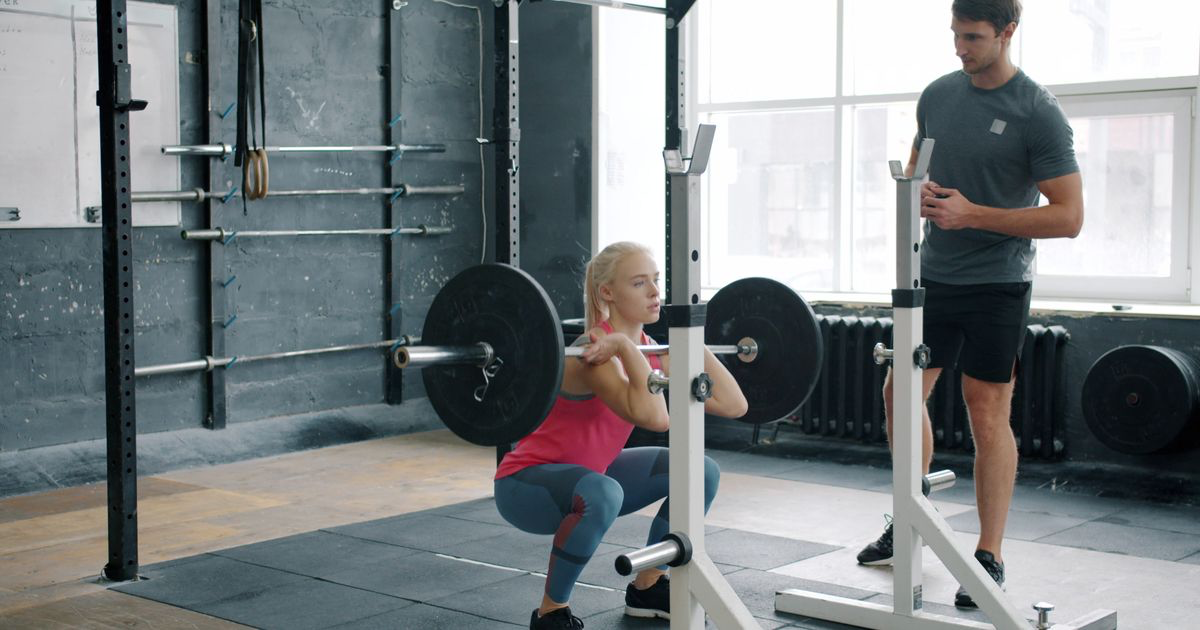
A leg press is close to self-explanatory. A barbell squat takes weeks of practice before technique stops being the limiting factor, and that gap matters most in your first few months. If your first session is soon, your first day at the gym covers where to start.
Loadability and small jumps
Machines come with a fixed stack, often in jumps of 5kg or more, which is a big relative step on a small exercise. Dumbbells have the same problem at the light end. Barbells win here, because you can add 1.25kg plates and creep upward.
Safety when you train alone
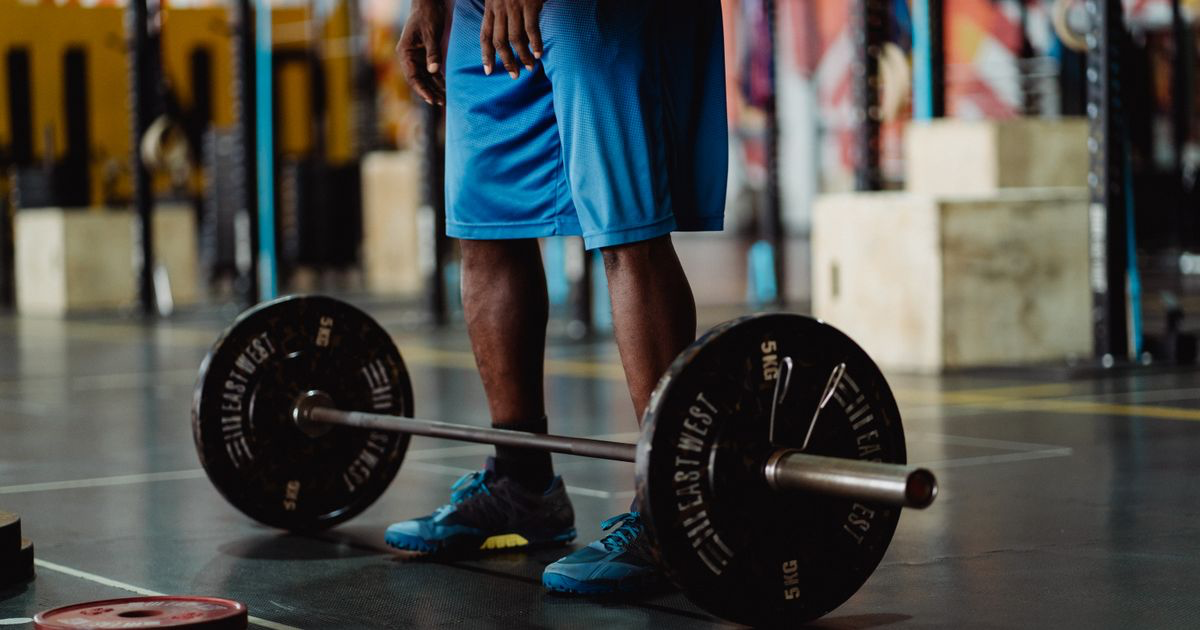
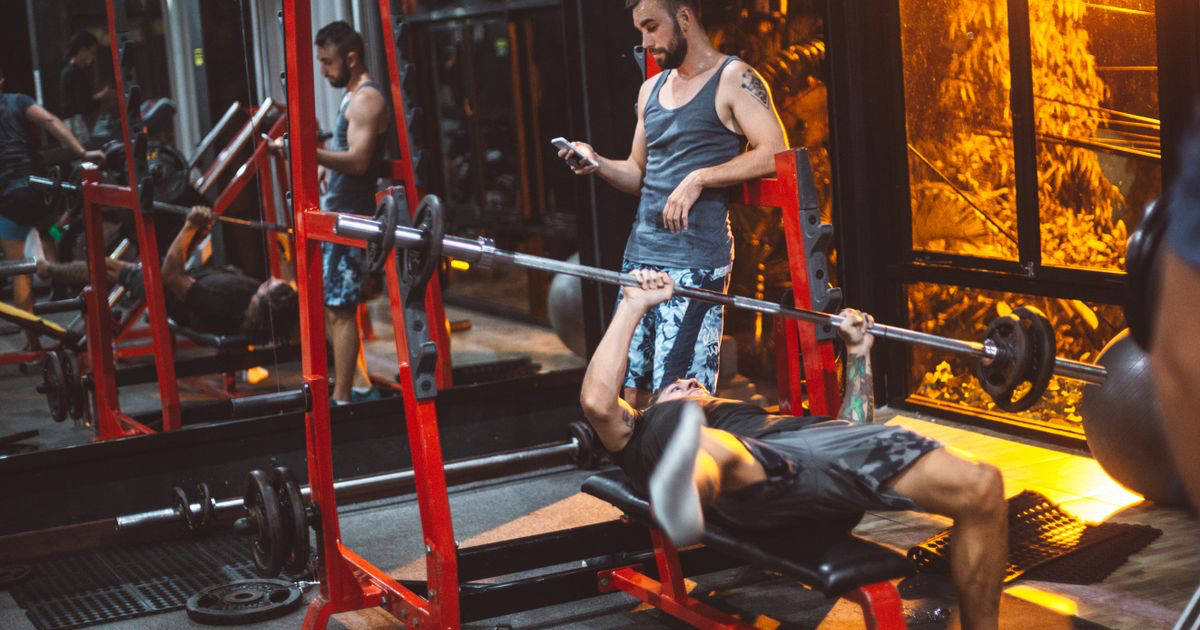
This one is genuinely one-sided. A failed rep on a leg press or a chest press machine means racking the handles and standing up. A failed rep under a barbell bench press without a spotter or safety pins is the classic way people get hurt.
If you train alone at odd hours, that difference should carry real weight in your exercise selection.
| Factor | Machines | Free weights |
|---|---|---|
| Stability demand | Low | High |
| Learning curve | Short | Longer |
| Small weight jumps | Often coarse | Fine on barbells |
| Safe to fail alone | Usually yes | Often no |
| Carryover to daily strength | Moderate | High |
| Easy to push near failure | Yes | Harder on big lifts |
What does the research say about muscle growth?
The honest summary: when training is matched for effort and volume, machines and free weights grow muscle about equally.
A systematic review and meta-analysis of 13 studies covering 1,016 participants (789 men and 219 women), published in BMC Sports Science, Medicine and Rehabilitation, found no difference between the two modalities for hypertrophy. The authors also found no difference for jump performance, and concluded that "the choice between free-weights and machines are down to individual preferences and goals."
Strength, though, is a different story.
Strength gains are specific to what you trained on
The same meta-analysis found that when everyone was tested on a free-weight exercise, the free-weight groups improved more. When testing happened on machines, the machine groups tended to come out ahead, though that result did not reach statistical significance.
Read that as a testing effect, not a muscle effect. You get good at the thing you practise. If your goal is a bigger barbell squat, you have to squat with a barbell. If your goal is bigger quads, the machine is a legitimate route.
Beginners get the same news. A randomised trial of 36 novice men over 10 weeks, published in the International Journal of Environmental Research and Public Health, compared machines only, free weights only, and a group that switched from machines to free weights halfway. The authors concluded that similar gains in muscularity, strength, and functional ability "can be expected for male novices in RT regardless of the equipment being used."
Who should favour machines?
Beginners in their first few months. You can reach a hard, productive set on a machine on day one. On a barbell, your first eight weeks are mostly technique practice, and that is fine, it just means machines let you accumulate real stimulus sooner.
Anyone training alone or without safety pins. Failing safely changes how close to your limit you are willing to go, and that is a large part of what drives growth.
Lifters chasing a specific muscle. Removing the stability tax lets you take a side delt or hamstring to actual failure, which is the same logic behind isolation work generally, covered in compound vs isolation exercises.
People working around an injury. A fixed path loads a muscle while avoiding an angle that hurts.
Who should favour free weights?
Anyone whose goal is a number on a barbell. Powerlifters, Olympic lifters, and anyone who wants a strong squat, bench, or deadlift have to train those exact lifts, because strength is specific.
Athletes who need to control their own body in space. Free weights train the coordination that machines deliberately remove.
Lifters at busy gyms or home gyms. A rack, a bar, and a set of dumbbells cover almost every movement pattern. A machine covers one.
Anyone stuck on coarse weight jumps. If the smallest machine increment is a huge relative leap, a barbell or a loadable dumbbell gives you a gentler ramp. Our free one rep max calculator is useful here for checking whether a jump you are considering is realistic before you attempt it.
Should you just use both?
Yes, and that is what most good programs already do. The useful framing is per exercise rather than per lifter.
Use free weights for the big compound patterns where technique and carryover matter: squat, hinge, press, row. Use machines and cables for accessory work, where you want to take a muscle close to failure without a stabiliser giving out first.
A simple starting plan
- Pick two free-weight compounds per session. A squat or Romanian deadlift for legs, a bench press or dumbbell press for push, a barbell or dumbbell row for pull. These go first, while you are fresh.
- Add two or three machine or cable exercises after them. Leg press or leg curl, chest press or pec deck, lat pulldown, cable lateral raise. Take these to within a rep or two of failure.
- Write the machine setup down the first time. Seat height, pin number, handle position, foot placement. One extra word per line now saves you guessing in three months.
- Log weight and reps for every working set. Both modalities, same log, same format.
leg press seat 4, 120kg 10,9,8is enough. - Check the trend every two weeks. If reps or load are climbing on both the barbell lifts and the machines, keep going. If one has stalled, change that exercise, not the whole plan.
How do you track progress across both?
Machine loads are not comparable between gyms, or even between two machines in the same gym, because plate weights, cable ratios, and lever arms all differ. So "leg press 100" tells you nothing next year unless you noted which machine and what the seat setting was. How to log machine weights covers that problem in detail.
Most lifters solve it with a note on their phone, something like chest press m/c seat 4, 60kg 10,9,8. Fast to type, but a wall of text hides whether the number is climbing.
| Logging method | Physical notebook | Notes app | Traditional gym app | Gym Note Plus |
|---|---|---|---|---|
| Logging speed | Fast | Very fast | Slow (menus and taps) | Very fast (plain text) |
| Data visualization | None | None | Yes | Yes (auto charts) |
| Flexibility | Total | Total | Rigid templates | Total (free-form text) |
| Searchability | Flip pages | Basic text search | Good | Strong (per-exercise history) |
Gym Note Plus works with the plain-text habit instead of replacing it. You type the session the way you already type it, and the app turns those lines into a tracked log:
- Machine settings stay attached. Seat height, pin number, or handle position lives with the set, not in your memory.
- Per-exercise history. Tap the leg press to see every past session instead of scrolling months of notes.
- Charts without data entry. Progression shows as a line, so a stall on one exercise is visible.
- Free-weight and machine lifts side by side. One log, no separate system for each.
You can try the idea without installing anything: paste your last workout into the free notes to workout translator and see the shorthand become a structured session.
The bar and the machine both build muscle. What decides your results is how hard you work and whether you can see the numbers moving.
Frequently Asked Questions
Are machines as good as free weights for building muscle?
Yes. A meta-analysis of 13 studies in BMC Sports Science, Medicine and Rehabilitation found no difference in hypertrophy between machine-based and free-weight training. Machines and free weights grow muscle at similar rates when sets are taken close to failure with matched volume, so equipment choice comes down to preference and access.
Are free weights better than machines for strength?
Free weights are better for free-weight strength, and machines are better for machine strength. The BMC meta-analysis found strength gains were specific to the modality tested. If your goal is a heavier barbell squat or bench press, train with barbells. If you simply want stronger muscles, either route works.
Can a beginner build muscle using only machines?
Yes. A randomised trial of 36 novice men in the International Journal of Environmental Research and Public Health found similar gains in muscularity and strength regardless of whether participants used machines, free weights, or switched between them. Machines let a beginner reach hard sets immediately, before barbell technique becomes reliable.
Should I do machines or free weights first in a workout?
Do free weights first in most sessions. Barbell and dumbbell compounds demand more technique and coordination, so they belong early while you are fresh. Machines and cables work well later, when fatigue would make a heavy free-weight lift risky but still allows you to push an isolated muscle hard.
Do machines count as compound exercises?
Some do. A machine chest press or lat pulldown moves multiple joints, which makes them compound exercises regardless of the equipment. A leg extension moves only the knee, which makes it isolation. Joint count decides the category, not whether the resistance comes from a stack or a barbell.
Final Takeaways
- The difference is who controls the path. Machines fix it, free weights leave it to you and your stabilisers.
- Growth is similar between the two. A 13-study meta-analysis found no hypertrophy difference between machines and free weights.
- Strength is specific. Train the barbell if you want barbell numbers, because testing follows training.
- Machines suit beginners and solo lifters. Faster to learn, safer to fail on, easier to push near failure.
- Free weights suit strength and sport goals. Better carryover, finer weight jumps, less equipment needed.
- Use both, chosen per exercise. Free-weight compounds first, machine and cable accessories after.
- Log the machine settings. A machine number without the seat and pin position is not comparable later.

Josh Ibbotson
Josh is the creator of Gym Note Plus, building tools that make workout tracking as simple as taking notes.
Ready to try it out?
Download Gym Note Plus and start tracking your workouts the way you want.
Download on App Store