
Compound vs Isolation Exercises: What's the Difference?
Quick answer: Compound exercises move several joints and muscles at once (squat, bench press, row, deadlift, pulldown), so they build the most strength and muscle per minute. Isolation exercises move one joint and target a single muscle (curl, lateral raise, leg extension). Train compounds first, then add isolation to fill gaps.
You walk into the gym for the first serious week and there are forty machines, a wall of dumbbells, and a rack full of barbells. Everything looks like it does something. None of it comes with a label saying "this one matters most."
So you drift toward the machines that feel easy and safe, spend twenty minutes on your biceps, and leave wondering why the guy doing five sets of squats seems to grow faster on half the exercises.
What is a compound exercise?
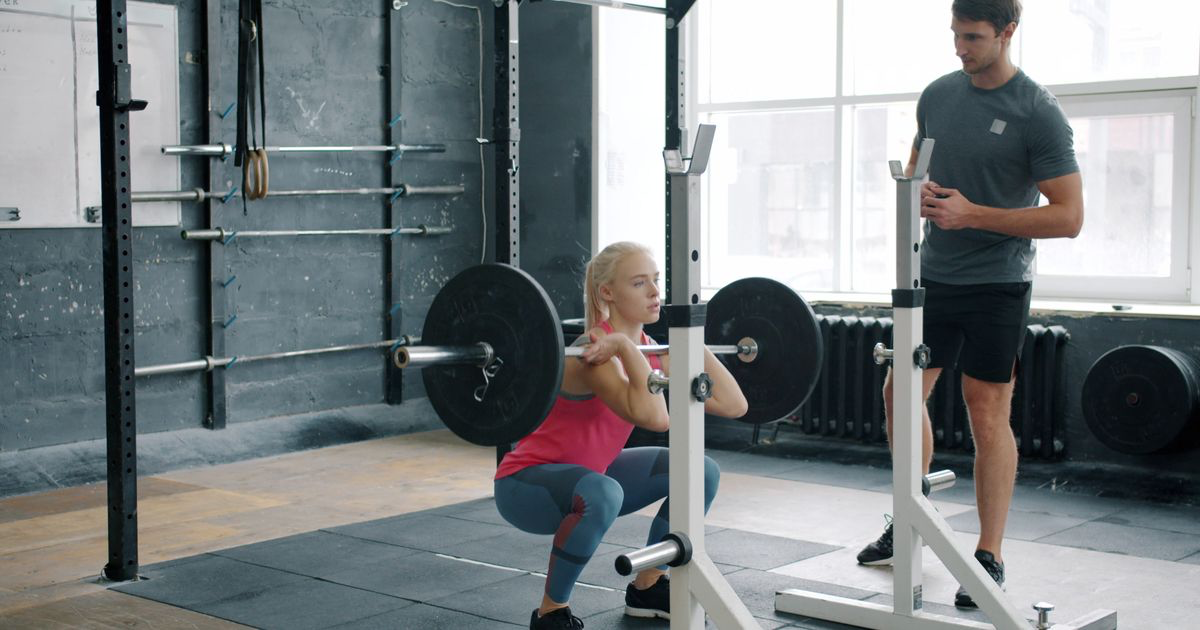
A compound exercise moves more than one joint and works several muscles together. A squat bends your hips, knees, and ankles at once, driving your quads, glutes, hamstrings, and core in a single movement.
Because so much muscle is working, you can load these lifts heavy and move real weight. That combination of load and muscle mass is what makes them the backbone of almost every good program.
Common compound movements
- Squat: hips, knees, quads, glutes, core
- Deadlift: hips, back, hamstrings, glutes, grip
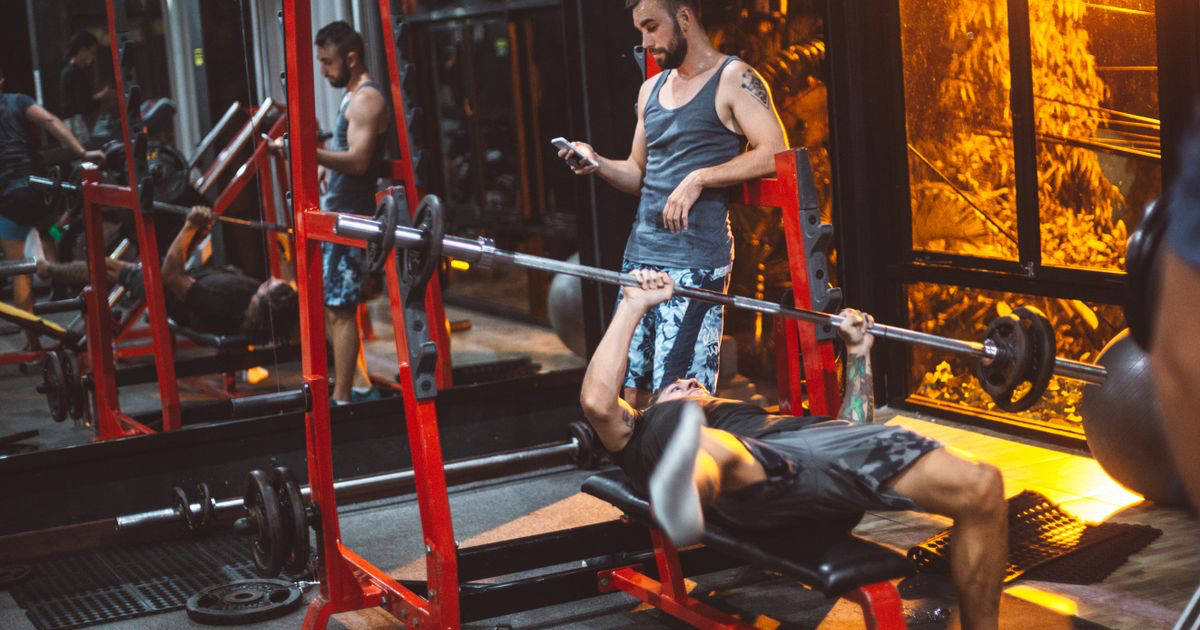
- Bench press: chest, shoulders, triceps
- Overhead press: shoulders, triceps, upper chest
- Row: mid-back, lats, biceps, rear delts
- Lat pulldown or pull-up: lats, biceps, upper back
If you learn to progress these six patterns, you have covered most of the muscle in your body with a handful of lifts.
What is an isolation exercise?
An isolation exercise moves a single joint and targets one muscle. A biceps curl bends only the elbow, so the work lands almost entirely on the biceps. A lateral raise moves only the shoulder joint sideways and hits the side delt.
Isolation work cannot be loaded as heavily, and it drains you far less, but that is the point. It lets you aim at a specific muscle that your compounds may not fully cover.
Common isolation exercises
- Biceps curl: elbow flexion, biceps
- Triceps pushdown: elbow extension, triceps
- Lateral raise: shoulder abduction, side delts
- Leg extension: knee extension, quads
- Leg curl: knee flexion, hamstrings
- Calf raise: ankle, calves
Notice that every one of these is easy to picture as a single hinge. That single-joint quality is the whole definition.
Which builds more muscle and strength?
Compounds win on raw efficiency, and for most goals they do the heavy lifting. They move more weight through more muscle, so they deliver more total stimulus in less time than a stack of isolation exercises could.
For strength, the research is reassuring rather than dramatic. In a crossover study on trained men published in the International Journal of Exercise Science, Brigatto and colleagues found that multi-joint and single-joint protocols produced statistically similar strength increases in the bench press and squat. Both work, but compounds get you there while covering more muscle at once.
For size, isolation is not the shortcut beginners imagine. In a study of untrained subjects published in PLOS ONE, Gentil and colleagues found no significant difference in arm muscle size or strength between a group doing only multi-joint lifts and a group that added single-joint arm exercises on top. Your rows and pulldowns already hammer the biceps hard.
The practical read: compounds are non-negotiable, and isolation is a targeted top-up, not the main event.
When is each one best?
Reach for compounds when you want the most result per minute. Building a base of strength, training on limited time, or just trying to get generally bigger and stronger all point straight at the big lifts.
Reach for isolation when a specific muscle lags or a joint needs a break. Side delts, biceps, and calves often want a little direct work, because no compound targets them cleanly. Isolation is also gentler on cranky elbows and shoulders when a heavy press is off the table that day.
Isolation earns its place, it just earns it second. Think of compounds as the meal and isolation as the seasoning.
How should you order them in a session?
Do your compounds first, while you are fresh. Heavy squats, presses, and rows demand the most from your technique and your nervous system, and a tired lifter grinds ugly, risky reps.
Curls and lateral raises, by contrast, are easy to do well even when you are drained. Nothing about a set of pushdowns punishes a little fatigue the way a heavy deadlift does.
The reliable template is simple: one or two compounds, then two or three isolation exercises to finish. This also protects your progression on the lifts that matter most, which is exactly where tracking earns its keep. If you want the theory behind the numbers, our guide on sets and reps for beginners pairs cleanly with this order.
How many of each should you program?
Lead each session with one or two compounds, then add two or three isolation exercises. That ratio keeps your time spent where the payoff is biggest without ignoring the smaller muscles.
Across a full week, most of your hard sets should come from compound movements. Isolation fills the gaps: a few sets for the side delts, biceps, and any muscle you specifically want to bring up.
If you are trying to work out how much total work to do, our breakdown of how many sets per week to build muscle gives you the weekly targets, and the rest is just splitting them sensibly between big and small lifts. Getting your rest right between those sets matters too, which is covered in how long to rest between sets.
How do you track the compounds that actually decide progress?
Here is the thing most tracking advice misses: the lifts worth tracking most carefully are the big compounds, because that is where week-to-week progression is real. Nobody remembers whether they curled 12kg or 12.5kg last month. Everybody notices when the squat stalls for three weeks.
That is why plenty of lifters just keep a plain-text log in Apple Notes, a line like squat 100kg 5,5,4 / curl 12kg 12,11. Fast and simple, but a wall of text hides the trend.
Here is how the common options compare on what makes your compound progression visible:
| Feature | Physical Notebook | Notes App | Traditional Gym App | Gym Note Plus |
|---|---|---|---|---|
| Logging speed | Fast | Very fast | Slow (menus and taps) | Very fast (plain text) |
| Data visualization | None | None | Yes | Yes (auto charts) |
| Flexibility | Total | Total | Rigid templates | Total (free-form text) |
| Searchability | Flip pages | Basic text search | Good | Strong (per-exercise history) |
Gym Note Plus is built for the notes-app habit rather than against it. You type your workout the way you already do, and it turns the text into a structured, trackable log:
- Type like a note, get a real log. No dropdown for every set, just plain text.
- Compound trends surfaced. Your squat and bench progression shows up as a chart, so a stall is obvious.
- Per-exercise history. Tap any lift to see every past session without scrolling a wall of text.
- Room for context. Note "elbow tweaky, skipped curls" and it stays with that session.
You can see the idea without installing anything: paste a workout into the free notes to workout translator and watch a few lines of shorthand become a tracked session. If you want to check your split, you can also get a free private link to the workout plan optimizer, which shows what muscles a plan actually hits, useful when you are balancing compounds against isolation.
Compounds build the house and isolation paints the trim. Track the big lifts closely, sprinkle in the small ones, and progress stops being a mystery.
A simple starting plan
- Pick your six patterns. Squat, hinge, push, pull, and an overhead press. These are the compounds you will build everything around.
- Open each session with a compound. One or two big lifts first, while your focus and energy are highest.
- Add two or three isolation exercises. Aim them at side delts, biceps, triceps, or calves, whatever your compounds miss.
- Log every set of the compounds. These are where progression is real, so write down weight and reps every time.
- Review every two weeks. If your compound weights or reps are climbing, the plan is working. If not, adjust before adding more isolation.
Frequently Asked Questions
Are compound or isolation exercises better for beginners?
Compound exercises are better for most beginners because they build strength and muscle across several muscles at once, teaching the core movement patterns while using time efficiently. Isolation exercises still help, especially for smaller muscles like the side delts, but they should support compounds rather than replace them.
Can you build muscle with only compound exercises?
Yes, you can build a lot of muscle with only compound exercises. A Gentil study on untrained lifters found no significant difference in arm size between a compound-only program and one that added isolation work. Most people benefit from a little isolation for lagging muscles, but compounds alone go remarkably far.
Is a squat a compound or isolation exercise?
A squat is a compound exercise. It moves the hips, knees, and ankles together and works the quads, glutes, hamstrings, and core in one movement. Any lift that bends more than one joint, like the deadlift, bench press, or row, is compound. A leg extension, which moves only the knee, is isolation.
Should you do compound or isolation exercises first?
Do compound exercises first if strength is the goal, since you get stronger at whatever you perform while fresh. For muscle growth the order matters far less: a meta-analysis of 11 studies found no meaningful hypertrophy difference between compound-first and isolation-first training. Our guide on whether to do compound or isolation exercises first covers the evidence in full.
Are lateral raises compound or isolation?
Lateral raises are an isolation exercise. The movement happens almost entirely at the shoulder joint and targets the side deltoid on its own. The same applies to leg extensions, which bend only the knee, and to biceps curls, which bend only the elbow. One working joint means an isolation exercise.
Is a lat pulldown compound or isolation?
A lat pulldown is a compound exercise. It moves both the shoulder and the elbow, recruiting the lats, rhomboids, rear delts and biceps together. Cable rows and pull-ups are compound for the same reason. The joint count decides the classification, not whether the exercise uses a machine or free weights.
How many isolation exercises should I do per workout?
Most lifters do two or three isolation exercises per workout, added after one or two compounds. Point them at muscles your compounds do not fully cover, such as side delts, biceps, triceps, or calves. Doing more than that usually adds session length without adding much extra muscle for the time spent.
Final Takeaways
- Compound means many joints, isolation means one. Squats and rows are compound, curls and leg extensions are isolation.
- Compounds build the most per minute. They move more weight through more muscle, so they anchor every good program.
- Isolation is a top-up, not the main event. Use it for lagging muscles and cranky joints, not as your whole workout.
- Compounds first, isolation second. Train the hard lifts while fresh, finish with the easy ones.
- One or two compounds, two or three isolation exercises. That ratio covers most goals.
- Track the big lifts closely. Progression on compounds is where real progress shows, so keep that log fast and readable.

Josh Ibbotson
Josh is the creator of Gym Note Plus, building tools that make workout tracking as simple as taking notes.
Ready to try it out?
Download Gym Note Plus and start tracking your workouts the way you want.
Download on App Store