
How to Use a Smith Machine: Setup, Form and Bar Weight
Quick answer: A Smith machine is a barbell fixed to vertical or slightly angled rails, so the bar can only move up and down. Set the safety stops just below your lowest position, unrack by rotating the bar off its hooks, and treat the bar as 5 to 20 kg depending on the machine, not a standard 20 kg barbell.
Every gym has one. Half the people in the gym are not quite sure what it is for, and the other half quietly suspect they are not supposed to use it.
You are allowed to use it. You just need to know three things first: how the hooks work, where the stops go, and what the bar actually weighs.
What is a Smith machine and how does it work?
A Smith machine is a barbell locked into rails. The bar slides up and down on a fixed path, and hooks on the bar let you rack it at almost any height by rotating your wrists.
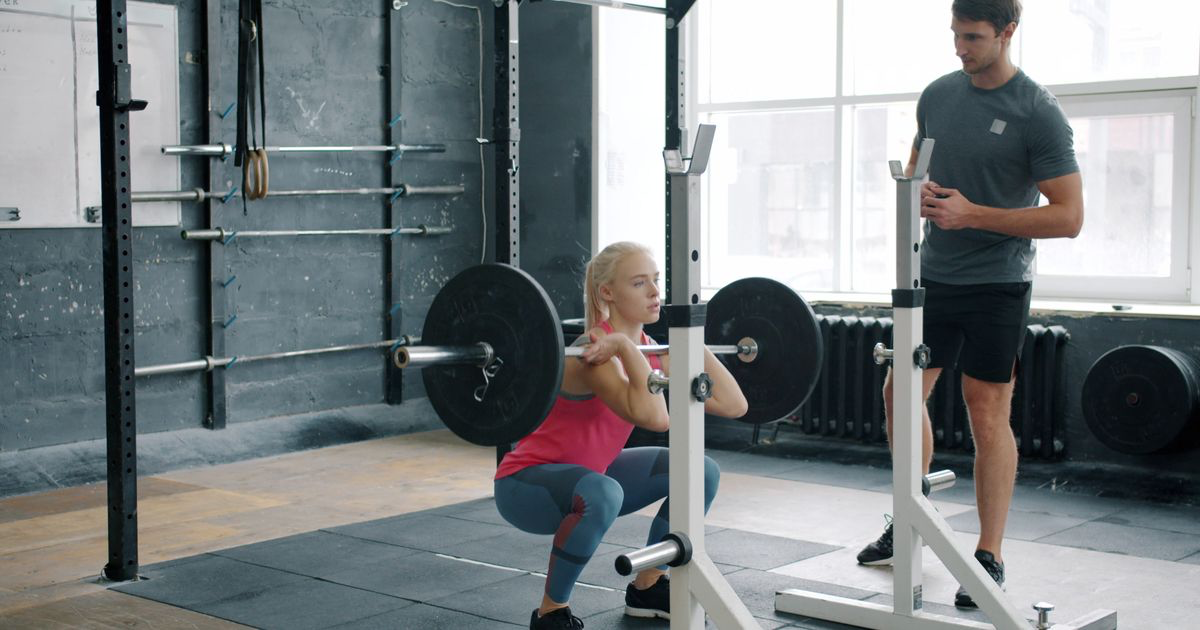
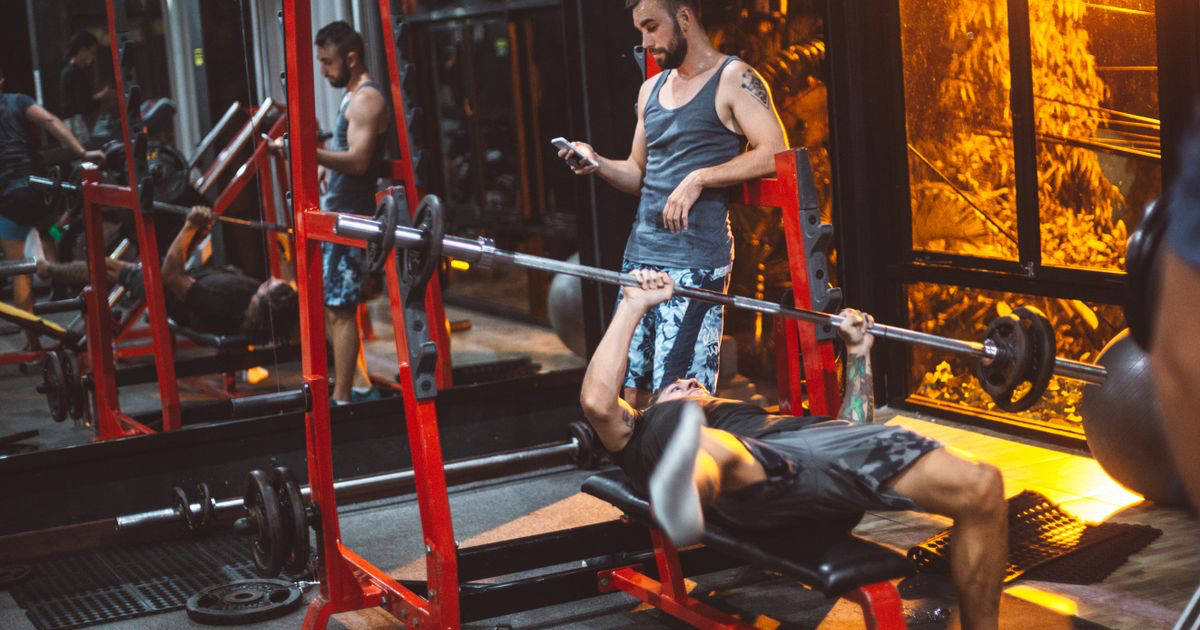
That fixed path is the whole trade. You lose the freedom to move the bar forward and back, and in exchange the machine balances the bar for you. The bar cannot tip or drift, and you can rack it mid-rep anywhere on the rails, which is why nobody needs a spotter on this machine.
Most machines add a second safety layer: adjustable stops that the bar physically cannot pass. Set them just below the bottom of your rep and the worst case of a failed squat or bench press is a short, boring pause, not an accident.
How much does a Smith machine bar weigh?
A Smith machine bar usually weighs far less than the 20 kg barbell you are picturing, and the exact weight varies by machine. Counterbalanced Smith machines use a hidden counterweight, so the bar can feel lighter than 5 kg. Machines without one commonly land between 7 and 20 kg.
The spread across brands is real. A Home Gym Supply guide to Smith machine bar weights lists Life Fitness at around 20 lb, Hoist at 25 lb and Hammer Strength at 30 lb, with counterbalanced bars often under 10 lb. Life Fitness's product page for the Hammer Strength Smith machine lists a starting resistance of 30 lb, about 13.6 kg.
The practical fix takes thirty seconds. Look for a sticker on the frame, ask the gym staff, or press the empty bar and compare it to a dumbbell you know. Then use that number consistently. This is the same problem every pin-loaded machine has, and our guide to logging machine weights covers the general rule: the number only has to be consistent on that machine.
How do you set up a Smith machine safely?
- Rotate the bar to unrack it. The hooks release when you twist the bar, usually toward you. Practice once with no weight so the motion is automatic.
- Set the safety stops first, not after. Put them one notch below the lowest point of your rep. Test with the empty bar.
- Check which way the rails lean. Many Smith machines run on a slight angle. Hammer Strength builds its rails at seven degrees to mimic a natural bar path. Do an empty-bar rep and pick the direction that keeps the bar over your midfoot at the bottom of a squat, or drifting slightly toward your eyes at the top of a press.
- Position your body to the bar, not the bar to your body. The bar path is fixed, so your feet and the bench have to do the adjusting.
- Re-rack by twisting the bar back onto the hooks. Any height works.
Is the Smith machine as good as free weights?
The Smith machine builds muscle about as well as free weights, but it falls short of them for total-body coordination.
The activation studies favour free weights. Schwanbeck and colleagues measured muscle activity during free-weight and Smith machine squats and found overall EMG averaged 43% higher with the free bar, with the biggest gaps in the calves and vastus medialis. On the bench press, Schick and colleagues found the medial deltoid worked harder on the free-weight version.
Growth is a different question. An eight-week trial by the same Schwanbeck group put 46 lifters on either free weights or machines, including Smith machine squats and presses. Quadriceps and biceps thickness grew the same in both groups, and most strength measures rose 11 to 19% with no difference between them.
The honest summary: the stabilisers work less, the target muscle grows about the same. For the wider comparison, see machines vs free weights.
Why is your Smith machine number higher than your barbell number?
Because the machine is doing the balancing. Cotterman and colleagues tested one rep max squats and bench presses on both. Bench press was stronger with free weights, while squats went the other way, with women lifting significantly more on the Smith machine.
So the two numbers are not interchangeable, and they change in different directions per exercise. A 60 kg Smith machine bench is not a 60 kg barbell bench, and pretending otherwise is how people get pinned the first week back on free weights.
Keep the two lifts as separate entries in your log. If you want a comparable strength number across both, plug each one into the free one rep max calculator and compare estimated maxes instead of bar weights.
What are the best Smith machine exercises?
The lifts where a fixed vertical path is natural, and the lifts where failing alone is scary.
- Squats and split squats. Feet slightly in front of the bar so your midfoot stays under it.
- Bench press and incline press. Line the bar up with your mid-chest at the bottom.
- Overhead press. Sitting or standing, with the bar path just clearing your face.
- Barbell rows and inverted rows. The rackable bar makes row height easy to set.
- Hip thrusts and calf raises. Setup is faster than with a free bar.
Skip anything that needs the bar to travel in an arc, like power cleans, and anything where the fixed path fights your joints. If a movement hurts on the rails but not with a free bar, believe the free bar.
How do the ways to track Smith machine work compare?
| Physical notebook | Notes app | Traditional gym app | Gym Note Plus | |
|---|---|---|---|---|
| Logging speed | Fast | Fast | Slow, many taps | Fast, plain text |
| Keeps Smith and barbell lifts separate | If you remember | If you remember | Only if you pick the right entry | Yes, from your wording |
| Records which machine you used | Free text | Free text | Rarely a field | Yes, free text |
| Turns loads into a trend | No | No | Yes | Yes, automatic |
| Searchable months later | No | Partly | Yes | Yes |
A simple starting plan
- Weigh the bar once this week. Sticker, staff, or the dumbbell comparison test. Write the number down.
- Set the stops on every exercise, every time. One notch below your bottom position.
- Pick two Smith machine lifts and run them for six weeks. A squat pattern and a press is plenty.
- Log them under their own names.
smith squat 60kg 3x8is a different exercise fromsquat 60kg 3x8. - Progress them like any other lift. Add a rep per week within your range, then add weight.
Keep the machine and the barbell honest in your log
If you already scribble your sessions into a notebook or your phone's notes app, the Smith machine only adds one requirement: the word "smith" in the line.
Gym Note Plus reads the plain text you were going to type anyway and turns it into tracked, charted exercises.
smith bench 50kg 10,9,8becomes a structured exercise, kept separate from your barbell bench.- Notes like "bar feels light, counterbalanced" stay attached to the session.
- Your progression on each machine shows up as a chart, not a memory.
Paste your last session into the free notes to workout translator to see what your own shorthand turns into.
The Smith machine is not cheating and it is not a barbell. It is its own exercise with its own numbers, and it rewards anyone who writes those numbers down.
Frequently Asked Questions
How much does a Smith machine bar weigh?
A Smith machine bar typically has an effective weight between 5 and 20 kg. Counterbalanced machines can feel lighter than 5 kg, while Hammer Strength lists a 30 lb (13.6 kg) starting resistance on its machine. The weight varies by brand and mechanism, so check the frame sticker or test the empty bar against a known dumbbell.
Is the Smith machine good for squats?
Smith machine squats grow the quadriceps about as well as free-weight squats. An eight-week trial by Schwanbeck and colleagues found the same quadriceps growth from machine-based and free-weight training. Free-weight squats produced around 43% more overall muscle activation in an earlier EMG study, mostly from stabilising muscles, so keep some free-weight work if coordination matters to you.
Can beginners use a Smith machine without a spotter?
Yes, and that is one of its main advantages. The bar racks at any height with a twist of the wrists, and adjustable safety stops physically prevent it from descending past the point you set. Set the stops one notch below the bottom of your rep and a failed set ends with the bar resting on them, not on you.
Should you face toward or away from an angled Smith machine?
There is no researched answer, so use the bar path as the test. Do an empty-bar rep facing each way. For squats, choose the direction that keeps the bar over your midfoot at the bottom. For presses, choose the direction where the bar drifts slightly back toward your eyes as you lock out.
Is a Smith machine bench press the same weight as a barbell bench press?
No. Cotterman and colleagues found lifters bench pressed more with a free barbell than on a Smith machine, while squat one rep maxes shifted the other way. Log Smith machine lifts under their own names and compare estimated one rep maxes rather than bar weights when you switch between the two.
Final Takeaways
- The bar is not 20 kg. Find your machine's real bar weight once and use it forever.
- Stops first, lift second. The safety stops are the reason the machine exists. Set them every session.
- Growth matches free weights more than the gym floor admits. Stabiliser activation is lower, muscle growth is similar.
- It is a separate exercise. Smith squat and barbell squat get separate lines in your log, always.
- Match your body to the fixed path. Feet forward on squats, bench lined up under the bar, and test every new setup with an empty bar.

Josh Ibbotson
Josh is the creator of Gym Note Plus, building tools that make workout tracking as simple as taking notes.
Ready to try it out?
Download Gym Note Plus and start tracking your workouts the way you want.
Download on App Store