

How to Remember What Weight You Lifted Last Time
Quick answer: The reliable way to remember what weight you lifted is to write it down the second you finish each set, not after the workout. Log the exercise, weight, and reps in one short line, like "bench 135 3x8." Memory fades within hours, so a written record is the only thing that lets you beat last week on purpose.
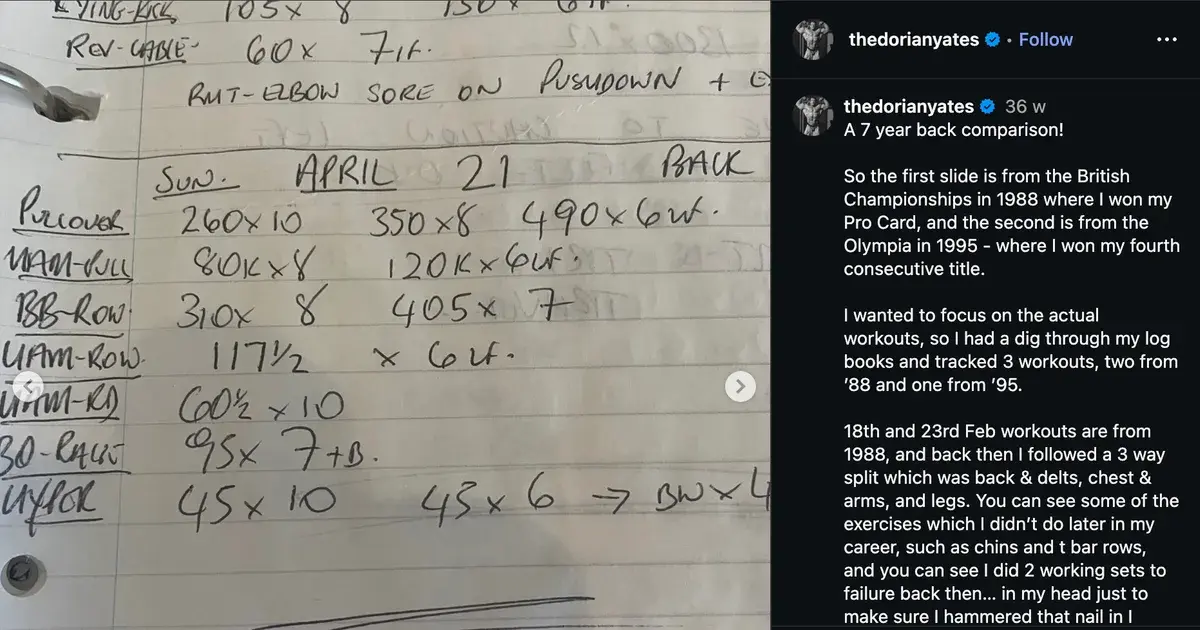
You walk up to the bench, load the bar, and freeze. Was it 135 last time? Or 125? You did three sets of something.
So you shrug and repeat what feels safe. And that shrug, week after week, is quietly why your progress stalled.
Why can't you remember what you lifted?
Because human memory is built to forget, fast. This is not a you problem. It is how memory works, and lifting is exactly the kind of detail it drops first.
The classic research on this, Hermann Ebbinghaus's forgetting curve, showed that without reinforcement people lose a large share of newly learned information within the first day, with the steepest drop happening in the first hours. A set you did 48 hours ago, mixed in with five other exercises, barely stands a chance.
Now stack that across a whole session. Six exercises, three sets each, plus reps and how each felt. That is roughly 18 data points per workout you are asking your brain to file and retrieve days later. It will not.
Why does remembering your weights matter so much?
Because progress in the gym is built on beating your last session, and you cannot beat a number you cannot recall. This is progressive overload: adding a little weight or a rep over time. It only works if you know the starting point.
When you cannot remember, one of two things happens. You play it safe and repeat the same weight for weeks, which is why you plateau. Or you guess high, grind ugly reps, and risk your form.
If either sounds familiar, it is the same trap behind why so many lifters stop making progress: they are training hard but flying blind.
The mental tricks people try (and why they fail)
Most people try to remember instead of record, and it almost never holds up. The common workarounds all leak:
- "I'll just remember the round numbers." You remember two lifts and forget the other four.
- Repeating the same routine to anchor it. Works until a busy week scrambles the order.
- Rounding everything to plates. Fine for the big lifts, useless for accessories and dumbbells.
- Trusting the pump. How a set felt is not the same as what you actually did.
These feel efficient in the moment. They fail the moment you need a precise number, which is every single set.
What is the reliable way to remember your weights?
Write it down the instant you rack the weight, between sets, not after the workout. The gap between finishing a set and logging it is where the number slips away. Close that gap and the problem disappears.
Keep the entry tiny so logging never becomes a chore:
- Exercise: a short name or abbreviation.
- Weight: the load on the bar or dumbbells.
- Reps: how many you actually got.
That is it. "Squat 185 5,5,4" takes four seconds and tells next week's you exactly what to beat. For a full shorthand system, see how to write down your workouts and what to write in your workout notes.
Log between sets, not after
The best moment to log is during your rest. You are already standing there for a minute or two. Typing one line uses that time and captures the number while it is still fresh, before the next set overwrites it.
By the time you are in the locker room, three exercises have blurred together. Logging in the moment is the whole trick.
Where should you write it down?
Anywhere you will actually check, but the tool decides how useful the record is. A number you wrote down but cannot find fast is barely better than forgetting it.
Here is how the common options compare:
| Physical notebook | Notes app | Traditional gym app | Gym Note Plus | |
|---|---|---|---|---|
| Logging speed | Fast | Fast | Slow, many taps | Fast, plain text |
| Find last week's weight | Flip pages | Scroll and search | A few taps | Instant, per exercise |
| Data visualization | None | None | Charts | Automatic charts |
| Flexibility | Total | Total | Rigid fields | Total, free text |
| Always with you | If you carry it | Yes | Yes | Yes |
A notebook and your notes app are fast to write in but slow to read back: finding last week's bench means flipping or scrolling. A rigid gym app files it neatly but makes logging each set a multi-tap slog. The ideal keeps notes-app speed and still pulls up last week's number instantly.
A simple system to never forget again
- Pick one place to log and use it every single session, whether that is Notes, a notebook, or an app.
- Write the set the moment you rack it. Exercise, weight, reps, in one line. Do it during your rest.
- Glance at last time before you start each exercise. That number is your target to match or beat.
- Note anything odd in a word or two. "Bench 135 3x8, last rep grind" tells you not to jump yet.
- Review weekly. Skim the last two sessions and confirm at least one lift moved up.
Do this for two weeks and the guessing at the rack simply stops.
Turn the notes you already keep into memory that works for you
If you already type sets into your phone's notes or a paper book, you have solved the hard part: you are recording. The weak spot is retrieval. Scrolling back through weeks of entries to find one number is the friction that makes people stop checking, and then stop logging.
Gym Note Plus fixes retrieval. You log in plain text, the same fast way you already type into Notes, and it organizes every set by exercise and date automatically. Last week's bench is one tap away, and your progress shows up as a chart instead of a wall of text.
Already have months of workouts sitting in Apple Notes? Paste them into the free notes to workout translator and watch that pile of text turn into structured, searchable history with charts, no retyping.
- Log at notes-app speed. No menus, no set-by-set tapping.
- Find any past weight instantly. Every lift is grouped by exercise, not buried in a note.
- See the trend, not just the number. Automatic charts tell you when to add weight.
For the bigger picture, start with how to track gym progress.
You do not have a bad memory for the gym. You have a normal one. Write the set down the second you finish it, and last week's number is always waiting for you.
Frequently Asked Questions
How do I remember how much weight I lifted?
The reliable way to remember how much weight you lifted is to write down each set immediately after finishing it, during your rest period. Record the exercise, weight, and reps in one short line, such as "squat 185 3x5." Human memory fades within hours, so a written or app-based log is the only dependable method. Reviewing last session's numbers before each exercise gives you a target to beat.
Should I write down my weights at the gym?
Yes, you should write down your weights at the gym. Tracking every set is the single most effective habit for making consistent progress, because progressive overload depends on knowing exactly what you did last time. Logging takes only a few seconds per set during your rest, and it removes the guesswork that causes lifters to repeat the same weight for weeks and stall.
Is it normal to forget what weight you lifted?
Yes, it is completely normal to forget what weight you lifted. Research on the forgetting curve shows people lose a large portion of new information within the first day, and a typical workout contains dozens of numbers across multiple exercises and sets. Forgetting is a feature of how memory works, which is exactly why writing your lifts down beats trying to memorize them.
When should I log my sets during a workout?
You should log each set immediately after finishing it, during your rest period, rather than waiting until the end of the workout. Logging in the moment captures the weight and reps while they are fresh, before the next set or exercise overwrites them in your memory. Rest time between sets is already idle, so using it to write one short line costs you nothing.
What is the fastest way to track gym weights?
The fastest way to track gym weights is plain-text shorthand, writing something like "bench 135 3x8" in a note or an app that reads that format. Plain text logs a set in a few seconds, as fast as paper, without navigating menus or dropdown fields. Tools like Gym Note Plus turn that shorthand into organized, per-exercise history and progress charts automatically.
Final Takeaways
- Forgetting is normal. Memory drops most new details within a day, so do not rely on it for your lifts.
- Record, do not memorize. Write each set down the second you rack the weight.
- Log between sets, not after. Your rest period is the perfect, free moment to capture the number.
- Check last time before each exercise. That number is your target to match or beat.
- Use a tool that makes retrieval instant, so finding last week's weight never becomes a reason to quit tracking.

Josh Ibbotson
Josh is the creator of Gym Note Plus, building tools that make workout tracking as simple as taking notes.
Ready to try it out?
Download Gym Note Plus and start tracking your workouts the way you want.
Download on App Store