
How to Use the Hip Abduction Machine: Muscles Worked, Form, and Lean
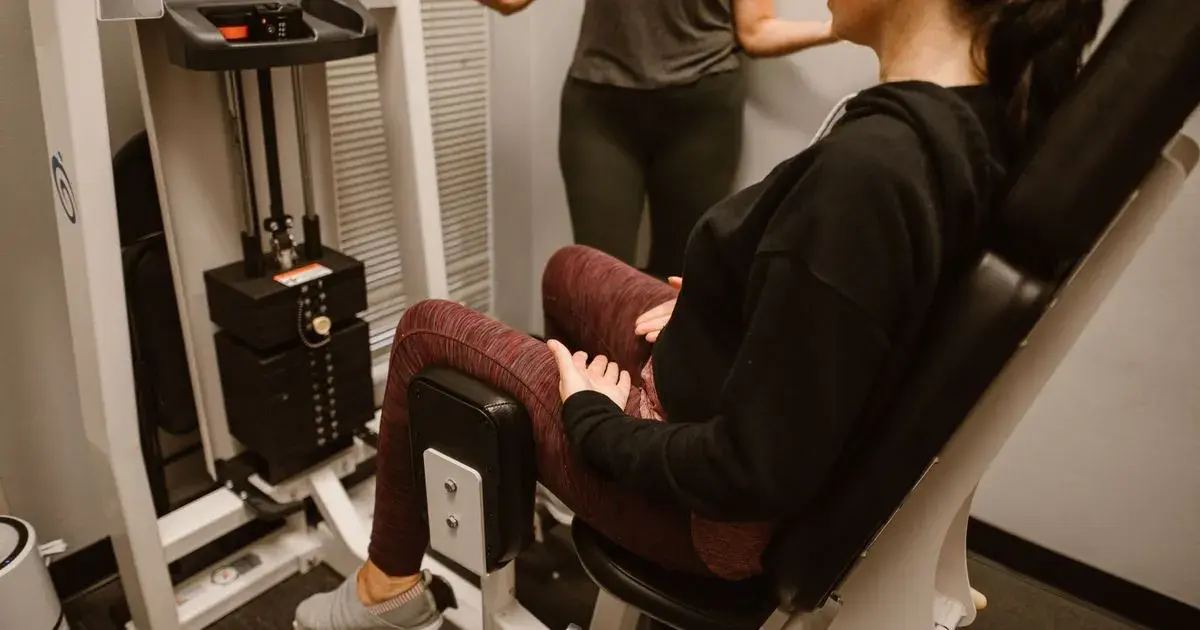
Quick answer: To use the hip abduction machine, sit with your back on the pad, place the pads against the outside of your knees, brace, and push your knees apart until you feel your side glutes work. Pause, then return slowly. The machine trains the gluteus medius, gluteus minimus, upper glute max and tensor fascia latae.
The hip abduction machine is the one in the corner that people either swear by or quietly avoid. You sit down, push your knees out, and the set is over in a minute.
That simplicity makes it easy to do on autopilot. The seat angle, how far you lean and which pin you used all change the exercise, and most logs record none of it.
What muscles does the hip abduction machine work?
The gluteus medius is the main target. It sits on the side of your hip, above the glute max, and its job is to move the thigh out to the side and keep your pelvis level when you stand on one leg.
The gluteus minimus and the TFL help. The gluteus minimus lies under the glute med and does the same job. The tensor fascia latae (TFL) sits at the front of the hip and also abducts, but it rotates the thigh inward too, so most programmes try to keep it from taking over.
The upper glute max joins in. The top fibres of the gluteus maximus also abduct the hip. How much they contribute depends on how far you lean, which is covered below.
The machine is good at isolating the glute med. In de Almeida Paz and colleagues' 2022 study of 11 trained men, the hip abductor machine produced the same glute med activation as side-lying hip abduction and clamshells. It produced a higher glute med to TFL ratio than both, which led the authors to call it the best of the three for targeting the glute med while keeping the TFL quiet.
How do you use the hip abduction machine?
Setup takes about thirty seconds, and it is where most of the mistakes start.
- Set the starting width. Most machines have a lever or pin that sets how close together your legs start. Pick a start where you feel a light stretch on the outside of your hips, not one where your knees touch.
- Sit all the way back. Your lower back and hips should touch the pad. Put your feet on the footrests.
- Place the pads on the outside of your knees. The pads should sit on your outer thighs, just above the knee joint.
- Hold the handles and brace. Grip lightly and tighten your stomach so your torso does not rock.
- Push your knees apart. Drive out with the sides of your hips, under control, to the widest point you can reach without your hips lifting off the seat.
- Pause for one second, then return over two to three seconds. Stop just before the weight stack touches down, then start the next rep.
Should you lean forward on the hip abduction machine?
Leaning forward shifts the work towards the glute max. In a study by Fujisawa and colleagues, 27 men pushed into hip abduction at hip flexion angles from 0 to 80 degrees. Upper and lower glute max activity rose significantly as the hip flexed further, TFL activity fell, and glute med activity stayed about the same.
A newer study points the same way for the TFL. A 2026 preprint on Research Square tested 14 trained volunteers on a seated abduction machine at 45, 90 and 135 degrees of hip flexion. TFL activation fell as hip flexion increased, and the glute med to TFL ratio tripled at 135 degrees. Glute med activation itself was higher at 45 degrees than at 135. The paper had not been peer reviewed when this was written, so treat it as early evidence.
So which position should you use?
Sit upright for the glute med. This is the standard setup the machine was designed around, and it keeps the glute med working hard.
Lean forward for more glute max and less TFL. Hinge from the hips with a flat back and bring your chest towards your knees. The movement will feel different, which is expected.
Pick one and log it. Upright and leaning are different exercises in practice. If you switch between them without noting it, your numbers stop being comparable.
What are the most common hip abduction machine mistakes?
Bouncing out of the bottom. Letting the stack slam and rebounding off it removes tension from the stretched position. Control the return.
Lifting the hips off the seat. When the weight is too heavy, people rock their pelvis to finish the rep. If your hips leave the pad, the load is too high.
Cutting the range short. Half reps in the middle of the range let you load more weight, but you lose the stretch and the squeeze at the ends.
Rushing the set. The movement is short and the weights feel light, so fast reps are tempting. A one second pause at the widest point makes a light weight feel much heavier.
How many sets and reps should you do on the hip abduction machine?
Two to four sets of 12 to 20 reps, one to three times a week. This is a small, single-joint movement, so higher reps suit it, and it recovers quickly. Put it near the end of a lower body session, after your heavier compound lifts.
Progress reps before weight. Pin jumps on abduction machines are often large compared with the working load. Add reps across all your sets first, then move up one pin and drop back to the bottom of the rep range.
Use tempo when the pin jump is too big. A two second hold at the widest point or a three second lowering phase makes the same weight harder.
The hip abduction machine is an accessory, not your main glute lift. Our hip thrust guide covers the heavy hip extension side of the plan, and cable glute kickbacks are another light, low back friendly option.
How should you log the hip abduction machine?
"Abductor 3x15" hides most of what matters. Which machine, which start width, leaning or upright, and what pin?
A useful entry records the machine, the start width setting, your torso position, the pin number and the reps for each set. Stack numbers are not consistent between brands, so a pin is only comparable on the same machine. Our guide on how to log machine weights covers shorthand for pins, settings and add-on plates.
| Logging method | Logging speed | Records seat and lean settings | Shows progress over time | Searchable later |
|---|---|---|---|---|
| Physical notebook | Fast | Only if you write them | Flick back through pages | No |
| Notes app | Fastest | Only if you write them | Plain text, no trend | Text search only |
| Traditional gym app | Slow, menus per set | Rarely, notes field at best | Charts | Inside the app |
| Gym Note Plus | Fastest, plain text | Yes, kept with the set | Automatic per-exercise trends | Whole history |
A simple four-week starting plan
- Week one: find your settings. Choose a light pin and do three sets of 15. Write down the machine, start width, torso position and pin number.
- Week two: own the range. Same weight, three sets of 15, with a one second pause at the widest point and a slow return.
- Week three: push the reps. Same weight, three sets taken to about two reps in reserve. Record every set.
- Week four: move one pin. Drop to 12 reps at the new weight and keep the pause. If your hips start lifting off the seat, go back to week three's weight.
Where Gym Note Plus fits
If you already type your sets into your phone's notes app, you have already built the habit that matters. The trouble starts when you want last month's abductor numbers and have to scroll through a wall of text to find them.
Gym Note Plus lets you keep writing in plain text and turns it into tracked data.
- Type
hip abduction lean fwd pin 7, 15,15,13and it becomes three structured sets. - Upright and leaning versions stay separate because you named them differently.
- Seat settings and pin numbers stay in the note next to the set.
- Per-exercise trends are calculated for you, so you can see when it is time to move the pin.
Paste a recent leg day into the free notes to workout translator to see what your own shorthand turns into.
Sitting upright works the glute med and leaning forward brings in more glute max, so pick a position and write it down.
Frequently Asked Questions
What muscles does the hip abduction machine work?
The hip abduction machine mainly works the gluteus medius, with help from the gluteus minimus, the upper gluteus maximus and the tensor fascia latae. A 2022 study by de Almeida Paz and colleagues found the machine gave a higher glute med to TFL activation ratio than clamshells or side-lying hip abduction.
Should you lean forward on the hip abduction machine?
Leaning forward on the hip abduction machine increases glute max involvement and reduces TFL activity. Fujisawa and colleagues found glute max activity rose and TFL activity fell as hip flexion increased, while glute med activity stayed about the same. Sitting upright is the standard version for the glute med.
Is the hip abduction machine good for building glutes?
The hip abduction machine is a good accessory for building the side and upper glutes, especially the gluteus medius. It does not replace heavy hip extension work such as hip thrusts, squats or Romanian deadlifts, which load the gluteus maximus far more. Most lifters use both.
What is the difference between the hip abduction and hip adduction machine?
The hip abduction machine has you push your knees apart against pads on the outside of your thighs, training the glute med and other outer hip muscles. The hip adduction machine has you squeeze your knees together against pads on the inside, training the inner thigh adductors. Many gyms combine both into one machine.
How many sets and reps should you do on the hip abduction machine?
Two to four sets of 12 to 20 reps on the hip abduction machine suits most lifters, done one to three times a week near the end of a lower body session. Add reps across all sets before moving up a pin, and use a one second pause at the widest point to make lighter weights harder.
Final Takeaways
- The hip abduction machine targets the gluteus medius while keeping TFL activity relatively low.
- Your lean changes the exercise. Upright favours the glute med; leaning forward brings in more glute max.
- Control the full range. No bouncing, no hips lifting off the seat, and a pause at the widest point.
- Treat it as an accessory to heavy glute lifts, with higher reps and small progressions.
- Log the machine, start width, lean and pin, or next month's numbers will not mean much.

Josh Ibbotson
Josh is the creator of Gym Note Plus, building tools that make workout tracking as simple as taking notes.
Ready to try it out?
Download Gym Note Plus and start tracking your workouts the way you want.
Download on App Store