
How to Goblet Squat: Form, Muscles Worked and How to Progress
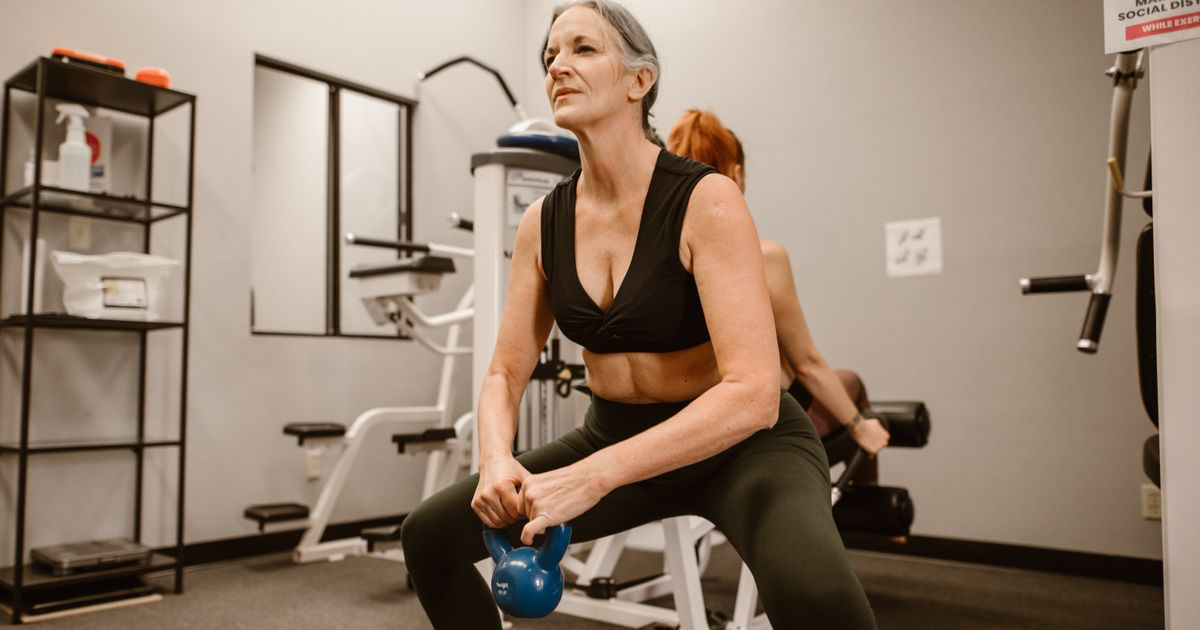
Quick answer: Hold a dumbbell or kettlebell vertically against your chest with both hands under the top of it. Stand a little wider than shoulder-width, brace, and sit straight down between your knees until your elbows pass inside your thighs. Drive back up through your whole foot. The goblet squat trains quads hardest, plus glutes and adductors.
The goblet squat is the squat variation people learn in week one and then abandon, on the grounds that it is the beginner one.
That is a strange thing to say about a lift most experienced lifters cannot do well for twenty reps.
The front-loaded position fixes your torso angle for you. You either stay upright or the weight falls forward and out of your hands, which is the most honest form check in the gym.
What muscles does the goblet squat work?
Quads first, with glutes and adductors close behind. Holding the load in front pulls you into a more upright torso and a deeper knee bend, which is exactly the shape that loads the knee extensors.
Collins and colleagues measured this in the Journal of Strength and Conditioning Research, comparing the goblet squat with the landmine squat in 16 men and 16 women at 30% of bodyweight. The goblet squat produced greater vastus medialis and vastus lateralis activity and higher vertical loading than the landmine version, which shifted work away from the quads and into horizontal force.
Your upper back and abs work the whole set. The weight sits in front of your centre of mass, so the front of your torso has to stop you folding. This is why a goblet squat feels harder than the number on the dumbbell suggests.
Your grip and forearms are the ceiling. Past a certain load, the thing that ends the set is holding the bell, not the legs.
Why does the front-loaded position matter?
Because putting weight in front changes where the joint load lands.
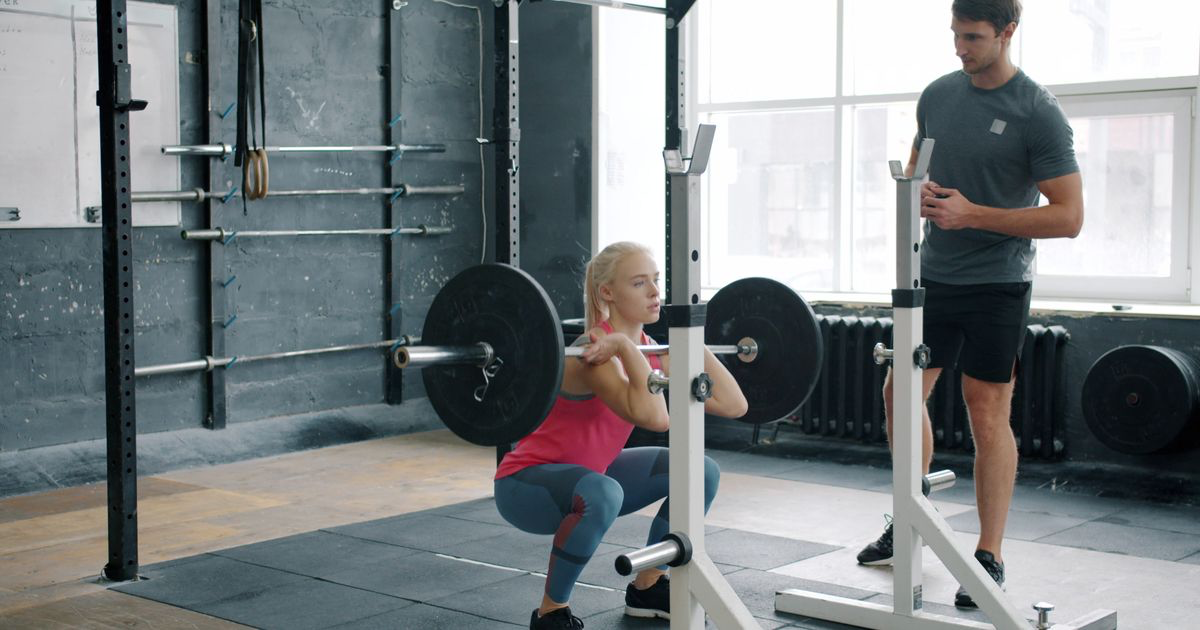
Gullett and colleagues compared front and back squats in the Journal of Strength and Conditioning Research using force plates, video and surface EMG in 15 trained lifters. The back squat produced significantly higher knee compressive forces and knee extensor moments. The front squat matched it for overall muscle recruitment with less compression, which the authors suggested makes it the better option for people with knee complaints.
The goblet squat is a lighter version of the same geometry: load in front, torso upright, less shear on the lower back. It is not the same lift as a front squat, but it inherits the useful part.
How do you goblet squat with good form?
Set up before you pick anything heavy.
- Hold the bell like a goblet. Cup your hands under the top of a kettlebell, or hold one end of a dumbbell vertically. Elbows tucked in, the weight touching your sternum.
- Feet slightly wider than shoulder-width. Toes out five to twenty degrees, whichever lets your knees track over them.
- Take a breath and brace. Air into your belly, ribs down, then hold it for the descent.
- Sit straight down, not back. This is the difference from a low-bar squat. Knees travel forward, torso stays near vertical.
- Go until your elbows pass inside your knees. For most people that is at or below parallel. If your lower back rounds first, that is your depth for now.
- Drive up through your whole foot. Breathe out at the top, not at the bottom.
Keep the bell on your chest the whole time. The moment it drifts away from your sternum, your upper back has given up and the set is over whether you notice or not.
How deep should you goblet squat?
As deep as you can go with a flat lower back and the weight still on your chest. For most people the goblet position allows more depth than a back squat, because you are not fighting a bar trying to tip you forward.
Depth is worth chasing. A systematic review by Kassiano and colleagues in the Journal of Strength and Conditioning Research found that training at longer muscle lengths tends to grow the quadriceps better than short-range work.
If your heels lift, elevate them. A pair of small plates under the heels, or lifting shoes, buys you the ankle range you do not currently have. That is a legitimate setup, not cheating.
What are the most common goblet squat mistakes?
Letting the bell drift off the chest. The most common one. It turns a squat into a slow front raise and your quads stop being the limit.
Sitting back like it is a barbell squat. Hips-back is correct for a bar on your back. With the load in front, sitting back tips you forward and pulls the bell away from you.
Chasing depth by rounding the lower back. The bottom of a goblet squat should look like a resting position, not a collapse. Stop where your pelvis stays neutral.
Going too heavy too early. Past about 40kg, most people run out of ways to hold the thing before they run out of legs. That is the signal to move to a front squat or a heel-elevated dumbbell squat, not to grind.
Goblet squat vs back squat vs front squat: which should you use?
| Goblet squat | Front squat | Back squat | |
|---|---|---|---|
| Load ceiling | Low, grip-limited | Moderate | High |
| Torso angle | Upright, enforced | Upright, enforced | Variable |
| Quad emphasis | High | High | Moderate to high |
| Skill needed | Almost none | High (rack position) | Moderate |
| Setup time | Pick up a dumbbell | Rack and bar | Rack and bar |
| Best for | Learning depth, high-rep quad volume, warm-ups | Quad strength with real load | Total load and posterior chain |
They are not competing for the same slot. The goblet squat is a warm-up, a high-rep accessory, and a depth diagnostic. It is not your main strength lift, and it does not need to be. See the how to squat guide for the barbell version and how to front squat for the loaded upright variant.
Why is the goblet squat easy to log badly?
Because "goblet squat 24kg" leaves out everything that changed.
The depth changed. The heel elevation changed. Whether you used a kettlebell or a dumbbell changed how it sat on your chest. Six weeks later, "goblet squat 24kg 12" tells you nothing about whether the sessions were the same exercise.
Write the load, the implement, and one word about depth or setup. Something like goblet squat 24kg KB heels up 12,12,10.
| Physical notebook | Notes app | Traditional gym app | Gym Note Plus | |
|---|---|---|---|---|
| Logging speed | Fast | Fast | Slow, many taps | Fast, plain text |
| Room for setup notes | Total | Total | Rarely | Total, free text |
| Turns loads into a trend | No | No | Yes | Yes, automatic |
| Keeps kettlebell and dumbbell apart | Manual flip-back | Manual scroll | Usually not | Yes, via your own notes |
| Estimated 1RM tracking | Manual math | Manual math | Sometimes | Automatic |
A simple starting plan
- Session one is a depth test. Light bell, film one set from the side, find the frame where your lower back rounds. That is your bottom.
- Run three sets of ten to fifteen. The goblet squat is a rep-range lift. Your lower back is not the limiter, so push these close to failure.
- Add weight only when every set hits fifteen at full depth. Depth first, kilos second.
- Write the implement and the setup. Not "goblet 24". Something like "goblet squat 24kg KB, heels elevated, full depth".
- Reassess at four weeks. When your grip becomes the limit rather than your legs, move to the front squat and keep the goblet squat as a warm-up. Get a free private link to the workout plan optimizer if you want to see what your week actually hits before you swap anything.
Keep logging the way you already do
If you log in a notes app or a notebook, you already record the awkward extras: which bell, heels up or flat, how deep it felt. That instinct is worth more than most app data.
The problem is that free text never becomes a line on a chart.
Gym Note Plus keeps the typing and adds the memory.
- Type
goblet squat 24kg 12,12,10and it becomes structured, charted sets. - Notes on implement, heel elevation and depth stay attached to the session.
- Volume and estimated one rep max are tracked per exercise automatically.
- Old notes import, so your existing squat history comes with you.
Want to see it on your own text first? Paste your last leg session into the free notes to workout translator.
Everyone calls the goblet squat the beginner squat, right up until they try twenty full-depth reps with the bell still on their chest.
Frequently Asked Questions
What muscles does the goblet squat work?
The goblet squat trains the quadriceps hardest, with the glutes and adductors assisting and the upper back and abdominals working isometrically to hold the load in front. Research in the Journal of Strength and Conditioning Research found the goblet squat produced greater vastus medialis and vastus lateralis activity than the landmine squat at matched loads.
How much weight should you goblet squat?
Start with a bell you can control for fifteen clean reps, often 8kg to 16kg for a beginner. Progress in small jumps until roughly 32kg to 40kg, at which point most lifters run out of grip and upper-back capacity before their legs are challenged. That ceiling is the signal to move to a front squat.
Is the goblet squat better than the back squat?
Neither is better outright. The goblet squat enforces an upright torso, teaches depth and works well for high-rep quad volume, but its load ceiling is low. The back squat carries far more weight and trains the posterior chain harder. Most lifters use the goblet squat as a warm-up or accessory alongside a barbell squat.
Should you use a kettlebell or a dumbbell for goblet squats?
Either works. A kettlebell sits more naturally against the chest because you can cup the horns, so it stays put with less forearm effort. A dumbbell held vertically is fine and usually easier to find. Whichever you pick, record it in your log, since the two do not feel like the same load.
Can goblet squats build muscle on their own?
They can, particularly for the quadriceps, provided you take sets close to failure in the ten to twenty rep range. The limitation is load: once you can goblet squat 40kg for fifteen reps, adding stimulus becomes difficult. At that point pair them with a barbell squat or a leg press rather than adding more goblet sets.
Final Takeaways
- It is a quad lift. Upright torso, deep knee bend, quads first with glutes and adductors assisting.
- Front loading is the feature. Weight in front means less knee compression than a back squat at matched recruitment, and a torso angle you cannot fake.
- Depth ends where your lower back rounds. Elevate your heels if your ankles are the limit.
- Grip is the ceiling, not your legs. When holding the bell ends the set, graduate to the front squat.
- Log the implement and the setup. "Goblet 24" is not a record. "24kg KB, heels up, full depth" is.

Josh Ibbotson
Josh is the creator of Gym Note Plus, building tools that make workout tracking as simple as taking notes.
Ready to try it out?
Download Gym Note Plus and start tracking your workouts the way you want.
Download on App Store