
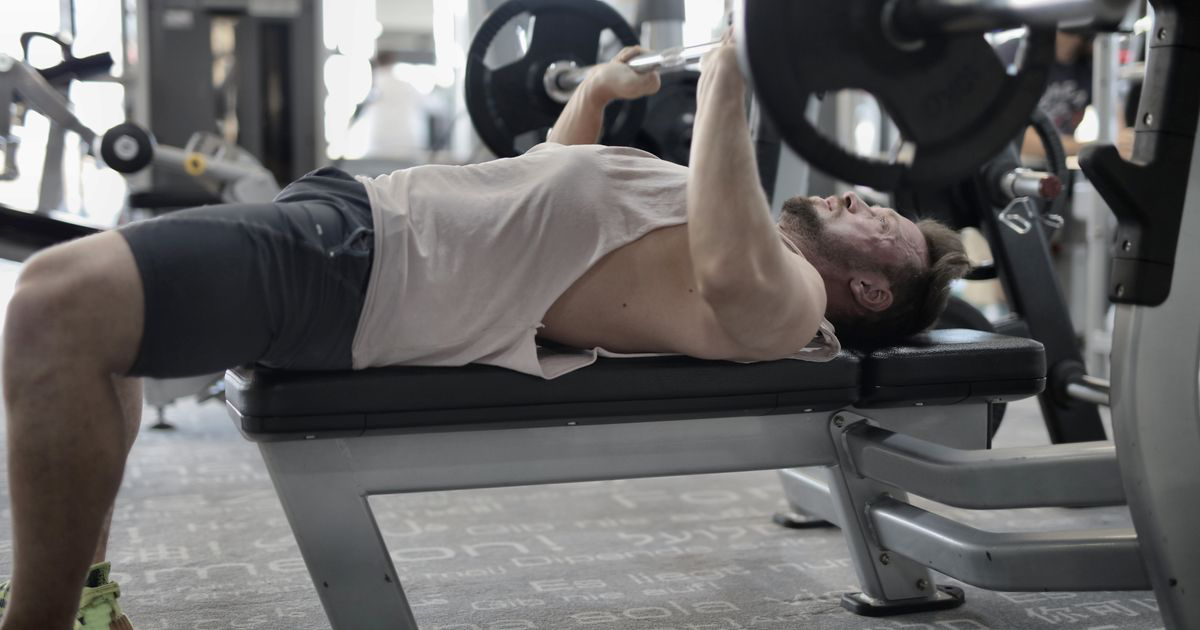
How to Close Grip Bench Press: Form, Grip Width, Elbows
Quick answer: Grip the bar at shoulder width, not hands-touching, tuck your elbows to about 45 degrees, and press with the bar touching your lower chest. The narrower grip shifts work from the chest to the triceps, making the close grip bench press the heaviest triceps exercise you can load.
The close grip bench press has a naming problem. "Close" convinces people to jam their hands together, which wrecks their wrists, flares their elbows and turns a great triceps builder into an elbow-pain generator.
Done at the right width it is the rare isolation-ish lift you can load like a compound: a triceps exercise measured in plates, not stack pins.
What muscles does the close grip bench press work?
Triceps first, upper chest and front delts close behind. Every bench press works the pecs, anterior deltoids and triceps together. Grip width sets the ratio.
The classic EMG study by Barnett and colleagues (1995) found triceps activity fell as the grip widened, while Lehman's grip-width research found triceps excitation was greatest with a narrow, pronated grip and dropped as the hands moved out. Narrower grip, more elbow extension work, more triceps. We cover the full range, from close to wide, in bench press grip width.
The pecs never switch off, and the clavicular (upper) fibres stay busy. That is a feature: it is why the close grip bench press carries real weight while a pushdown does not.
How close should your grip actually be?
Shoulder width, or a thumb's length inside your normal grip. For most people that is hands 30 to 40 cm apart, index fingers somewhere around the edge of the knurling's smooth centre section.
Hands-touching grips add nothing for the triceps and cost a lot:
- Wrist pain, because the bar can no longer sit stacked over your forearms.
- Elbow flare, because ultra-narrow hands force the elbows out to balance.
- Less weight, with no extra triceps stimulus to show for it.
The rule: your forearms should be close to vertical at the bottom of the rep. If they angle inward, your grip is too narrow.
How do you do the close grip bench press with proper form?
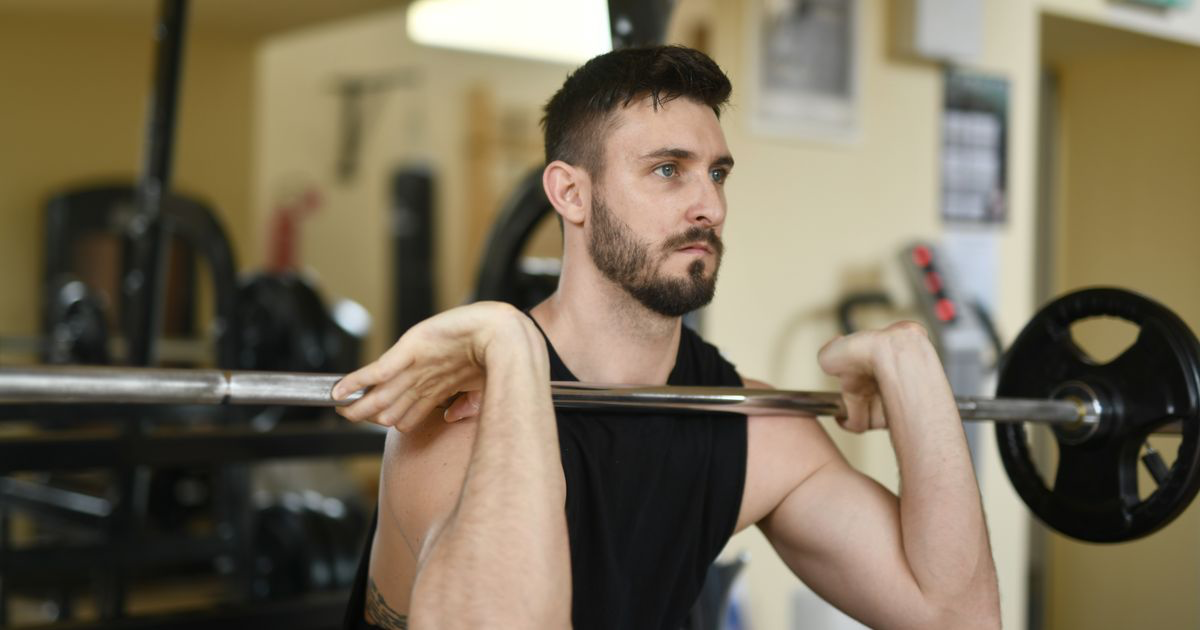
- Set up like a normal bench press. Shoulder blades pinched, slight arch, feet planted. The setup does not change; only the hands do. Our bench press guide covers the base position.
- Grip at shoulder width, wrists stacked, bar in the heel of the palm.
- Unrack and lower to your lower chest, elbows tucked to roughly 45 degrees from your torso, closer than a regular bench.
- Touch, do not bounce. The bottom position is where the triceps get their stretch.
- Press up and slightly back toward your shoulders, elbows finishing locked out. Lockout is the triceps' job; do not cut it short.
- Keep the reps between 6 and 12 for most sets. It is still a barbell press, so it progresses in small jumps like one.
Why does close grip bench hurt your elbows, and how do you fix it?
Usually width, volume, or lockouts, in that order.
- Too narrow. The most common cause. Widen to shoulder width and most elbow complaints disappear within weeks.
- Too much, too suddenly. Triceps tendons hate a sudden doubling of heavy pressing volume. Add the lift with two or three sets, not six.
- Grinding lockouts every set. Repeated maximal elbow extensions under fatigue aggravate the tendon insertion. Leave a rep in reserve on most sets.
- Everything hurts anyway? Swap in skull crushers or pushdowns for a block; the close grip bench will still be there.
How much should you close grip bench press?
A little less than your regular bench. The narrower grip lengthens the bar path and leans on the smaller triceps, so almost everyone presses somewhat less than their standard grip number.
Treat it as its own lift with its own history. Estimate its ceiling separately by putting a hard set into the free one rep max calculator, and never judge a close grip session against your competition-grip record. In your log, make the name unambiguous: CGBP 80kg 8,8,7 and bench 100kg 5 are different lifts and should never share a line.
Is the close grip bench press worth it compared to isolation work?
Yes, for a specific reason: load. Pushdowns and extensions isolate the triceps well but cap out light. The close grip bench lets the triceps work near their strength ceiling with help from the chest and shoulders, which is exactly what a stalled bench press or pressing plateau usually needs. It is a standard fix in our bench press plateau playbook for lifters weak at lockout.
The two are partners, not rivals: close grip bench for heavy loading, one isolation movement for volume without beating up your joints.
| Close grip bench press | Regular bench press | |
|---|---|---|
| Hand spacing | Shoulder width | 1.5 to 2x shoulder width |
| Primary emphasis | Triceps | Chest |
| Elbow position | Tucked, about 45 degrees | Moderately flared |
| Bar touch point | Lower chest | Mid to lower chest |
| Typical load | Slightly less | Your strongest press |
| Role in a program | Heavy accessory | Main lift |
| Physical notebook | Notes app | Traditional gym app | Gym Note Plus | |
|---|---|---|---|---|
| Logging speed mid-session | Fast | Fastest | Slow, many taps | Fast, plain text |
| Separates CGBP from regular bench | If you write it | Yes, free text | Only if you pick the right entry | Yes, automatic |
| Data visualization | None | None | Charts | Charts, automatic |
| Spots a stalled press | No | No | Partly | Yes |
A simple starting plan
- Put it after your main press, two or three sets of 6 to 10, starting around 70 to 80 percent of your usual bench weight for those reps.
- Find your width on the empty bar first. Forearms vertical at the bottom, wrists straight. Note where your fingers land on the knurling and use that spot forever.
- Log it as its own exercise with its own name:
CGBP 60kg 10,9,8. - Add 2.5 kg when all sets hit the top of the range without elbow flare or a grinding lockout.
- Check the trend after six weeks. The close grip number should climb faster than your bench at first. If both are flat, the problem is recovery or volume, not grip. Our guide on when to add weight has the progression rules.
Keep the two benches from blurring together
The close grip bench fails in logs more than in gyms. Sessions get written as "bench" whichever grip was used, and three months later the history is one muddy line that says nothing about either lift.
Gym Note Plus fixes that without slowing you down. Type cgbp 80kg 8,8,7 elbows fine as plain text and it becomes a separate, charted exercise: its own trend, its own records, searchable next to your regular bench but never mixed into it.
The close grip bench press rewards precision twice: an inch of grip width decides your elbows, and one honest label decides whether your log can see the lift at all.
Frequently Asked Questions
What does the close grip bench press work?
The close grip bench press primarily works the triceps, with the upper chest and front deltoids assisting. EMG research by Barnett and colleagues found triceps activity increases as the grip narrows, while wider grips shift emphasis to the chest, which is why lifters use the close grip version as their heaviest triceps exercise.
How close should your hands be on close grip bench press?
Shoulder width, roughly 30 to 40 cm between hands, is close enough. Your forearms should be vertical at the bottom of the rep and your wrists straight. Touching-hands grips do not add triceps work; they strain the wrists, force the elbows out and reduce the weight you can press.
Why does close grip bench press hurt my elbows?
Usually the grip is too narrow, the volume jumped too fast, or every set ends in a ground-out lockout. Widen to shoulder width, add the lift with two or three sets rather than six, and keep a rep in reserve. Persistent pain that survives those fixes deserves a deload and, if it continues, professional eyes.
Is close grip bench press better than regular bench press?
Neither replaces the other. The regular bench press is the stronger lift and the better chest builder; the close grip bench press biases the triceps and typically improves lockout strength. Most pressing programs benefit from running the standard grip as the main lift and the close grip as the heavy accessory.
How much less should you close grip bench than regular bench?
Slightly less, and the exact gap is individual. The narrow grip lengthens the range of motion and shifts work to the triceps, so expect your close grip sets to sit below your regular bench numbers at the same reps. Track it as a separate exercise and let its own history set the targets.
Final Takeaways
- Shoulder width is the whole trick. Vertical forearms and straight wrists give you the triceps stimulus without the elbow bill.
- It is the heaviest triceps exercise available. Load is the reason it earns a place next to pushdowns, not instead of them.
- Elbow pain is a settings problem. Width, volume and grinding lockouts account for nearly all of it.
- It is a separate lift. Own name, own log history, own records; never blended with the regular bench.
- Progress it like a barbell lift. Small jumps, full lockouts, and a six-week look at the trend before changing anything.

Josh Ibbotson
Josh is the creator of Gym Note Plus, building tools that make workout tracking as simple as taking notes.
Ready to try it out?
Download Gym Note Plus and start tracking your workouts the way you want.
Download on App Store