
How to Arnold Press: Form, Muscles Worked, and Progression
Quick answer: To Arnold press, start seated with dumbbells at chin height, palms facing you and elbows tucked in front of your chest. Rotate your palms outward as you press up, finishing overhead with palms facing forward. Reverse the rotation on the way down so the dumbbells end where they started.
The Arnold press is the lift people either love or quietly skip. It looks fussy. There is a twist in the middle, and the weight you can use is embarrassing next to your normal dumbbell press.
Then you do a set and your front delts are on fire at rep eight with weights you would call a warm-up.
What muscles does the Arnold press work?
All three heads of the deltoid, with the front head doing most of the work. The rotation is the whole point: starting with your palms facing you puts the front delt in a longer, stretched position than a normal press, and the outward turn brings the side delt in as the arms travel.
The supporting cast is the usual overhead press crew. The triceps lock out the elbow, the upper traps and serratus rotate the shoulder blade as the arms go up, and the core stops you leaning back to cheat the weight up.
The rear delt does almost nothing. No press does. If your back shoulder is the weak point, that is what reverse flyes and face pulls are for.
Is the Arnold press better than a normal shoulder press?
It gets more out of the front delt at a lower load, which is a real trade, not a free win.
A small EMG study of ten trained men compared the Arnold dumbbell press with a standard overhead dumbbell press and found higher activation in both the anterior and medial deltoid during the Arnold variation, according to Raizada and Bagchi in the Indian Journal of Public Health Research and Development. The authors put the difference down to the longer range of motion the rotation creates.
Read that carefully before you throw out your dumbbell press. Ten people is a small study, EMG measures electrical activity during a set rather than muscle growth over months, and the loads used are lighter by definition. It tells you the rotation changes something. It does not tell you the Arnold press builds more shoulder.
What it is genuinely good for: front delt emphasis at a weight your shoulders tolerate, and a longer range of motion if pressing straight up feels cramped. Our how to overhead press guide covers the heavier standard version.
How do you do an Arnold press?
- Sit on a bench with back support and set the dumbbells on your thighs. Kick them up one at a time.
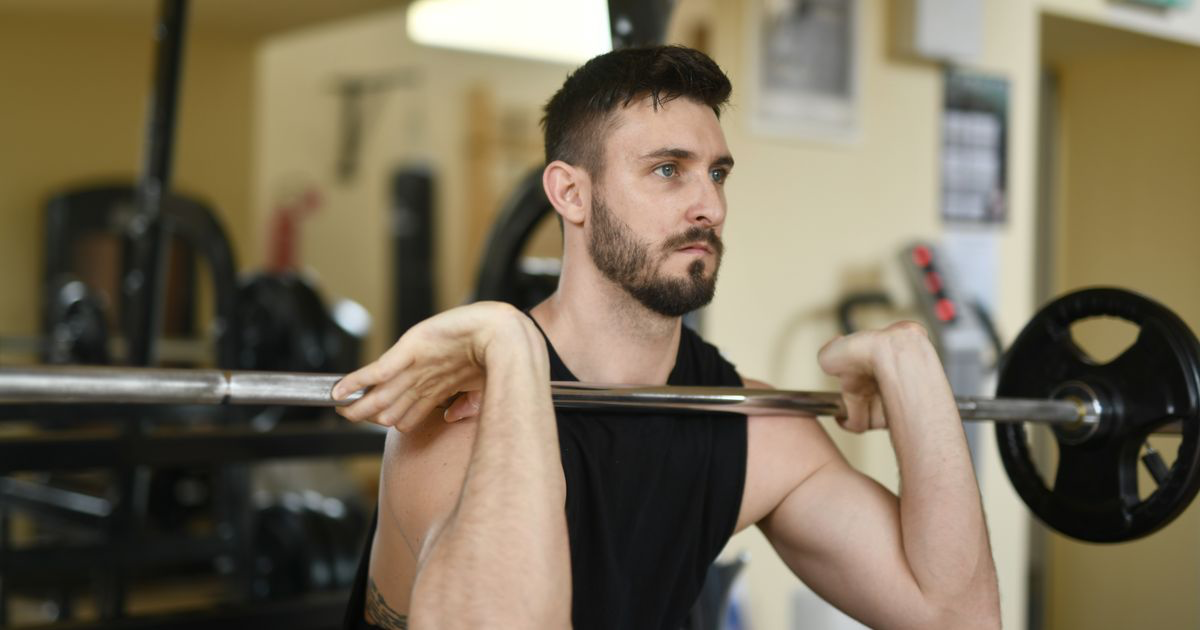
- Start at chin height with palms facing you, elbows tucked in front of your chest, dumbbells almost touching.
- Rotate as you press, turning the palms outward through the middle of the rep so they finish facing forward at the top.
- Stop just short of locking out, with the dumbbells over your shoulders rather than out in front of them.
- Reverse the whole path down, rotating the palms back toward you as the elbows come in.
- Finish exactly where you started, at chin height with elbows in front, then go again.
Keep the rotation smooth across the whole rep rather than pressing first and twisting at the top. The turn is part of the lift, not a flourish at the end.
Should you do the Arnold press seated or standing?
Seated for most people, most of the time. The lift is already awkward, and a bench takes your lower back and balance out of the equation so the shoulders get the work.
Standing is fine if you want the core involvement, but expect to use less weight and to catch yourself leaning back as the set gets hard.
What are the most common Arnold press mistakes?
Going too heavy. This is the big one. The Arnold press starts with your arms in a mechanically weak position, so a load that felt easy on a normal dumbbell press turns into a shoulder-shrugging mess. Most people should start with roughly 60% to 70% of their usual dumbbell press weight.
Flaring the elbows out at the bottom. The start position is elbows in front of the chest, not out to the sides. Letting them flare skips the stretched position that makes the lift worth doing and puts the shoulder into an internally rotated, pinch-prone spot.
Rushing the rotation. Twisting at the top turns the lift into a normal press with a wrist flick. The palms should be halfway around when the dumbbells pass your ears.
Arching the back to finish a rep. Once the low back starts helping, the set is over. Stop it there rather than grinding two ugly reps.
Does the Arnold press hurt your shoulders?
It can, and the rotation is usually blamed unfairly. The pain more often comes from starting with the elbows flared, which stacks internal rotation and overhead pressing together.
Fix the start position first. If a clean rep at a light weight still pinches, the Arnold press may not suit your shoulder anatomy, and a neutral-grip dumbbell press does a similar job without the turn.
How much weight should you use on the Arnold press?
Start lighter than you think, and treat 8 to 12 reps as home. The lift punishes heavy loads, and low-rep Arnold presses tend to become sloppy standard presses.
A reasonable first attempt is two thirds of the dumbbells you use for a strict seated dumbbell press. If your first set feels too easy, that is a much better problem than the alternative.
Progress with reps before load. Dumbbells jump in awkward steps, often 2 kg or more, which is a huge relative increase on a lift where you might be holding 12 kg. Add reps until you can do 12 clean ones on every set, then take the next pair up and start again at 8.
Plug your best set into the one rep max calculator if you want a single number to compare month to month, and read when to increase weight lifting for how to judge the jump.
Why is the Arnold press easy to log badly?
Because "Arnold press 14kg 3x10" hides the two things that decide whether the set counted. Whether you were seated, and whether the rotation was real.
A standing set and a seated set are different lifts at different weights. A set where the elbows flared and the twist happened at the top is a dumbbell press wearing a costume. Neither shows up in a weight and a rep count.
| Physical Notebook | Notes App | Traditional Gym App | Gym Note Plus | |
|---|---|---|---|---|
| Recording seated or standing | Free text | Free text | Rarely a field | Free text, kept |
| Noting form breakdown | Margin scribble | Free text | Fixed notes field | Free text, kept |
| Charting the trend | None | None | Charts | Charts from your text |
| Comparing to dumbbell press | Manual | Manual | Per-exercise view | Per-exercise view |
| Finding last session | Flip pages | Text search | Structured search | Structured search |
The fix is four extra words on the same line: Arnold press seated 14kg x10,10,8 last set elbows flared. Three months later that is the difference between a chart you trust and one you argue with.
A simple Arnold press starting plan
- Test the pattern with 5 kg dumbbells for a set of ten, seated, watching the elbow position rather than the weight.
- Set your working weight at about two thirds of your usual seated dumbbell press.
- Run 3 sets of 8 to 12, once a week, placed after your main press while the shoulders are warm but not wrecked.
- Add reps until all three sets hit 12, then move up one dumbbell size and drop back to 8.
- Write down seated or standing every time, so a stalled month has an explanation you can find.
Keep logging the way you already do
If you type sessions into your phone's notes app, you already handle the messy part well. Plain text takes "seated, 14s, rotation felt off on set 3" without asking you to pick it from a menu that does not have it.
Gym Note Plus is built for that habit. You write the line the way you always have, and it groups every set by exercise and date, so your Arnold press becomes a chart instead of a scroll.
- Type the set in plain text, form notes included.
- See the trend per exercise, so you can watch the gap to your dumbbell press close.
- Pull up last session in a tap, before you pick the dumbbells.
Paste an old shoulder session into the free notes to workout translator and see what your pressing numbers have actually been doing.
The Arnold press is not a heavier shoulder press. It is a longer one, and the weight has to come down for the length to mean anything.
Frequently Asked Questions
What muscles does the Arnold press work?
The Arnold press works all three heads of the deltoid, with the anterior and medial heads doing most of the work. The triceps assist at lockout, the upper traps and serratus anterior rotate the shoulder blade, and the core stabilises the torso. The rear deltoid contributes very little.
Is the Arnold press better than the dumbbell shoulder press?
The Arnold press produced higher anterior and medial deltoid activation than a standard overhead dumbbell press in a small EMG study of ten trained men. That is a measure of activation during a set, not muscle growth, and the Arnold press uses lighter loads, so treat it as a useful variation rather than a replacement.
How much weight should you use for the Arnold press?
Start at roughly 60% to 70% of the dumbbells you use for a strict seated dumbbell shoulder press. The Arnold press begins in a mechanically weak position with the palms facing you, so a load that feels manageable on a normal press usually collapses the form here.
Should the Arnold press be done seated or standing?
Seated with back support suits most lifters, because it removes balance and lower-back involvement so the shoulders take the load. Standing adds core demand but reduces the weight you can use and invites leaning back as the set gets hard.
Why does the Arnold press hurt my shoulders?
Arnold press shoulder pain usually comes from starting with the elbows flared out to the sides rather than tucked in front of the chest, which combines internal rotation with overhead pressing. Fix the start position first. If light, clean reps still pinch, use a neutral-grip dumbbell press instead.
How many reps should you do on the Arnold press?
Eight to twelve reps per set suits the Arnold press. Heavy low-rep sets tend to degrade into a standard press with a wrist twist at the top, which removes the range of motion that makes the exercise worth doing in the first place.
Final Takeaways
- The rotation is the exercise. Twist across the whole rep, not at the top.
- Start with elbows in front of the chest, never flared to the sides.
- Use about two thirds of your dumbbell press weight and expect that to feel wrong at first.
- Progress with reps, then dumbbells. The jumps are too big to chase with load alone.
- Log seated or standing every time, or the numbers will not compare to each other later.

Josh Ibbotson
Josh is the creator of Gym Note Plus, building tools that make workout tracking as simple as taking notes.
Ready to try it out?
Download Gym Note Plus and start tracking your workouts the way you want.
Download on App Store