
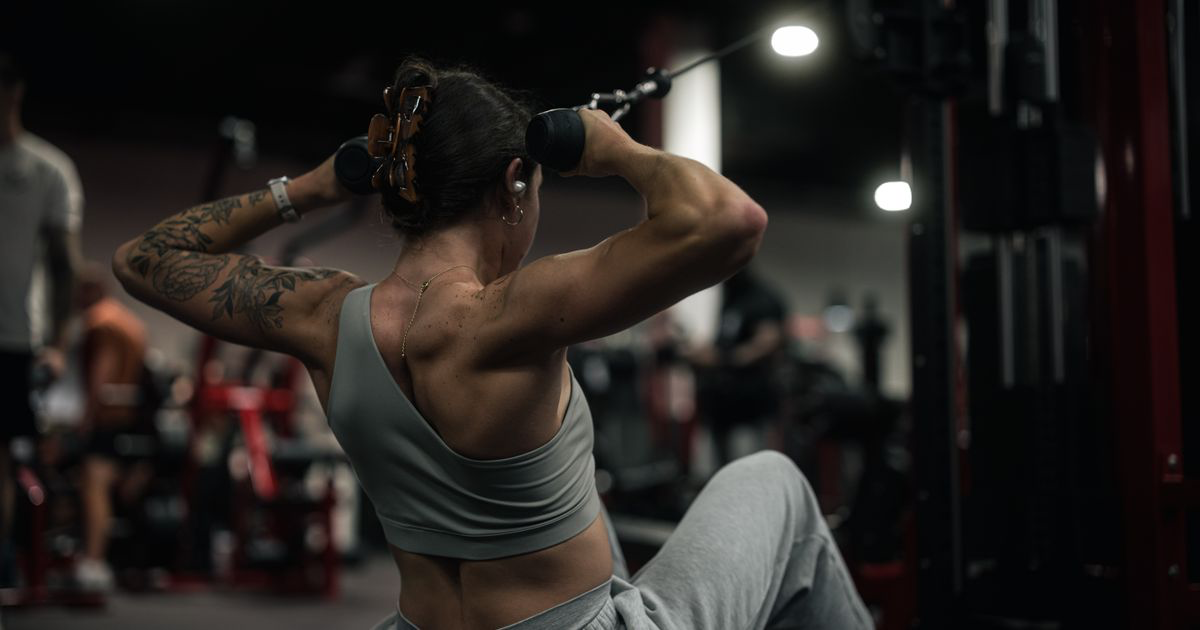
How to Do the Seated Cable Row
Quick answer: The seated cable row is a horizontal pulling exercise that trains the lats, mid-traps, rhomboids and rear delts. Sit with your feet on the plate, knees slightly bent, chest tall and spine neutral. Pull the handle to your lower ribs by driving your elbows back, squeeze your shoulder blades together, then lower the weight under control.
The row machine is free, so you sit down, grab the V-handle and pull. Three sets later you are not sure whether you trained your back or just rocked back and forth against a heavy stack.
Then there is the log problem. Your notes say Cable row 60 3x10, but at a different gym 60 feels nothing like it did last week.
How do you set up the seated cable row?
Set the seat before you touch the weight. The cable should run level with your lower ribs. Too high and the pull turns into a shrug, too low and you lean back to reach it.
Plant both feet on the foot plate with a soft knee bend. Around 10 to 20 degrees is enough. Locked knees push the load into your lower back, and heavily bent knees leave no room to sit tall.
Sit up with a neutral spine. A small natural arch is normal. What you are avoiding is the slumped position where your shoulders roll forward and the pull comes from your arms. Take the handle, extend your arms fully, and let your shoulder blades travel forward a little. Your torso stays put.
How do you do a cable row, rep by rep?
Drive your elbows back, not your hands. Lead with the elbows and pull them past your ribcage. The handle finishes between your lower ribs and your navel.
Squeeze at the back, briefly. Half a second with the shoulder blades pulled together makes the mid-back do the work instead of the biceps. Holding for three seconds just costs you reps.
That squeeze matters more than it looks. In a 2025 study using high-density surface EMG across scapular positions in the seated row, a fixed scapular position produced 6.83% higher latissimus dorsi and 3.72% higher middle trapezius excitation during the eccentric phase than letting the shoulder blades run free.
Control the way back out. Two to three seconds on the return, resisting the stack instead of letting it yank your arms straight. This is the half most people give away.
Use the full range. A meta-analysis of partial versus full range of motion training by Wolf and colleagues found a small effect in favor of full range across strength and size outcomes, though partials at long muscle lengths held up well. On a row, the long-length half is the stretch at the front, the part people cut short.
What muscles does the seated cable row work?
The seated cable row muscles worked, in order of how much they do:
- Lats (latissimus dorsi). The primary mover, pulling your upper arm down and back toward your body.
- Mid-traps and rhomboids. They retract the shoulder blades, which is why the squeeze changes what you feel.
- Rear delts. They take more of the load as your elbows flare wider from your sides.
- Biceps and forearms. Elbow flexion and grip on every rep, whether you want it or not.
- Spinal erectors and core. These hold your torso still, so you should feel braced and never bent.
Elbow position decides where the work lands. A study on grip position and shoulder abduction angle during the seated cable row found that upper trapezius, middle trapezius and rear deltoid activation rose as the elbows moved toward 60 and 90 degrees of abduction, while lat activation and peak force were highest with the elbows close to the body.
So tucked elbows make it a lat exercise and flared elbows make it an upper-back exercise. Both are useful. Just know which one you are doing.
What are the most common seated row form mistakes?
Heaving with the lower back. Swinging your torso back 30 or 40 degrees to start the pull turns a back exercise into a shaky deadlift. Ten degrees is plenty. Set your feet once and let only your arms and shoulder blades move.
Shrugging instead of rowing. If your shoulders rise toward your ears, the upper traps have taken over. Usually the seat is too low or the weight is too heavy.
Cutting the range short. Stopping at your forearms gives you an easier rep that looks like the real thing. Arms fully extended at the front, elbows behind your torso at the back.
Going too heavy. The giveaway is the return. If the stack pulls your arms forward faster than you chose, you have skipped the eccentric on every rep.
Which grip or attachment should you use?
V-handle (close neutral grip)
The default, and the one that lets you move the most weight. Palms face each other, elbows near your ribs, handle to the navel. The lat-biased version.
Wide bar (pronated, elbows out)
Palms down, elbows flared to shoulder height, handle to the sternum. Expect more mid-trap and rear delt work and less weight on the stack.
Single-arm
One side at a time. It exposes side-to-side differences a bar hides and gives more range at the front. Log left and right separately.
When the row station is taken
The barbell row hits the same muscles but demands far more from your lower back. A chest-supported row takes the torso out entirely, the best swap if your lower back is the limiting factor. The lat pulldown pulls vertically, so treat it as a companion rather than a replacement.
How many sets and reps should you do?
Three to four sets of 8 to 12 reps covers most people. The cable row is a compound movement without a heavy spinal load, so it runs well twice a week. Stop each set with about 1 to 3 clean reps left.
Progress with reps first, then weight. Cable stacks usually jump in 5kg (10lb) increments, a big leap on a row. Add reps until you hit the top of your range on every set, then move the pin one plate and work back up. Magnetic add-on weights of 1.25kg (2.5lb) smooth out the jump. More in progressive overload explained.
A simple starting plan
- Pick one attachment and keep it for a month. The V-handle is the easiest starting point.
- Find your working weight. Rep 10 should be hard while your torso barely moves.
- Set a tempo rule. Pull in about a second, squeeze for half a second, return over two to three.
- Log the machine, not just the number.
Cable row (V-handle, PF plate 8) x10,10,9beatsRow 8x10next week. - Review after four weeks. Same attachment, same gym, more reps or more plates.
How should you log the seated cable row?
Cable stack numbers are not standard. One gym labels plates in kilos, another labels them 1 through 15, and two machines from different manufacturers can put very different resistance on the same-numbered plate because of the pulley ratio. A bare Row 60 3x10 is useless six months later.
Write down the attachment, the gym, and what you actually did. Cable row (wide bar, PureGym) 55 x12,11,9 tells you everything you need next session.
| Physical Notebook | Notes App | Traditional Gym App | Gym Note Plus | |
|---|---|---|---|---|
| Logging speed | Fast | Fast | Slow (menus and forms) | Fast (plain text) |
| Records machine and attachment | Yes, if you write it | Yes, if you write it | Rarely, fixed fields | Yes, in the same line |
| Data visualization | None | None | Charts | Charts from your own notes |
| Flexibility | Total | Total | Low | Total |
| Searchability | Poor | Decent | Good | Good |
If you already keep rows in your phone, paste a session into the free notes to workout translator and see the same lines as structured sets with a chart.
Where does Gym Note Plus fit in?
Your current log is not the problem. A line of text in Apple Notes takes five seconds and never crashes at the rack. It just cannot answer questions. Was the V-handle row heavier this month? Did the wide-bar version stall in April?
Gym Note Plus reads the plain text you were already typing:
- Type
Cable row 60 3x10and it logs three sets of ten at 60, no dropdowns. - Attachment notes stay attached.
Cable row (V-handle) 60 x10,10,8keeps the detail and still charts the numbers. - Your last session surfaces automatically, which is the whole reason you wrote it down.
The seated cable row rewards elbows that travel behind you and a stack that comes back slowly. The rest is bookkeeping, and the bookkeeping is what tells you next month whether any of it worked.
Frequently Asked Questions
What muscles does the seated cable row work?
The seated cable row works the latissimus dorsi as the main mover. The middle trapezius and rhomboids retract the shoulder blades, the rear deltoids assist, the biceps and forearms flex the elbow, and the spinal erectors and core hold the torso steady. Elbows tucked close biases the lats, elbows flared biases the upper back.
Should you lean back during a seated cable row?
A small amount of torso movement is fine, roughly 10 degrees, and it happens naturally at the end of a heavy pull. Swinging back 30 or 40 degrees to start the rep is not: that is your lower back and hips doing the work. If you need the swing, reduce the load.
Should I use a wide grip or close grip on the seated row?
Use a close neutral grip when you want more lat involvement and more weight on the stack, and a wide pronated grip with the elbows flared when you want more middle trapezius and rear deltoid work. Research on the seated cable row shows peak force is highest with the elbows tucked close to the body.
Why does my lower back hurt during seated rows?
Lower back pain in the seated cable row usually comes from three setup errors: rounding the spine at the front of the rep, locking the knees so the load transfers to the lumbar spine, or swinging the torso to move too much weight. Fix the seat height, soften the knees, drop the load.
How much should I be able to seated cable row?
There is no useful universal standard, because cable stacks are labeled differently and pulley ratios change the real resistance between machines. Judge the lift against your own log at your own gym, not against a chart. A fair target is adding reps or a plate every two to three weeks in your first year.
Final Takeaways
- Set up before you load up. Feet planted, knees softly bent, spine neutral, cable level with your lower ribs.
- Lead with your elbows and finish with a squeeze. The handle goes to your lower ribs and your torso barely moves.
- The eccentric is half the exercise. Two to three seconds back out, resisting the stack the whole way.
- Elbow angle picks the muscle. Tucked elbows for lats and heavier loads, flared elbows for mid-traps and rear delts.
- Log the machine, not just the number. Stack labels vary between gyms, so record the attachment and the gym alongside your sets, on paper, in a notes app, or in Gym Note Plus.

Josh Ibbotson
Josh is the creator of Gym Note Plus, building tools that make workout tracking as simple as taking notes.
Ready to try it out?
Download Gym Note Plus and start tracking your workouts the way you want.
Download on App Store