
How Much Protein Do You Need to Build Muscle?
Quick answer: Aim for about 1.6 grams of protein per kilogram of bodyweight per day, which covers most lifters trying to build muscle. Push toward 2.0 to 2.2 g/kg when you are dieting to protect muscle. For an 80 kg lifter that is roughly 128 to 176 grams a day.
You finish a solid session, log your sets, and then wonder if the actual muscle is going to show up. The lifting is only half the equation.
The other half is whether you eat enough protein to turn those sets into tissue. Most people either wildly overthink this or ignore it completely.
How much protein do you actually need per day?
The evidence-based target is around 1.6 grams per kilogram of bodyweight. That is the number the research keeps landing on for people who lift and want to grow.
A 2018 meta-analysis by Morton and colleagues in the British Journal of Sports Medicine pooled 49 studies and 1,863 participants. It found that protein intake above roughly 1.62 g/kg/day produced no further gains in fat-free mass from resistance training.
That 1.62 figure is a ceiling for most, not a magic threshold. Individual needs vary, and older lifters and dieters sit at the higher end. But it tells you that once you clear about 1.6 g/kg, eating more protein is not what is holding your muscle back.
The International Society of Sports Nutrition position stand frames it as a range: 1.4 to 2.0 g/kg/day is sufficient for most people training to build and keep muscle.
What is that in grams for your bodyweight?
Take your weight in kilograms and multiply by 1.6 to 2.2. That single calculation converts the guideline into a real daily number you can actually chase.
Here is how the "protein per day to build muscle" math shakes out at common bodyweights:
- 60 kg (132 lb): roughly 96 to 132 g per day.
- 75 kg (165 lb): roughly 120 to 165 g per day.
- 90 kg (198 lb): roughly 144 to 198 g per day.
- 100 kg (220 lb): roughly 160 to 220 g per day.
If you only think in pounds, the shortcut is about 0.7 to 1 gram per pound. That lands you in the same zone without converting units, which is why the "one gram per pound" rule of thumb stuck around. It slightly overshoots the science, but overshooting protein is a cheap mistake.
Protein does not exist in a vacuum, though. It sits inside your total calories, and muscle needs a small surplus to build. If you have not set your calorie baseline yet, run your numbers through the TDEE calculator and read our guide on how many calories to build muscle before you fine-tune protein.
Do you need more protein when cutting?
Yes, and this is where grams of protein per kg bodyweight climbs. When you are in a calorie deficit, protein does double duty: it still builds, but its main job becomes protecting the muscle you already have.
The ISSN position stand notes that intakes of 2.3 to 3.1 g/kg/day may help resistance-trained people retain lean mass during a hypocaloric phase.
Practically, most lifters cutting fat do well around 2.0 to 2.2 g/kg. Higher protein also blunts hunger and has a bigger thermic cost than carbs or fat, so it quietly helps the diet in two ways beyond muscle retention.
The logic is simple. When calories are scarce, your body is more willing to burn muscle for fuel, and a high protein intake is the strongest signal telling it not to.
Does protein timing actually matter?
The "anabolic window" is far more forgiving than supplement marketing suggests. The old idea that you had to slam a shake within 30 minutes of your last rep or lose your gains does not hold up.
Total daily protein is the primary driver. Timing is a minor refinement on top of a target you are already hitting.
That said, spreading protein across the day beats one giant serving. This is where "protein per meal for muscle" comes in, and it is a real, measurable effect.
How much protein per meal?
A 2018 review by Schoenfeld and Aragon in the Journal of the International Society of Sports Nutrition recommends about 0.4 g/kg per meal across at least four meals to maximize the muscle-building response and comfortably reach 1.6 g/kg/day.
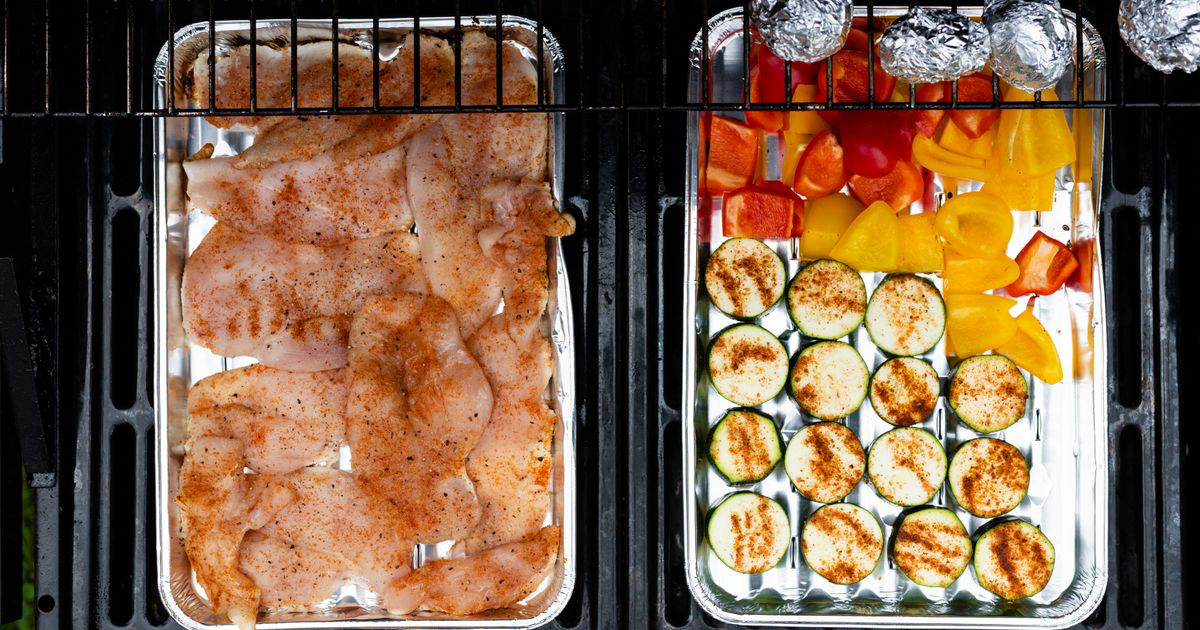
For an 80 kg lifter that is roughly 32 g of protein per meal, four times a day. Think a chicken breast, a couple of scoops of whey, a can of tuna, or a big bowl of Greek yogurt.
The takeaway: hit your daily number first, then split it into three or four feedings. Chasing the perfect post-workout minute while missing your daily total is optimizing the wrong thing.
Where should your protein come from?
Whole-food animal sources make hitting your target easy because they are complete proteins. Chicken, beef, fish, eggs, and dairy contain all the essential amino acids in the amounts muscle needs, especially leucine, the amino acid that flips on protein synthesis.
- Lean meat and fish: roughly 20 to 30 g per palm-sized serving.
- Eggs: about 6 g each.
- Greek yogurt and cottage cheese: 15 to 20 g per serving and easy to eat when appetite is low.
- Whey or casein powder: 20 to 25 g per scoop, the cheapest way to close a daily gap.
Plant-based lifters can absolutely build muscle, they just need a little more total protein and variety. Soy, lentils, tofu, tempeh, and seitan work well, and combining sources across the day covers the full amino acid profile. Aiming for the top of the range compensates for slightly lower digestibility.
You do not need exotic supplements. You need enough total protein from foods you will actually eat repeatedly.
How do you know if you are hitting it?
You do not, until you track it, and this is where most people quietly fail. "I eat pretty high protein" is almost always an overestimate when you actually weigh and count.
The gap between feeling like you eat enough protein and hitting 1.6 g/kg is usually 30 to 50 grams a day. That gap is the difference between building and spinning your wheels.
Here is how the common ways of keeping track compare:
| Feature | Physical Notebook | Notes App | Traditional Gym App | Gym Note Plus |
|---|---|---|---|---|
| Logging speed | Slow | Fast | Slow (menus and taps) | Fast (plain text) |
| Links food to training data | No | No | Rarely | Yes, alongside your log |
| Flexibility | Total | Total | Rigid templates | Total (free-form text) |
| Searchability | Flick through pages | Text search only | Good | Good |
| Spots stalled progress | No | No | Sometimes | Yes, from your own log |
Protein is the input. Your training log is the output. If your lifts stall for weeks while you are eating enough, the problem is programming or recovery. If they stall and your protein is short, you have found your answer. You can only see that when both are written down. Our guide on why you might not be making progress in the gym walks through the usual suspects.
Where Gym Note Plus fits
You already log your workouts in your phone's notes or a notebook, and that habit is the right one. Speed and simplicity beat a bloated app you stop opening after a week.
Gym Note Plus keeps that plain-text habit and turns it into trackable progress. You type your session the way you always have, and it becomes structured data you can actually read.
- Your shorthand still works. Write
bench 80kg 8,8,7and it parses into sets, reps, and volume automatically. - Progress you can see. Charts show whether your lifts are climbing, which is the real test of whether your protein and training are working.
- One place for the whole picture. Your training trend sits next to the effort you put in, so a stall is easy to spot and diagnose.
- No templates to fight. Change your program or your foods and you just type something different.
Want to see it before installing anything? Paste a session into the free notes to workout translator and watch your raw text become a structured workout with charts.
Protein builds the muscle, but your log proves it is working. Hit roughly 1.6 grams per kilogram, spread it across your meals, and let the numbers tell you the truth.
A simple starting plan
- Weigh yourself and multiply by 1.6. That is your daily protein floor in grams. Write it at the top of your notes.
- Divide by four. That is your per-meal target, roughly 0.4 g/kg, so each feeding does its share.
- Anchor every meal with a protein source first. Build the plate around the chicken, eggs, yogurt, or shake, then add the rest.
- Track it honestly for one week. Count everything. Most people discover they are 30 to 50 grams short of where they assumed they were.
- Log your training next to it. When protein is dialed in, your log becomes the scoreboard that shows the muscle actually arriving.
Frequently Asked Questions
How much protein do I need to build muscle?
To build muscle, most lifters should eat about 1.6 grams of protein per kilogram of bodyweight per day. The Morton 2018 meta-analysis found gains in fat-free mass plateaued around 1.62 g/kg. When dieting to lose fat, raising protein to 2.0 to 2.2 g/kg helps protect existing muscle while you eat in a deficit.
Is 100g of protein enough to build muscle?
Whether 100 grams of protein is enough to build muscle depends on your bodyweight. At 1.6 g/kg, 100 grams covers a person of about 62 kg (137 lb). A heavier lifter of 80 to 90 kg needs roughly 128 to 176 grams per day, so 100 grams would fall short of the target for optimal muscle growth.
How much protein per meal is best for muscle growth?
For muscle growth, aim for about 0.4 grams of protein per kilogram of bodyweight per meal, spread across at least four meals. Schoenfeld and Aragon recommend this distribution to maximize the muscle-building response and reach a daily total near 1.6 g/kg. For an 80 kg lifter that is roughly 32 grams of protein four times a day.
Can you build muscle without protein powder?
Yes, you can build muscle without protein powder. Protein powder is a convenient way to close a daily gap, not a requirement. Whole foods like chicken, eggs, fish, dairy, and legumes can meet the same 1.6 to 2.2 g/kg target. Powder simply makes hitting that number cheaper and faster when your appetite or schedule is tight.
Does more protein build more muscle?
More protein does not build more muscle once you clear roughly 1.6 g/kg per day. The Morton 2018 meta-analysis found no additional fat-free mass gains beyond about 1.62 g/kg. Beyond that point, muscle growth is driven by progressive overload in training, adequate calories, and recovery, not by adding still more protein.
How much protein do I need to build muscle while losing weight?
To build or preserve muscle while losing weight, aim for 2.0 to 2.2 grams of protein per kilogram of bodyweight. The ISSN position stand notes intakes of 2.3 to 3.1 g/kg may help retain lean mass in a calorie deficit. Higher protein also curbs hunger, which makes the diet itself easier to sustain.
Final Takeaways
- Target about 1.6 g/kg per day. That covers most lifters building muscle, per the Morton 2018 meta-analysis.
- Convert it to grams. Bodyweight in kg times 1.6 to 2.2, or roughly 0.7 to 1 gram per pound.
- Eat more when cutting. Push to 2.0 to 2.2 g/kg to protect muscle in a deficit.
- Spread it out. About 0.4 g/kg per meal across four meals beats one huge serving.
- Timing is a footnote. Hit your daily total first; the anabolic window is wide.
- Track both sides. Log your protein and your lifts so a stall tells you which one to fix.

Josh Ibbotson
Josh is the creator of Gym Note Plus, building tools that make workout tracking as simple as taking notes.
Ready to try it out?
Download Gym Note Plus and start tracking your workouts the way you want.
Download on App Store