
What Muscles to Work Out Together: The Best Pairings by Split
Quick answer: The best muscles to work out together are the ones that move the same way. Pair chest, shoulders and triceps (push), back and biceps (pull), and quads, hamstrings, glutes and calves (legs). If you train three or four days a week, upper and lower body pairings work too. Pick a pairing that lets you hit each muscle twice weekly.
Your notes say "chest" on Monday, "shoulders" on Tuesday and "arms" on Wednesday. By Thursday your triceps have been pressed three days running, and next Monday's bench feels heavier than it should.
Effort probably isn't the issue. The way you grouped your muscles is.
Why does it matter which muscles you train together?
Muscles work in teams. Most exercises use one main muscle plus a few helpers, called synergists. Your triceps straighten your elbow on every bench press, overhead press and dip. Your biceps bend your elbow on every row and pulldown. When you train a big muscle, its helpers get worked as well, whether you planned it or not.
That gives you two ways to group muscles:
- Group helpers with the muscle they help. Chest with triceps, back with biceps. The small muscle is already warm and gets its rest days at the same time as the big one.
- Group opposites. Chest with back, biceps with triceps. One muscle rests while the other works, which suits supersets.
Both approaches can build muscle. What goes wrong is grouping things at random, so triceps get hammered on Monday, Wednesday and Friday without ever getting a full recovery.
What are the best muscle groups to work out together?
These are the muscle group combinations that come up in almost every split worth running.
Chest, shoulders and triceps (push)
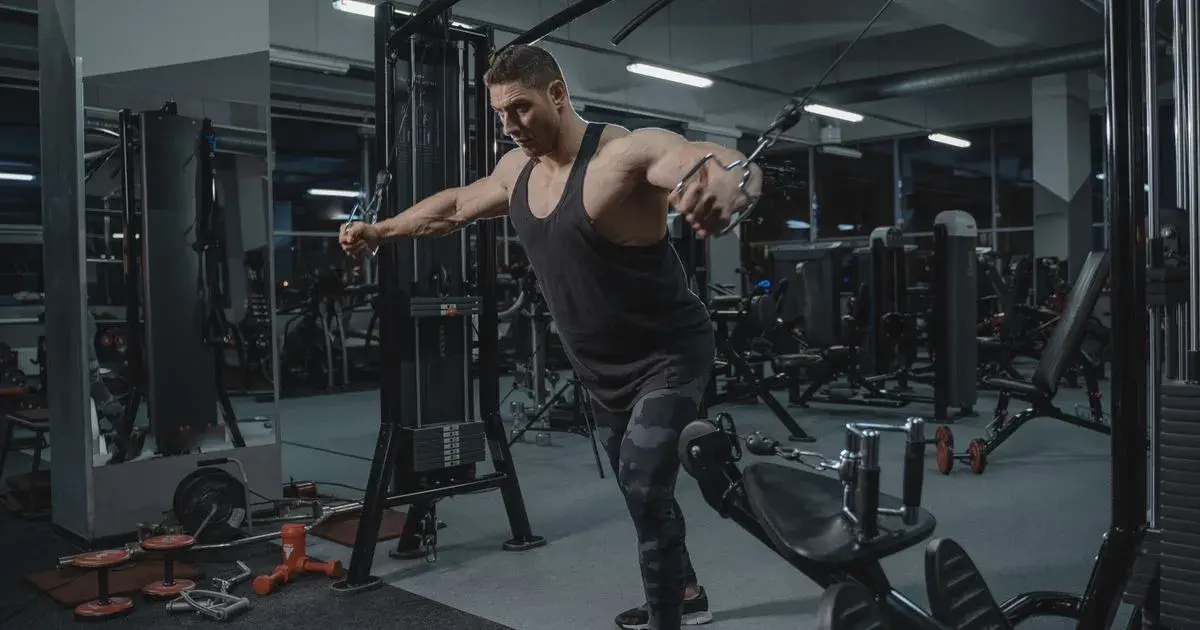
Every pressing movement uses all three. A bench press trains the chest first, then the front of the shoulders and the triceps. Put them on one day and you finish the session with the small muscles, once the heavy pressing is done.
Back and biceps (pull)
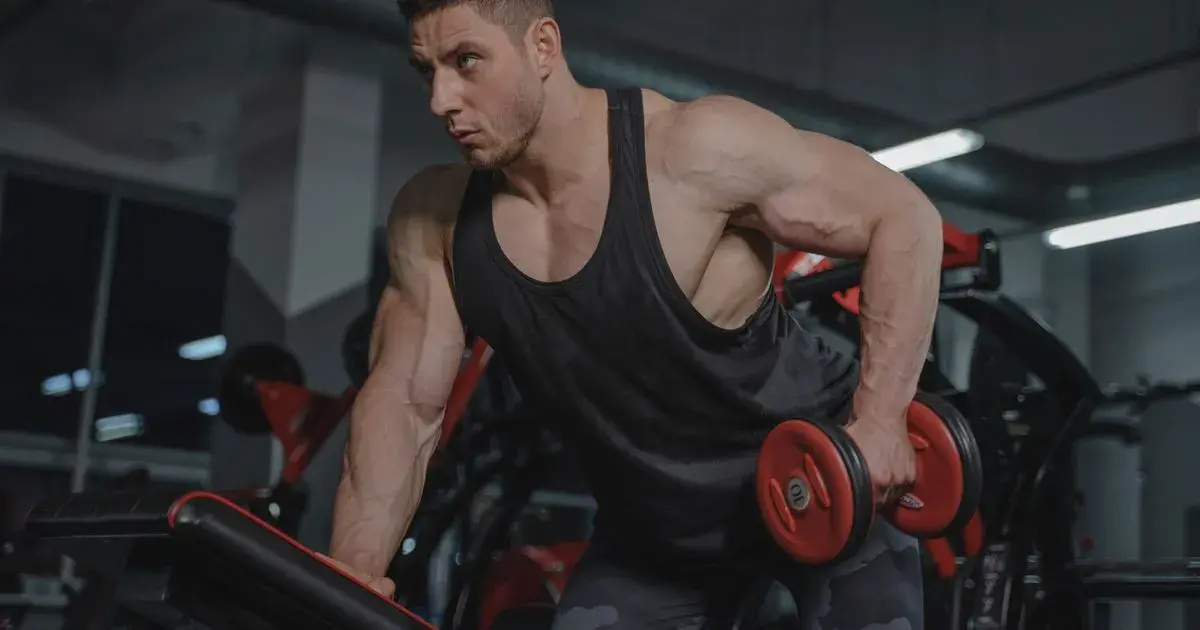
Rows, pull-ups and pulldowns all bend the elbow. Your biceps are already working on every back exercise, so a couple of curl sets at the end goes a long way. Rear delts fit here too, since face pulls and reverse flys are pulling movements.
Quads, hamstrings, glutes and calves (legs)
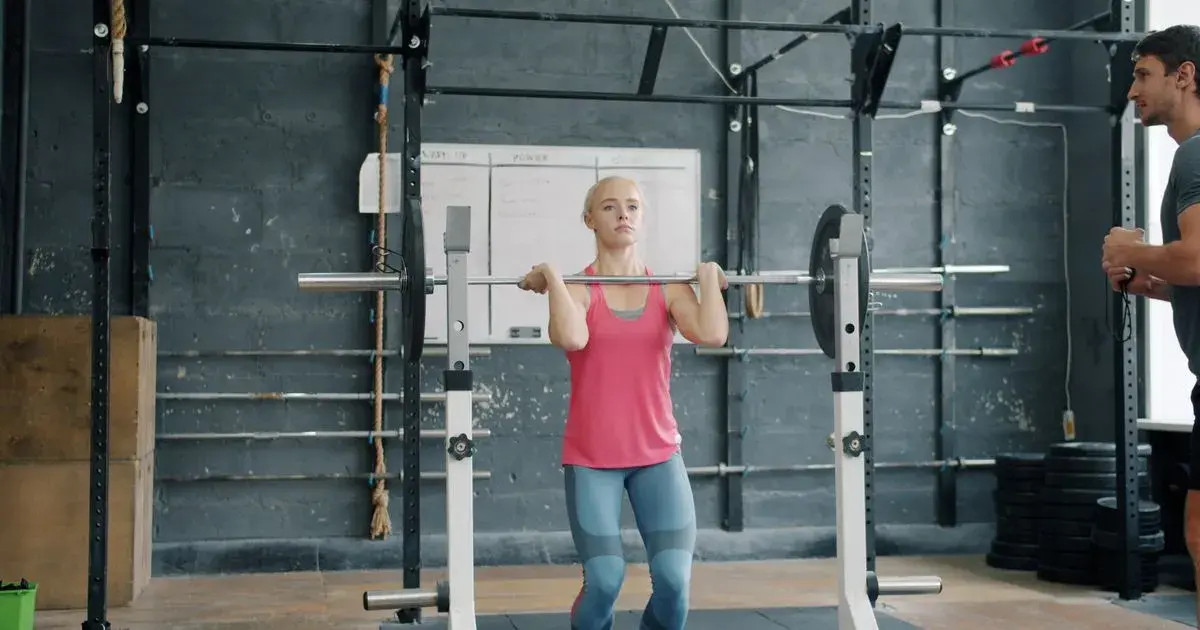
Squats, lunges, hip hinges and leg presses use the whole lower body. Putting them on one day keeps the most tiring work of the week in a single session, away from your upper body days. Abs fit on the end of it if you want somewhere to put them.
Chest and back (opposites)
Pushing and pulling don't compete for the same muscles. You can alternate a press with a row and rest less overall. A review of agonist-antagonist paired sets in the Journal of Strength and Conditioning Research concluded that pairing opposing exercises may be a time-efficient way to build strength.
Biceps and triceps (arms)
Same logic, smaller scale. Curls and pushdowns alternate well and fit easily into the end of an upper body day or a dedicated arm day.
Which pairings fit your split?
Which muscles you work out together depends mostly on how many days you train: full body for three days, upper/lower for four, and push/pull/legs for six. A split is just a grouping plan that repeats each week.
- Full body (3 days): everything, every session.
- Upper/lower (4 days): chest, back, shoulders and arms on one day; legs and abs on the next.
- Push/pull/legs (6 days): chest, shoulders and triceps; back and biceps; legs.
- Arnold split (6 days): chest and back; shoulders and arms; legs.
Three days a week points to full body. With only three sessions, the only way to hit every muscle twice a week is to train everything each time. Our 3 day full body workout plan lays that out.
Four days points to upper/lower. Each half of the body gets trained twice, with a day off after every pair. See the upper lower split for full sessions.
Six days points to push/pull/legs. Each group gets its own day and comes round twice a week. The push pull legs split covers it in detail.
How often should each muscle group be trained?
Twice a week is a safe default. A Sports Medicine meta-analysis by Schoenfeld and colleagues found that training a muscle twice a week grew more muscle than once a week.
Total weekly sets matter more than how you split them. A later Journal of Sports Sciences meta-analysis of 25 studies found no meaningful difference between frequencies once weekly volume was matched. So the choice of pairing is mostly about getting your weekly sets done with good quality.
This is the main problem with the classic one-muscle-a-day bro split. It can work, but cramming a whole week of chest work into one session means the last sets are done tired.
Which muscle groups should you not train together?
Avoid back-to-back days that share helpers. Chest on Monday and shoulders on Tuesday means your front delts and triceps get pressed hard two days running. Your Tuesday press will be weaker for it.
Don't put two heavy hinges or squats on consecutive days. Deadlifts tax your lower back, hamstrings and grip. Following them with a heavy squat day the next morning is asking for a weak session.
Keep small muscles off the day before their big partner. A big arm day right before back day takes the edge off your rows and pull-ups, because your biceps can't hold up their end.
How do you check whether your pairings are working?
Your logbook tells you, if you can read it. A pairing problem looks like one lift stalling or dropping while everything else climbs. Bench stuck for a month? Check what you trained the day before each bench session.
That check is easy with a few weeks of data and almost impossible from memory. Here is how the usual logging options compare:
| Logging method | Logging speed | Spotting weekly patterns | Flexibility | Searchability |
|---|---|---|---|---|
| Physical notebook | Fast | Flip back through pages by hand | Total | None |
| Notes app | Fast | Scroll and compare by eye | Total | Keyword search only |
| Traditional gym app | Slow (tap through forms) | Charts per exercise | Limited to the app's templates | Good |
| Gym Note Plus | Fast (type as you would in notes) | Charts and history per exercise | Total | Good |
If you're unsure whether your plan hits everything evenly, you can get a free private link to the workout plan optimizer. Paste your weekly plan and it maps which muscles it actually trains and how many sets each one gets.
A simple starting plan
- Count your training days. Three means full body, four means upper/lower, five or six means push/pull/legs or a hybrid.
- Write the grouping at the top of each day. "Push", "Pull", "Legs" or "Upper", "Lower". It stops random exercises creeping in.
- Check every muscle gets two hits a week. Small muscles count if a compound lift hits them hard.
- Look at the day before each heavy lift. Move anything that tires out that lift's helper muscles.
- Review after four weeks. If a lift has stalled while the rest moved, change the pairing before you change the exercise.
Keep logging the way you already do
If you write your workouts in Apple Notes or a notebook, keep doing that. Typing "bench 80kg 8,8,7" is faster than tapping through any app.
The catch is seeing the pattern. Spotting that your bench always drops after shoulder day means comparing weeks of entries side by side.
Gym Note Plus reads the plain text you already write and turns it into history you can check.
- Each exercise gets its own timeline, so a stalled lift is obvious.
- Volume per session is calculated for you.
- Charts show which lifts are moving and which aren't.
- Your old notes import, so you keep your history.
Want to see how it reads your notes? Paste your last session into the free notes to workout translator.
Pair muscles by how they move, give each one two hard days a week, and let your log show you when a pairing gets in the way.
Frequently Asked Questions
What muscles should you work out together as a beginner?
Beginners should train all major muscles together in full body sessions three times a week. Full body training lets a beginner practise each lift often and hits every muscle group about three times weekly. Once a beginner wants to train four or more days, an upper/lower split is the natural next step.
Is it better to train chest and triceps or chest and back together?
Both chest and triceps and chest and back are good pairings. Chest and triceps groups muscles that work together on every press, so the triceps finish the session already warm. Chest and back pairs opposing muscles, which suits supersets and shorter rest. Pick the one that fits the rest of your split.
Can you train arms and shoulders together?
Training arms and shoulders together works well, and it is the middle day of the Arnold split. The triceps help on every shoulder press, so arm work fits naturally after pressing. Keep that day away from chest day so the front delts and triceps get at least a day of rest in between.
Should you train legs on their own day?
Most lifters train legs on their own day because squats, deadlifts and leg presses are the most tiring lifts in the gym. A separate leg day keeps that fatigue away from upper body pressing and pulling. Upper/lower splits also give legs their own day, twice a week, which matches the twice-weekly frequency research supports.
How many muscle groups should you train per workout?
Two to four muscle groups per workout suits most lifters, which is what push/pull/legs and upper/lower splits produce. Training fewer groups per session usually means hitting each muscle only once a week. Training many more means the last muscles get trained when you're already tired, which lowers the quality of those sets.
Final Takeaways
- Group muscles by movement. Push, pull and legs is the simplest grouping that works.
- Opposites pair well too. Chest with back or biceps with triceps saves time with supersets.
- Let your training days choose the split. Three days for full body, four for upper/lower, six for push/pull/legs.
- Aim for two hits per muscle each week. Weekly sets drive growth; the pairing just spreads them out.
- Use your log to catch bad pairings. A lift that stalls while the rest climb usually shares helpers with the day before.

Josh Ibbotson
Josh is the creator of Gym Note Plus, building tools that make workout tracking as simple as taking notes.
Ready to try it out?
Download Gym Note Plus and start tracking your workouts the way you want.
Download on App Store