
Microloading: How Small Weight Jumps Keep Your Lifts Moving
Quick answer: Microloading means adding weight in jumps smaller than the standard 2.5 kg (5 lb), often 0.5 to 1 kg in total, using fractional plates or machine add-ons. It keeps a lift progressing after normal jumps start stalling it. It matters most on light upper-body lifts like the overhead press, where 2.5 kg can be a 6% jump.
Your overhead press went 35, 37.5, then 40 kg in three weeks. Then came 42.5 kg, and the third set fell apart at three reps. Two weeks later, the same thing happened again.
You are not getting weaker. The jump got too big for the lift, and the plates in your gym do not come any smaller.
What is microloading?
Microloading is progressive overload in smaller steps. Normally the smallest jump on a barbell is a 1.25 kg plate on each side, so 2.5 kg in total (or 2.5 lb a side, 5 lb in total). Microloading adds less than that: usually somewhere between 0.25 and 1 kg on the bar.
The equipment is simple:
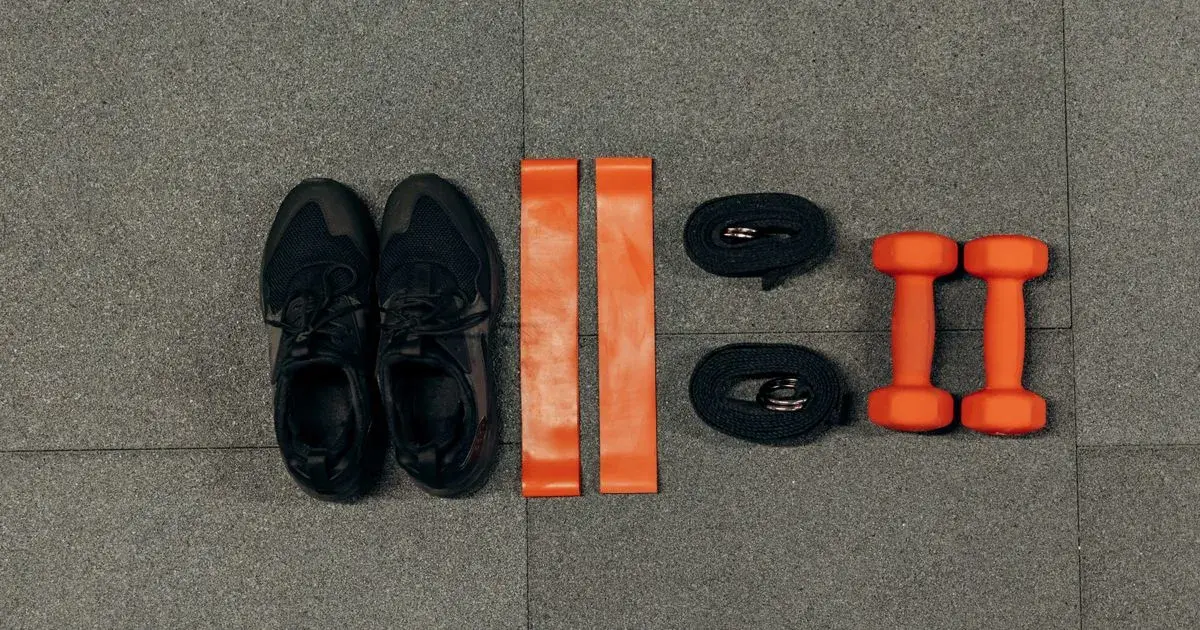
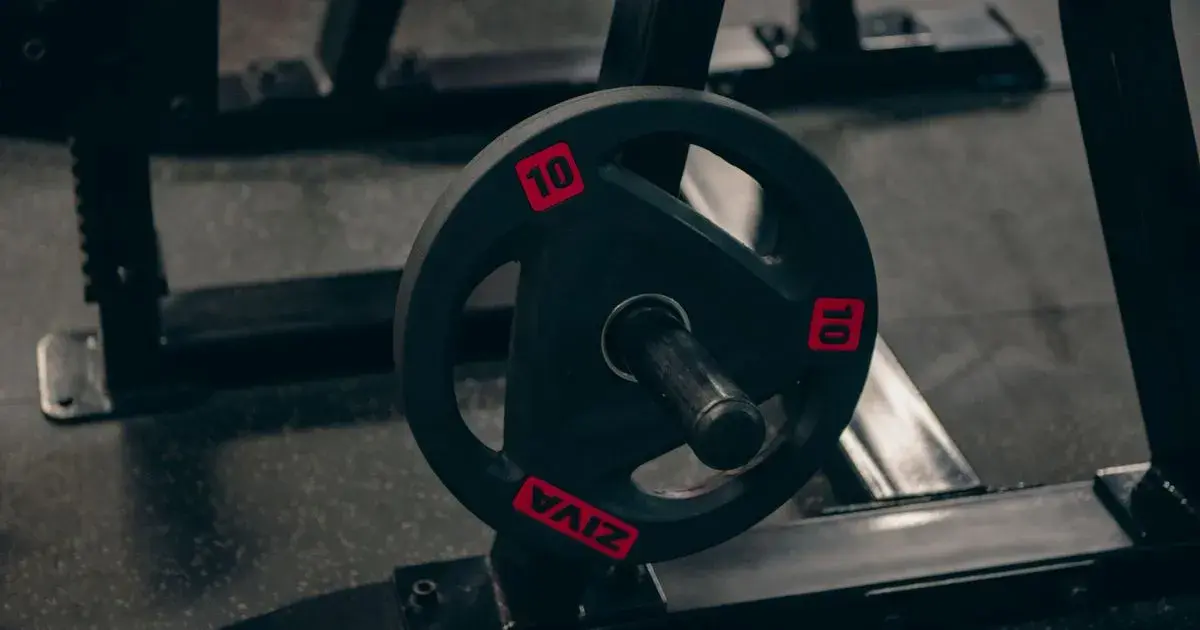
- Fractional plates. Thin discs, sold in sizes like 0.25, 0.5, 0.75 and 1 kg (or the same numbers in pounds), that all share one diameter. They slide onto the barbell next to your normal plates.
- Change plates. The standard small plates that get wider as they get heavier. If your gym has 0.5 kg change plates, they work the same way.
- Magnetic add-ons. Small weights that stick to the top of a machine's weight stack.
Why do standard 2.5 kg jumps stop working?
A standard 2.5 kg jump is a different-sized jump on every lift. Plates step in fixed amounts, but your lifts sit at very different weights:
- A 40 kg overhead press plus 2.5 kg is a 6.3% jump.
- A 60 kg bench press plus 2.5 kg is a 4.2% jump.
- A 140 kg squat plus 2.5 kg is a 1.8% jump.
The American College of Sports Medicine's position stand on resistance training progression recommends a 2 to 10% load increase once you can do one or two reps more than your target. A 2.5 kg jump sits near the bottom of that range on a heavy squat and well up it on a light press.
Progress also slows the longer you train. A 15-year analysis of 1,897 competitive powerlifters found that men's totals (squat, bench press and deadlift combined) rose by about 0.15 kg per day on average, and women's by about 0.12 kg. The strongest men improved at roughly half the rate of the least strong: 0.10 kg a day against 0.21 kg.
That is about a kilogram a week across three lifts. Beginners move faster for a while, but a plan that adds 2.5 kg to one lift every session still asks for far more, which is why linear progression eventually stalls.
Which lifts need microloading the most?
The lighter the lift, the more it benefits from microloading. The usual suspects:
- Overhead press. Usually your lightest barbell lift, so every standard jump is a large percentage.
- Bench press and incline bench, especially for smaller or newer lifters.
- Barbell rows, curls and close-grip bench. Light loads with slow progress.
- Machine and cable work, where a weight stack can step 5 kg at a time.
Squats and deadlifts can take full 2.5 kg jumps for longer, since the bar is heavier. Switch them once a 2.5 kg increase costs reps two sessions running.
How much weight should you add when microloading?
Choose the jump by percentage, not by whatever plate is nearby. A workable rule of thumb: if the smallest jump you can make is more than about 3% of the weight on the bar, it is too big to take every session.
Sensible starting points:
- Upper-body barbell lifts: 0.5 to 1 kg per jump (1 to 2.5 lb).
- Lower-body barbell lifts: 1 to 2.5 kg per jump (2.5 to 5 lb) once full jumps stall.
- Machines and isolation work: the smallest add-on you have, or add a rep first.
Timing matters as much as size: add weight after a session where every target rep was clean, and hold when it wasn't. Our guide on knowing when to increase weight covers the signals.
What do you need for microloading?
Fractional plates for barbell lifts
Fractional plates are the simplest fix for a barbell. A pair of 0.5 kg plates adds 1 kg to the bar, and a small set covers almost any jump you need. Check the hole size before buying: Olympic barbells take plates with a 50 mm (2 inch) hole.
Check whether your gym already has small change plates before you buy a set of microloading plates.
Machines and cable stacks
Machine weight stacks often have the biggest relative jumps. Many step in 5 kg or 10 lb plates. On a 25 kg triceps pushdown, one pin is a 20% jump. Your options:
- Use the built-in add-on, if the machine has a small half-step weight beside the stack.
- Add a magnetic weight to the top plate of the stack.
- Add reps before you move the pin.
Whatever you use, write the add-on into the log, as in "plate 8 + 1.25".
Dumbbells
Dumbbells are a separate problem, because the rack steps in fixed pairs. That one has its own guide: what to do when the next dumbbell is too heavy.
Does microloading actually work?
Microloading itself has barely been studied, but the principle behind it holds up.
The research does show that progress need not come in big load jumps. In an 8-week trial published in PeerJ, 43 people with at least a year of lower-body training either added load at fixed reps or added reps at a fixed load. Both approaches produced similar gains in muscle and strength. Strength slightly favoured the load group, by a margin the authors called of questionable practical significance.
Microloading keeps the load route open when the next standard jump is too big. It will not rescue a program that has simply run its course.
How do you log microloaded sets?
Log microloaded sets with the exact weight, decimals and all. A 1 kg jump disappears if your notes round 41 kg down to "40ish".
Overhead press
41kg 5/5/5
Bench press
61kg 5/5/5
Lat pulldown
56.25kg 10/10/9
Two habits make the log useful:
- Log the total weight, not the plates. "61kg" beats "60 + 2 small" because you can compare it with last week without doing sums.
- Read the trend monthly, not daily. Four weekly 1 kg jumps add up to 4 kg. Session to session, it looks like nothing happened.
At the start and end of a month, plug your best set into the one rep max calculator to check whether the small jumps added up.
How do common logging methods handle microloading?
| Logging method | Physical Notebook | Notes App | Traditional Gym App | Gym Note Plus |
|---|---|---|---|---|
| Logging speed | Fast | Fast | Slower (fields and menus) | Fast (plain text) |
| Recording 41kg or 61.25kg | Write it as is | Type it as is | Depends on the app's weight stepper | Type it as is |
| Data visualization | None | None | Charts | Charts from your notes |
| Spotting a 1 kg monthly climb | Flip and compare pages | Scroll and compare | Yes, once entered | Yes, per exercise |
| Flexibility | Total | Total | Limited to the app's fields | Total |
| Searchability | Poor | Decent | Good | Good |
A simple starting plan
- Pick the one lift that stalls first. For most people that is the overhead press or the bench press.
- Get the smallest plates you can. A fractional set, or the 0.5 kg change plates your gym already owns.
- Cut the jump to 1 kg (or 2.5 lb) and take it only after a session where you hit every target rep.
- Write the exact total weight every session, decimals included.
- Review after four weeks. If the bar went up and the reps held, keep going. If reps keep falling at the new weight, drop about 10% and build back up.
Your notes already hold the data
Logging in a notes app or a notebook works fine for microloading. Writing "41kg 5/5/5" takes seconds.
Reading it back is harder. A 1 kg jump a week is real progress, but across a month of notes it looks like the same number written over and over.
Gym Note Plus keeps the plain-text habit and does the reading back for you:
- Type the set the way you already write it, decimals included, and it becomes history, charts and personal records for each lift.
- Per-exercise charts make a slow 1 kg climb visible, where scrolling through notes hides it.
- Your shorthand stays in the note, so "plate 8 + 1.25" is still there next month.
- Search back months to find what you were lifting before the last stall.
Want to see your own notes as structured data? Paste a session into the free notes to workout translator.
Microloading will not make you stronger faster. It stops the plates from demanding more strength than you have built yet.
Frequently Asked Questions
What is microloading in the gym?
Microloading is adding weight to a lift in jumps smaller than the standard 2.5 kg or 5 lb, usually 0.5 to 1 kg in total. Lifters use fractional plates, small change plates or magnetic add-ons to do it. Microloading keeps a lift progressing once full-size jumps start costing reps, which happens first on light upper-body lifts.
Do you need fractional plates to microload?
Fractional plates are the easiest way to microload a barbell, but they are not the only way. A pair of 0.5 kg change plates adds 1 kg, magnetic weights work on machine stacks, and adding reps before adding weight works anywhere. Fractional plates matter most for the overhead press and bench press.
How much weight should you add when microloading?
Add 0.5 to 1 kg (1 to 2.5 lb) per jump on upper-body barbell lifts, and 1 to 2.5 kg on squats and deadlifts once full jumps stall. A useful rule of thumb for microloading: if the smallest available jump is more than about 3% of the bar weight, it is too large to take every session.
Should you microload squats and deadlifts?
Squats and deadlifts usually handle standard 2.5 kg or 5 lb jumps for longer than pressing lifts, because the bar is heavier and more muscle moves it. Switch the squat or deadlift to microloading when a standard jump costs reps two sessions in a row, rather than from the first week of training.
Can you microload on machines and cables?
Yes. Machine weight stacks often step 5 kg or 10 lb at a time, so microloading helps there too. Use the machine's built-in half-step weight if it has one, stick a magnetic add-on weight to the top of the stack, or add reps before moving the pin. Write the add-on into your log.
Final Takeaways
- Microloading means jumps smaller than 2.5 kg, usually 0.5 to 1 kg, made with fractional plates, change plates or machine add-ons.
- Judge a jump as a percentage. 2.5 kg is 6.3% of a 40 kg press and 1.8% of a 140 kg squat.
- Light upper-body lifts need it first, starting with the overhead press and bench press.
- Small plates do not change the rules. If 41 kg grinds, 42 kg will not go better because the plate is thin.
- Log the exact total, decimals included, and read the trend monthly so the small jumps show up.

Josh Ibbotson
Josh is the creator of Gym Note Plus, building tools that make workout tracking as simple as taking notes.
Ready to try it out?
Download Gym Note Plus and start tracking your workouts the way you want.
Download on App Store