
Printable Workout Log: A Free Template You Can Print Today
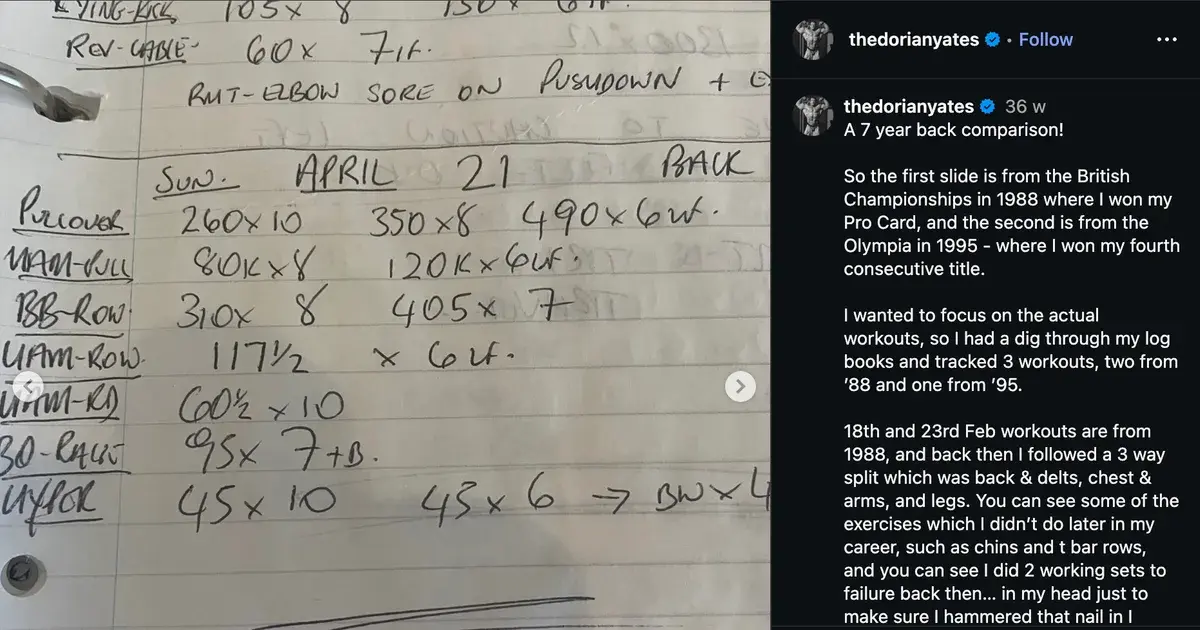
Quick answer: A printable workout log is a one-page sheet with columns for the date, exercise, sets, reps, and weight, plus a notes line for how each set felt. Print a stack, keep them on a clipboard, and fill one in every session. It gives you a paper record so you always know what to beat next time.
You like paper. There is nothing wrong with that.
A printed sheet never runs out of battery, never buzzes with notifications, and never makes you tap through four menus to write down a single set. You grab a pen, scribble the numbers, and get back to your rest timer.
The trick is having a log that captures the right things, so months from now the page actually tells you a story instead of a pile of random numbers.
What should a printable workout log include?
A good log sheet is boring on purpose. It has a fixed place for every number you need and nothing you do not.
Five columns do the heavy lifting. Date, exercise, weight, sets, and reps. That combination is enough to recreate any session and to know exactly what you lifted last time.
One notes line saves the rest. Add a short column for how the set felt, a rough RPE, or a reminder like "elbow tweak, drop weight next week." These small notes are the difference between guessing and knowing.
Here is the core layout to copy onto your own sheet:
| Date | Exercise | Weight | Sets x Reps | Notes |
|---|---|---|---|---|
| Jul 18 | Bench press | 185 lb | 3 x 8 | Last rep grindy |
| Jul 18 | Barbell row | 155 lb | 3 x 10 | Felt easy, add 5 |
| Jul 18 | Overhead press | 95 lb | 3 x 6 | Missed rep 6 set 3 |
If you want a deeper breakdown of each field, our workout log template guide covers exactly what to record in every session.
How do you use a printable log at the gym?
The point of printing is speed, so build a system that removes friction before you ever get to the rack.
Print a week or a month at once. Run off five to twenty copies so you never skip a session because you could not find a blank page. Punch holes and drop them in a cheap binder, or clip a few to a clipboard.
Fill in the plan before you leave home. Write tomorrow's exercises and target weights in advance. Walking in with the sheet half-filled means you already know your first move.
Log each set the moment you finish it. Do not wait until the end. Numbers written between sets are accurate. Numbers written from memory in the car are fiction.
Review the sheet before you start the same workout again. Beat one number from last time. That single habit is progressive overload in its simplest form, and you can read more about it in how to track gym progress.
Free printable workout log template
You do not need a designer or a paid PDF. Here is the five-column sheet as a file you can open and print in about thirty seconds:
Free download
Printable workout log (CSV)
The five-column sheet, ready to open in Google Sheets or Excel and print. Fifty blank rows, about five sessions per printed batch.
- Date, exercise, weight, sets x reps and notes columns
- Three filled example rows showing the format
- Fifty blank rows so one download covers weeks of training
- Print as-is, or delete the examples for a clean sheet
Google Sheets: File → Import → Upload → Replace spreadsheet. Excel: just open the file. Formulas come through in both.
Any of these three layouts will print cleanly on a single page.
The simple 5-column sheet. The table above, repeated for 8 to 10 exercise rows, with the date at the top. Works for any split and any experience level.
The full-body day sheet. Pre-print your fixed exercise names down the left column (squat, bench, row, and so on) and leave the weight and reps blank. Faster to fill because the exercises are already there.
The weekly gym log sheet. One row per exercise, one column per day of the week. Good if you repeat the same lifts across a Push Pull Legs or Upper/Lower week and want the whole week on one page.
Prefer to build your own in two minutes? Open a blank document, insert a table with the five headers above, add 10 empty rows, then print. Save the file so you can print more anytime.
Printable log vs notes app vs gym app: which tracks progress best?
Paper wins on speed and simplicity. Where it falls short is everything that happens after you write the number down.
A printable log cannot add up your weekly volume, chart your bench press over six months, or tell you your estimated one-rep max. To see trends you have to flip through pages and do the math yourself, which almost nobody keeps doing.
| Feature | Printable Log | Notes App | Traditional Gym App | Gym Note Plus |
|---|---|---|---|---|
| Logging speed | Fast | Fast | Slow (menus, taps) | Fast (plain text) |
| Data visualization | None | None | Good | Good |
| Flexibility | High | High | Low (rigid fields) | High |
| Searchability | None | Basic | Good | Good |
| Progress charts | Manual | Manual | Automatic | Automatic |
Notes apps solve the printing problem but not the progress problem. They are always in your pocket and never run out of paper, yet like the printout they leave you with plain text and no charts. Our workout notebook vs app comparison digs into that trade-off in detail.
This matters because writing things down is the easy part. Sticking with it and actually reading your own data is where most people fall off.
In a cohort of 522,994 beginner app users, only 18.1% were still training consistently at six months, and the median dropout time was 14 weeks, according to a large study of resistance exercise adherence on SportRxiv. The same study found that consistency in the first 28 days was the single strongest predictor of who kept going. A log you actually review keeps those early weeks on track.
Keep your paper habit, lose the busywork
If a printed sheet works for you, keep using it. The habit of writing every set down is the thing that builds progress, and you already have it.
The one gap paper leaves is turning those numbers into a picture. That is exactly where Gym Note Plus fits.
You keep logging in plain text, on paper or in your notes app, in the same shorthand you already use. Then you snap a photo of the page or paste the text in, and the app reads it into structured data automatically.
- No retyping. Photograph your handwritten sheet and it becomes a clean log.
- Automatic charts. Every lift gets a progress graph without you touching a spreadsheet.
- Estimated 1RM and volume. The math you would never do by hand, done for you.
- Full history, searchable. Find any exercise on any date in seconds.
It is the upgrade that respects how you already work instead of forcing you into a rigid app with a hundred fields.
Paper is a great place to write your workout down. It is a terrible place to watch your progress grow.
A simple starting plan
You can have this running before your next session.
- Get the sheet today. Download the CSV above, or make your own 5-column table, and print 10 copies. Five minutes, done.
- Fill in tomorrow's plan tonight. Write your exercises and target weights so you walk in ready.
- Log every set as you finish it. Pen goes to paper between sets, not from memory later.
- Beat one number next time. Before you repeat a workout, read the last sheet and add a rep or a little weight.
- Digitize once a week. Photograph your sheets into Gym Note Plus so you can see the trend lines your paper cannot draw. To see what a filled-in sheet becomes, type one session into the free notes to workout translator first.
Frequently Asked Questions
What is a printable workout log?
A printable workout log is a one-page sheet you print at home to record your training by hand. It has columns for the date, exercise, weight, sets, and reps, plus a notes line. You keep printed copies on a clipboard or in a binder and fill one in each session so you always have a written record of your lifts.
What should I write in a workout log?
Record five things for every exercise: the date, the exercise name, the weight used, and the sets and reps you completed. Add a short note on how the set felt or any pain, such as "last rep hard" or "add weight next time." Those five fields plus a note are enough to recreate any session and to know what to beat.
Is a printable workout log better than an app?
A printable workout log is faster and simpler for writing sets down, with no battery or menus. An app is better for seeing progress, since it charts your lifts, calculates volume and one-rep max, and searches your history automatically. Many lifters get the best of both by logging on paper and photographing the sheet into an app like Gym Note Plus.
How do I make a free printable workout log?
Download the free CSV in this article and print it, which takes under a minute and costs nothing. To make your own, open a blank document in Google Docs, Word, or Pages, insert a table with five columns labeled Date, Exercise, Weight, Sets x Reps, and Notes, then add around ten empty rows. Print as many copies as you need and save the file to reprint later.
How many exercises should a workout log sheet fit?
A single-page workout log sheet should hold about 8 to 10 exercise rows, which covers a typical full-body or split session with a couple of spare lines. If you run high-volume days with many exercises, use one sheet per session rather than cramming rows together, so each entry stays readable and easy to review later.
Final Takeaways
- A printable workout log needs only five columns. Date, exercise, weight, sets, and reps, plus a notes line, capture everything that matters.
- Print in bulk and log as you go. Copies on a clipboard and numbers written between sets beat a blank page and a car-park memory.
- Beat one number each session. Reading last time's sheet before you train is progressive overload made simple.
- Paper records well but shows nothing. To see trends you either do the math by hand or let an app do it.
- Keep the habit, add the charts. Photograph your sheets into Gym Note Plus and your paper log turns into automatic progress graphs.

Josh Ibbotson
Josh is the creator of Gym Note Plus, building tools that make workout tracking as simple as taking notes.
Ready to try it out?
Download Gym Note Plus and start tracking your workouts the way you want.
Download on App Store